
To clean curtains and drapes without damage, identify your fabric type first. Use gentle methods like hand washing with lukewarm water and mild detergent for delicate fabrics, and opt for a gentle cycle in cold water for sturdier materials. Regular vacuuming and spot cleaning help maintain them between washes. Avoid harsh chemicals, excessive moisture, or aggressive scrubbing to prevent damage. Following proper techniques guarantees your curtains stay fresh and intact—discover more tips to keep them looking their best.
Key Takeaways
- Identify fabric type and select appropriate cleaning method (hand wash, gentle cycle, or spot cleaning).
- Test cleaning solutions on small, inconspicuous areas before full treatment.
- Use mild detergents and avoid harsh chemicals or abrasive scrubbing.
- Gently clean and rinse thoroughly to prevent residue or damage.
- Properly hang and dry curtains away from direct sunlight to maintain shape and color.
Keeping your curtains and drapes clean not only refreshes your room’s appearance but also improves indoor air quality. To do this effectively, you need to understand the fabric types your curtains are made from, as different materials require different cleaning approaches. For example, delicate fabrics like silk or lace demand gentle handling, while heavier fabrics like cotton or polyester are more durable and can withstand more vigorous cleaning. Identifying your curtains’ fabric types is essential because it helps you choose the right cleaning method that preserves their texture and color.
Understanding fabric types is key to effectively cleaning curtains and maintaining their appearance.
When it comes to stain removal, act quickly to prevent stains from setting in. For fabric types prone to staining, like linen or silk, avoid using harsh chemicals or abrasive scrubbing. Instead, use a mild stain remover or a mixture of water and gentle dish soap. Test any cleaning solution on a small, inconspicuous area first to verify it doesn’t cause discoloration or damage. For stubborn stains, you might need to repeat the treatment or gently blot the stain rather than rubbing, which can spread the stain or damage the fibers. If your curtains are machine washable, check the label for specific instructions, such as water temperature and cycle type.
When cleaning curtains with delicate fabrics, hand washing is often the safest method. Fill a basin with lukewarm water and add a gentle detergent formulated for delicate fabrics. Submerge the curtains and gently agitate them, paying particular attention to stained areas. Rinse thoroughly to remove all soap residue, which can attract more dirt if left behind. For more robust fabrics like polyester or cotton blends, you can use a washing machine, but always opt for the gentle cycle and cold water. Using a mild detergent designed for curtains or delicate fabrics ensures you don’t strip away dyes or weaken fibers.
Additionally, understanding the role of fabric technology can help you select the most suitable cleaning methods and products for your curtains, ensuring they stay in optimal condition over time.
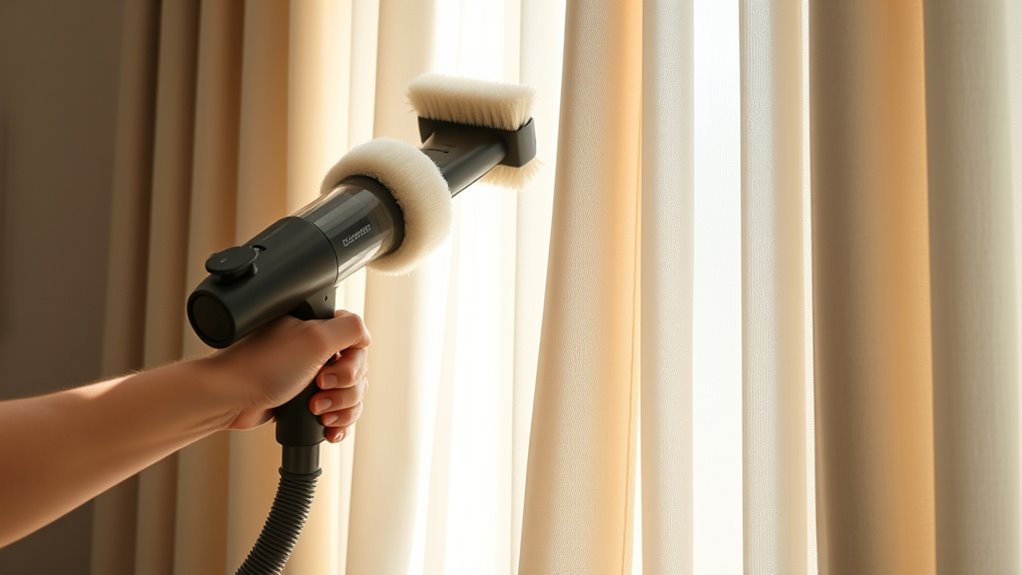
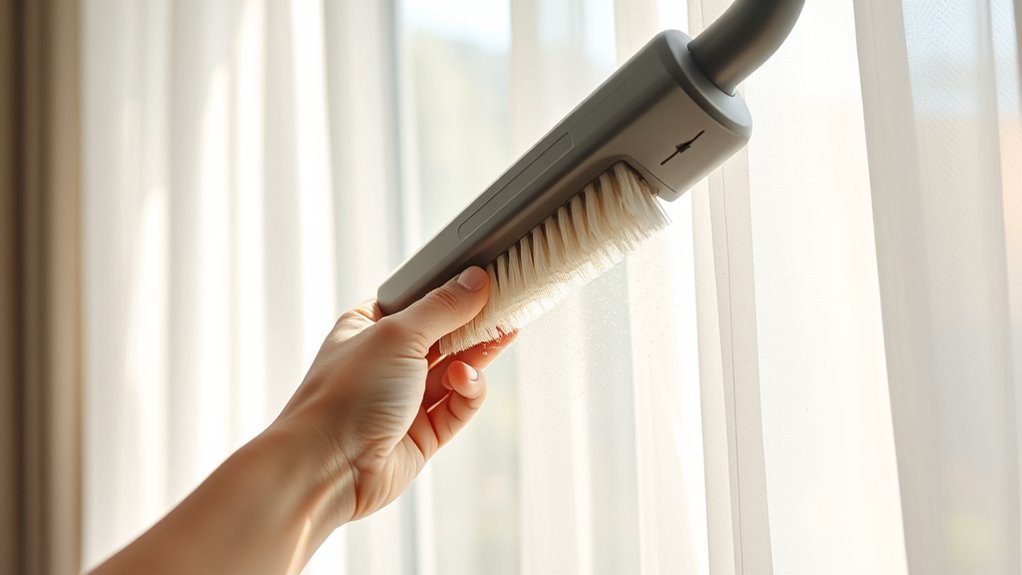
For curtains that cannot be washed, regular vacuuming with a soft brush attachment helps remove dust and loose debris, keeping them fresh longer. If you prefer a quick refresh, spot cleaning with a damp cloth and mild detergent can do wonders without risking damage. Always avoid excessive moisture, especially with delicate fabrics, as it can cause stretching or warping. When drying, hang curtains properly to maintain their shape. Avoid direct sunlight, which can fade colors over time, and never wring out heavy fabrics, as this can distort their structure.
Frequently Asked Questions
Can I Wash Curtains With Delicate Embellishments Safely?
You can wash curtains with delicate embellishments safely by taking fabric protection precautions. Hand wash or use a gentle cycle with cold water to prevent damage. Place the curtains in a mesh laundry bag to safeguard embellishments and guarantee safety. Avoid harsh detergents, and opt for mild, fabric-safe cleaning solutions. Always check care labels first, and consider spot cleaning or professional cleaning for extra delicate or valuable pieces.
How Often Should I Professionally Deep Clean My Curtains?
You should professionally deep clean your curtains at least once a year to maintain proper curtain maintenance and guarantee they stay fresh and free of dust. If you have allergies or notice visible dirt, increase the cleaning frequency to every six months. Regular professional cleaning helps preserve fabric quality and prevents buildup, extending the life of your curtains. Always follow manufacturer guidelines and consult with a professional for delicate or heavily soiled drapes.
Are There Eco-Friendly Cleaning Options for Curtains?
Sure, eco-friendly options exist—who knew cleaning could be guilt-free? You can opt for natural detergents that are gentle on fabrics and the environment, and skip wasteful disposables by using reusable cleaning cloths. These choices make your home sparkle without harming Mother Earth. So, go ahead, embrace green cleaning, and make your curtains happy—your conscience and the planet will thank you!
What Should I Do if My Curtains Shrink After Washing?
If your curtains shrink after washing, don’t panic. Gently dampen the shrunk curtains and try to stretch them back to their original size, working carefully to avoid damage. Use fabric restoration techniques, like steaming or ironing on low heat, to help relax the fibers. For delicate fabrics, consider consulting a professional cleaner who specializes in fabric restoration, ensuring your curtains regain their original shape without further harm.
Can I Use a Handheld Steamer on All Curtain Fabrics?
Yes, you can use a handheld steamer on most curtain fabrics, but check fabric types first. Some delicate materials like silk or velvet might need special steaming techniques or avoid steaming altogether. Always test a small hidden area first to prevent damage. Use gentle, sweeping motions, keeping the steamer a few inches from the fabric to remove wrinkles safely without risking water spots or damage.
Conclusion
Now that you know these foolproof methods, your curtains and drapes will stay spotless and vibrant forever—okay, maybe not forever, but close enough! With just a little effort, you’ll turn your windows into a stunning showcase that could make even the most glamorous homes jealous. So go ahead, conquer those curtains, banish dust, and transform your space into the envy of everyone you know. Your flawless, fabulous curtains are just a clean away!