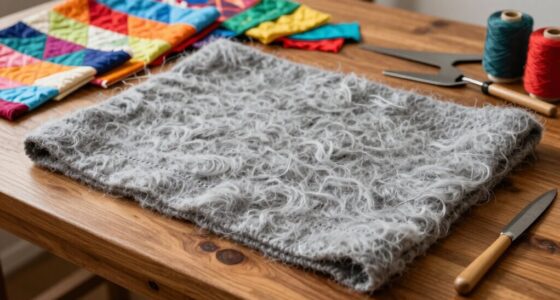
To make your own reusable produce bags from mesh and muslin, start by choosing suitable fabrics, then cut them to your preferred sizes. Sew the edges with simple stitches, adding drawstrings or toggles for closure. Mesh bags are lightweight and breathable; muslin adds durability and natural appeal. These bags help keep produce fresh longer and are easy to clean. Keep exploring for detailed steps and tips to craft the perfect eco-friendly bags.
Key Takeaways
- Choose lightweight, breathable mesh or muslin fabric to keep produce fresh and reduce spoilage during storage.
- Measure and cut fabric to desired bag size, then sew simple seams for a durable, reusable bag.
- Add drawstrings or toggles for secure closures, enhancing convenience and preventing produce from falling out.
- Wash and maintain bags regularly to ensure cleanliness and odor control, supporting long-term sustainability.
- Customize designs with different sizes, shapes, or embellishments for personalized, eco-friendly shopping solutions.

Reusable produce bags are an eco-friendly alternative to single-use plastic bags, helping you reduce waste and minimize environmental impact. When you choose to make your own bags from mesh and muslin, you’re opting for sustainable, eco-friendly materials that support a greener lifestyle. These fabrics are durable, breathable, and naturally biodegradable, making them ideal for storing fresh produce while reducing plastic consumption. Using eco-friendly materials not only benefits the planet but also offers you versatile storage solutions that can be customized to fit your needs.
Mesh fabric is perfect for creating lightweight, breathable bags that prevent excess moisture from accumulating around your produce. This helps keep fruits and vegetables fresh longer and reduces spoilage. When you sew your own mesh produce bags, you have control over the material quality, ensuring it’s free from harmful chemicals often found in mass-produced options. Muslin, on the other hand, provides a soft, natural fabric that’s sturdy enough for repeated use. It’s an excellent choice for bulkier items or produce that needs more support. Both fabrics are washable, allowing your bags to stay clean and odor-free after multiple uses, which makes them a smart investment in your sustainable storage solutions. Additionally, choosing natural fibers like muslin can contribute to reducing the sugar content often associated with synthetic materials, supporting a healthier environment.
Designing your own reusable produce bags from mesh and muslin is simple and rewarding. You can customize the size and shape to match your shopping habits, whether you prefer small pouches for berries or larger bags for leafy greens. The sewing process is straightforward, requiring only basic stitches, and you can add drawstrings or toggle closures for extra security. These features enhance the functionality of your bags, making them easy to carry and store. Plus, crafting your own bags allows you to combine eco-friendly materials with stylish designs, encouraging you to take your reusable options to the next level.
Top picks for "reusable produce bags"
Open Amazon search results for this keyword.
As an affiliate, we earn on qualifying purchases.
Frequently Asked Questions
Can I Use Natural Dyes to Color My Produce Bags?
Yes, you can use natural dye options to color your produce bags. Natural dyes like beetroot, turmeric, and spinach provide vibrant, eco-friendly colors. When dyeing, you should follow specific dyeing techniques such as soaking the fabric in a dye bath and simmering it carefully to achieve even color. Just guarantee your mesh or muslin bags are pre-washed, and experiment with different techniques to get the shades you want.
Are Mesh and Muslin Bags Suitable for Freezing Produce?
Mesh and muslin bags are suitable for freezing produce because they offer good freezing durability and maintain their shape. Their breathable material helps prevent moisture buildup, reducing freezer burn. Plus, the natural fibers in muslin are safe for food storage, ensuring no harmful chemicals leach into your produce. Just make sure the bags are sturdy and properly sealed to keep your produce fresh and protected during freezing.
How Do I Prevent Mold Growth on Reusable Produce Bags?
To prevent mold growth on your reusable produce bags, stay vigilant with mold prevention techniques. Make certain you dry your bags thoroughly after each use, especially in a well-ventilated area. Consider natural antimicrobial treatments like vinegar or tea tree oil to inhibit mold spores. Regularly inspect and wash your bags, and avoid storing them in damp places. These simple steps keep your bags fresh and mold-free, safeguarding your produce and your health.
Can I Add a Waterproof Lining to My Produce Bags?
Yes, you can add a waterproof fabric lining to your produce bags. Use lining options like PEVA, coated nylon, or outdoor fabric to keep items dry. Sew the waterproof fabric carefully into your mesh or muslin bags, ensuring seams are sealed to prevent leaks. This way, your bags stay breathable yet water-resistant, making them more versatile for different produce and wet items.
What Are the Best Practices for Washing and Maintaining Reusable Bags?
To keep your reusable bags in great shape, wash them regularly with gentle soap and cold water. Dry them thoroughly using air drying techniques or a low-heat tumble dry to prevent mold. Store your bags in a clean, dry place away from direct sunlight to maintain their quality. Proper drying techniques and storage tips guarantee your bags stay fresh, durable, and ready for reuse, reducing waste effectively.
Conclusion
Now that you’ve crafted your own reusable produce bags, you’re joining a legacy of mindful shoppers who protect our planet’s future. Just like the pioneers of conservation before you, your simple act of reuse echoes the timeless call to care for Earth’s bounty. Every bag you take to the market is a small but powerful step—proof that even the simplest tools can make a big difference. Keep weaving sustainability into your everyday life, one bag at a time.