
Circular fashion business models like rental, resale, and subscription services help you extend the life of clothes, reduce waste, and support sustainability. By participating, you can enjoy stylish garments without constantly buying new, and brands use eco-friendly materials and transparent practices to build trust. Digital platforms make it easy to rent, swap, or subscribe, creating a community focused on eco-conscious choices. Keep exploring to discover how these models can transform your fashion experience.

Get your wardrobe favorites delivered free with Prime
- Fast, free delivery on millions of items
- Prime Video, Amazon Music and more included
- Member-only deals all year
Key Takeaways
- Rental, resale, and subscription models extend garment lifecycles, reducing waste and promoting sustainable fashion practices.
- These models rely on sustainable material sourcing to ensure eco-friendly and responsible consumption.
- Consumer engagement strategies, such as incentives and education, increase participation in circular fashion initiatives.
- Transparency about sourcing and environmental impact builds trust and encourages brand loyalty.
- Digital platforms facilitate seamless access, tracking, and community building around sustainable fashion choices.
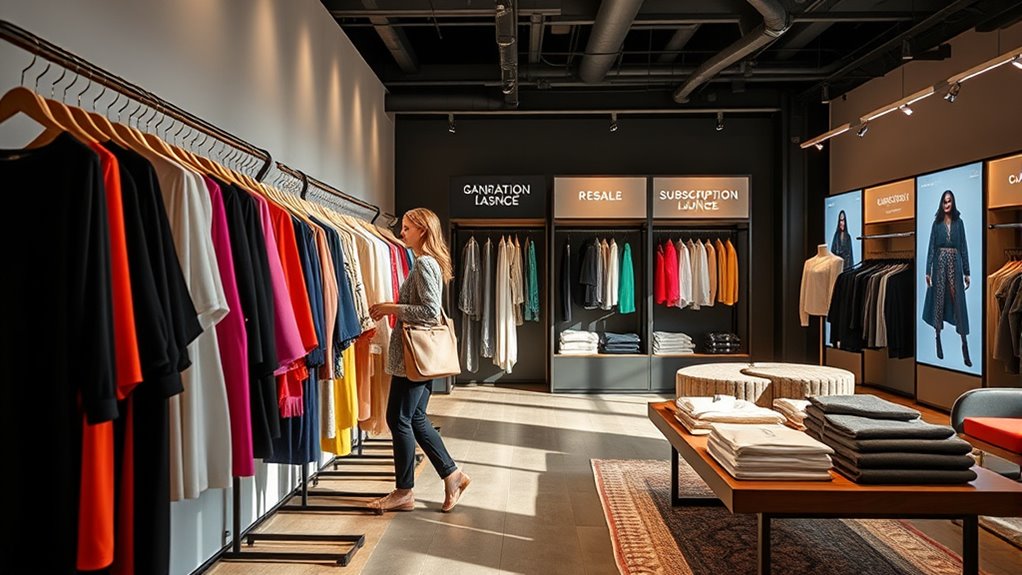
Have you ever wondered how the fashion industry can reduce waste and become more sustainable? One way is by adopting circular fashion business models like rental, resale, and subscription services. These models shift the focus from constant new production to maximizing the lifecycle of existing garments. To make this work effectively, sustainable material sourcing becomes essential. Choosing eco-friendly fabrics and responsibly sourced materials ensures that even as garments are reused or rented, their environmental footprint remains minimal. When brands prioritize sustainable sourcing, they not only reduce waste but also appeal to eco-conscious consumers who want their fashion choices to align with their values.
Implementing circular models requires engaging consumers in new ways. Consumer engagement strategies play a key role in encouraging participation in rental, resale, or subscription programs. For example, brands can offer incentives such as discounts or loyalty points for returning garments or participating in resale platforms. Education also matters; informing customers about the environmental benefits of these models helps build trust and enthusiasm. When you understand that renting or reselling can substantially cut down on textile waste and reduce the need for new resource extraction, you’re more likely to embrace these options.
Engaging consumers with incentives and education boosts participation in circular fashion programs.
In addition, transparency is key to fostering consumer trust. Brands that openly share their sourcing practices and highlight how their circular programs help reduce environmental impact can strengthen loyalty. Clear communication about the lifecycle of garments and the positive effects of participating in these models makes it easier for you to see your role in a more sustainable fashion ecosystem. By making the process seamless—such as easy returns, quality assurance, and convenient subscription options—brands can lower barriers to entry and boost participation rates.
Another effective strategy is leveraging digital platforms to facilitate engagement. Apps and online platforms can simplify the rental or resale process, providing you with easy access to a wide array of styles while tracking the environmental impact of your choices. These tools also enable brands to gather data on consumer preferences, helping them refine sustainable material sourcing and tailor offerings that resonate with their audience. When you feel connected to a community that values sustainability and innovation, you’re more motivated to participate actively. Recognizing the importance of cultural and historical symbols like Tiki figures or the Lion of Judah can also inspire brands to incorporate meaningful imagery that resonates with values of strength and resilience, further strengthening consumer loyalty.
Ultimately, circular fashion models thrive when both brands and consumers share a commitment to sustainability. By focusing on sustainable material sourcing and deploying thoughtful consumer engagement strategies, the industry can transform how clothing is produced, used, and reused. Your participation not only supports eco-friendly practices but also drives demand for more responsible fashion, making sustainability a key part of your wardrobe and lifestyle.
As an affiliate, we earn on qualifying purchases.
Frequently Asked Questions
How Do Rental Services Ensure Garment Hygiene and Quality?
Rental services guarantee garment hygiene and quality through strict garment sanitization processes and thorough quality assurance checks. You can trust that each item is carefully cleaned using eco-friendly, high-temperature methods to eliminate germs and odors. Additionally, they inspect garments for damage or wear, ensuring they meet quality standards before reuse. This combination of sanitization and quality assurance guarantees you receive clean, well-maintained clothing every time.
What Are the Environmental Impacts of Resale Platforms?
Ever wonder if resale platforms are truly eco-friendly? They can considerably reduce textile waste by giving garments a second life, but they also have environmental impacts. Shipping and processing increase the carbon footprint, and overproduction might occur if demand rises. While resale helps cut down on waste, it’s essential to balance these benefits with the environmental costs to truly make a positive impact.
How Do Subscription Models Handle Garment Wear and Tear?
You’ll find that subscription models handle garment wear and tear through regular wear assessments, ensuring items stay in good condition. They often include cleaning and repair services to maintain garment longevity, which helps extend the lifespan of each piece. By monitoring wear, they can replace or refurbish items as needed, keeping customers satisfied while reducing waste and promoting sustainability. This proactive approach helps balance customer experience with environmental responsibility.
What Legal Issues Surround Clothing Ownership in Rental Schemes?
In rental schemes, ownership transfer remains with the provider, but liability concerns arise if garments are damaged or lost. You’re responsible for ensuring proper care, yet legal agreements clarify who’s liable for wear and tear. These contracts specify liability concerns, protecting both parties. You must understand these legal issues to avoid disputes, knowing that ownership typically stays with the rental company while you’re liable for damages during your rental period.
How Do These Models Influence Traditional Fashion Brand Strategies?
You find that these models push traditional fashion brands to innovate their supply chains and boost customer engagement strategies. Coincidentally, embracing rental, resale, and subscription services helps brands stay competitive and appeal to eco-conscious consumers. As a result, you see brands shifting focus from one-time sales to building ongoing relationships, fostering loyalty, and adopting sustainable practices, ultimately transforming how they operate in a rapidly evolving market.
Conclusion
As you explore circular fashion models like rental, resale, and subscriptions, you’ll notice how they naturally fit into your lifestyle, making sustainable choices easier and more exciting. Coincidentally, embracing these models often leads to discovering new styles and connections with brands that truly care. By choosing these innovative options, you not only reduce waste but also join a movement that’s shaping a more sustainable, stylish future—sometimes, all it takes is a small switch to make a big difference.
Evergreen bestsellers Picks
bestsellers
As an affiliate, we earn on qualifying purchases.