Robotics can greatly improve your sewing and textile assembly processes by boosting efficiency, precision, and safety. They handle delicate fabrics with care, reduce waste, and guarantee consistent quality through advanced sensors and vision systems. Robots can perform repetitive tasks quickly and reliably, minimizing errors and rework. They also integrate seamlessly into existing workflows, adapt to different tasks, and operate continuously without fatigue. If you keep exploring, you’ll discover how these innovations can transform your manufacturing approach even further.
Key Takeaways
- Robots improve precision and consistency in sewing and textile assembly, reducing errors and waste.
- Automation enhances safety by handling hazardous or strenuous tasks, minimizing worker injuries.
- Robotic systems enable faster production cycles and seamless integration with existing manufacturing lines.
- Increased flexibility allows robots to quickly adapt to custom or small-batch textile projects.
- Workforce roles shift towards oversight and quality control, boosting morale and operational efficiency.
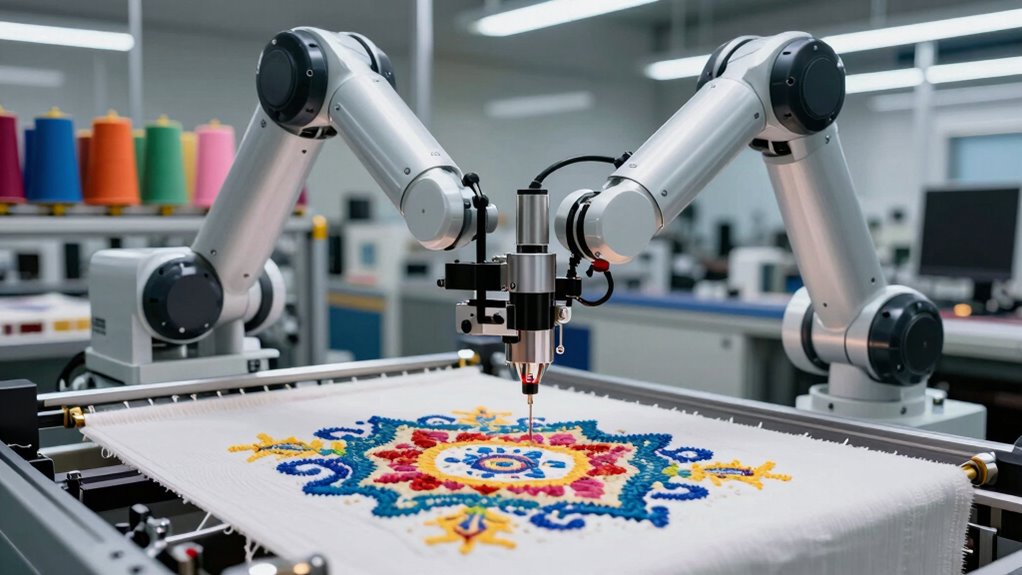
Robotics has revolutionized textile assembly by increasing efficiency, precision, and safety. As you work in the textile industry, you’ll notice how robots are transforming traditional sewing and assembly processes. One of the key breakthroughs is in fabric integration, where robots can handle delicate fabrics with ease, reducing waste and minimizing damage. These machines are designed to adapt quickly to different materials, guaranteeing that each piece is processed with consistent quality. With robotic precision, tasks like cutting, stitching, and assembling are performed with accuracy that far surpasses manual efforts, resulting in cleaner seams and better overall product quality.
When you incorporate robotics into your workflow, you’ll find that repetitive tasks become faster and less prone to human error. Robots equipped with advanced sensors and vision systems can detect fabric edges, align patterns, and execute complex stitching patterns seamlessly. This level of precision guarantees that each product meets strict quality standards, even as production scales up. You won’t need to worry about uneven stitches or inconsistent seam allowances anymore, because robotic systems maintain uniformity across large batches. This not only improves product consistency but also reduces the need for rework and returns, saving you time and money.
Furthermore, robotic systems excel at integrating with existing manufacturing lines, especially in tasks requiring fabric handling. They can pick up, position, and manipulate textiles with gentle but firm grip, which is vital when working with fragile or stretch fabrics. This capability enhances fabric integration, making the process smoother and more reliable. As a result, you’ll experience fewer material jams or misalignments, which are common issues in manual operations. Robots can also be programmed to switch between different tasks rapidly, allowing your production line to adapt quickly to changing demands or designs. Additionally, ongoing advancements in robotic adaptability and flexibility are making these systems even more versatile and suitable for small-batch or custom production runs.
Safety is another significant advantage of robotics in textile assembly. Automating hazardous or physically demanding tasks reduces the risk of injuries for your workforce. Workers can focus on oversight, quality control, and more skilled activities, rather than repetitive or strenuous work. This shift not only boosts morale but also helps you comply with safety regulations more easily. Plus, robotic systems can operate continuously without fatigue, increasing overall productivity and throughput.

Handheld Sewing Machine, Mini Electric Portable for Travel & DIY
- Flexible Power Options: Uses batteries or DC adapter for portability
- Complete Accessory Set: Includes manual, tools, and test cloth
- Versatile and Easy to Use: Suitable for beginners and various fabrics
As an affiliate, we earn on qualifying purchases.
As an affiliate, we earn on qualifying purchases.
Frequently Asked Questions
How Will Robotics Impact Employment in Traditional Sewing Jobs?
Robotics will likely lead to labor displacement in traditional sewing jobs, as machines take over repetitive tasks. However, you’ll see skill transformation, with workers shifting towards more technical roles like robot maintenance and programming. While some jobs may disappear, new opportunities will emerge for those who adapt and learn new skills. Embracing this change can help you stay relevant and even thrive in a more automated textile industry.
What Are the Cost Differences Between Manual and Robotic Textile Assembly?
You’ll find robotic textile assembly costs are like night and day compared to manual work—initial investments skyrocket, but long-term, they slash costs through unmatched cost efficiency. Robots dramatically reduce labor needs, cutting expenses and boosting productivity. While setting up robots may seem expensive upfront, the savings on wages and errors quickly make it worthwhile. Over time, automation transforms expenses, making traditional sewing methods look like ancient history.
Can Robotics Adapt to Custom or One-Of-A-Kind Textile Designs?
Yes, robotics can adapt to customization flexibility and handle design complexity. You’ll find that advanced robotic systems use AI and machine learning to interpret unique patterns and adjust their operations accordingly. This allows for precise execution of one-of-a-kind textile designs, reducing manual labor and increasing efficiency. As a result, you can achieve intricate, customized textiles with consistency, making robotic technology a valuable tool for bespoke and complex textile projects.
How Will Robotics Influence the Quality and Consistency of Textile Products?
Isn’t it clear that robotics will boost the quality and consistency of textile products? With advancements in fabric precision and automation integration, you’ll notice fewer errors and uniformity across your production line. Robotics streamline the process, ensuring every stitch meets strict standards. This technology minimizes human variability, allowing you to deliver high-quality textiles consistently. So, embracing robotics means a future of reliable, precise, and top-tier textile products.
Are There Environmental Benefits to Using Robotics in Textile Manufacturing?
Using robotics in textile manufacturing offers environmental benefits, such as promoting eco-friendly materials and improving energy efficiency. Robots can optimize resource use, reducing waste and conserving water and energy during production. By enabling precise handling of eco-friendly fabrics, they help minimize environmental impact. Additionally, automated processes often consume less power, making textile factories more sustainable. Overall, adopting robotics supports greener practices and helps protect the environment.
Conclusion
As robotics weave their way into sewing and textile assembly, they become the threads stitching innovation into the fabric of the industry. You’ll find yourself on the cusp of a new era where machines handle the tedious, freeing you to focus on creativity and quality. Like a skilled tailor adjusting a fine suit, embracing robotics means tailoring your future with precision and agility—making the fabric of tomorrow stronger and more vibrant than ever before.