The feel of your sheets primarily depends on the fabric’s weave. Percale has a tight, closely woven structure that gives it a crisp, cool, and matte feel, making it great for warmer weather. Sateen, on the other hand, features a satin weave that results in a smooth, silky, and glossy surface, offering a softer, more luxurious touch. To understand what creates these differences and how your choice impacts comfort, keep exploring what makes each fabric unique.

Get your wardrobe favorites delivered free — and shop member deals
- Fast, free delivery on millions of items
- Access to Prime Big Deal Days deals on October 6–7
- Prime Video, Amazon Music and more included
Key Takeaways
- Percale has a crisp, cool, and lightweight feel, while sateen is smoother, silkier, and more luxurious to the touch.
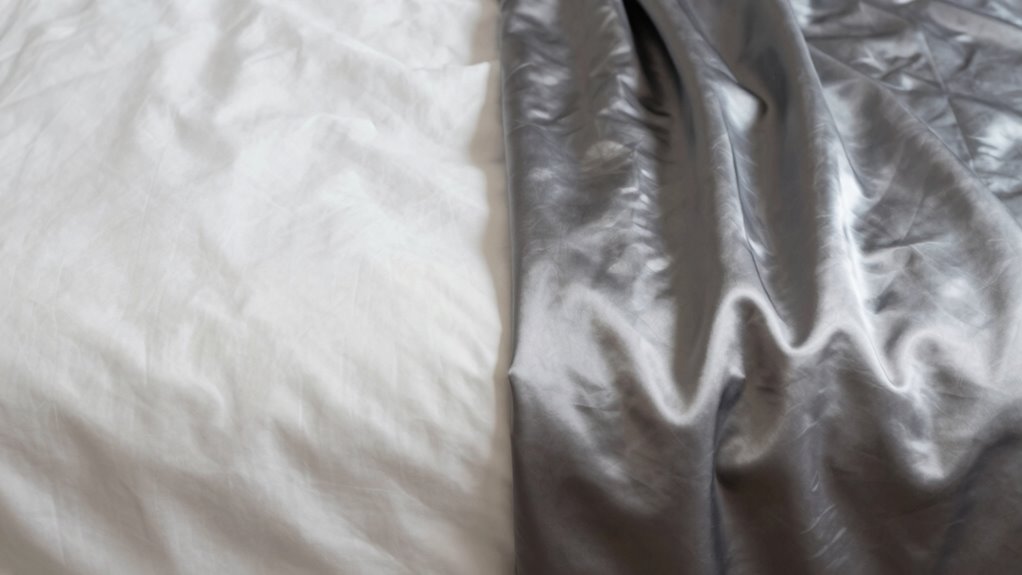
- The tight weave of percale provides a matte finish, contrasting with sateen’s glossy, shiny surface.
- Sateen’s higher thread count and satin weave create a softer, enveloping sensation compared to the crispness of percale.
- Percale feels more breathable and cooling, ideal for hot sleepers; sateen offers a warmer, cozier experience.
- The durability and care requirements influence how the fabrics maintain their initial feel over time.
Are you trying to decide between percale and sateen for your bedding? The choice often comes down to how each fabric feels and how long it lasts. Percale is known for its crisp, cool touch, while sateen offers a smoother, silkier feel. To understand what makes each fabric unique, it’s essential to look at factors like thread count and fabric durability. These elements influence not only the comfort but also how well your sheets hold up over time.
Choosing between percale and sateen depends on your preferred feel and how long your sheets last.
Percale is a closely woven fabric, usually made from cotton, with a thread count typically ranging from 180 to 200, though it can go higher. This tight weave results in a matte finish that feels light and breathable against your skin. Because of its dense construction, percale tends to be more durable, resisting pilling and wear over time. You’ll find that percale sheets maintain their crispness even after multiple washes, making them a reliable choice for those who want longevity and a fresh feel. The sharp, cool sensation is especially appealing during warmer months or if you tend to sleep hot. Its fabric durability ensures that your sheets won’t easily fray or lose their structure, giving you a consistent, high-quality sleep experience.
On the other hand, sateen is woven differently, with a higher thread count—often between 300 and 600—using a satin weave that produces a glossy, smooth surface. This weave creates a luxurious sheen and a silky softness that feels indulgent against your skin. Because of its construction, sateen tends to be less breathable than percale, which can be a plus if you prefer a warmer, cozier feel in colder weather. However, the high thread count and the way the fabric is woven can make sateen slightly more prone to pilling and snagging over time, especially if you don’t follow proper care instructions. Despite this, the fabric’s smoothness and elegant appearance make it a favorite for those seeking a touch of luxury. Sateen’s softer, more enveloping feel can sometimes diminish its durability compared to percale, but with gentle washing, it can still last for many seasons. Additionally, understanding fabric weave and its impact on sheet performance can help you make a more informed decision.
In the end, your choice hinges on your personal preferences for feel and longevity. If you prioritize crispness, breathability, and long-lasting fabric durability, percale is likely your best bet. If you prefer a silky, smooth texture and don’t mind a bit more delicate handling, sateen offers unmatched softness and a luxurious look. Both fabrics have their merits, but understanding these key differences will help you select the bedding that aligns perfectly with your comfort and lifestyle.
As an affiliate, we earn on qualifying purchases.
Frequently Asked Questions
Which Fabric Is More Durable Over Time?
You’ll find that percale fabric is more durable over time because it’s tightly woven, making it resistant to wear and tear. To keep it lasting longer, follow proper fabric care, like gentle washing and avoiding harsh chemicals. Sateen, while soft and luxurious, may soften or wear faster with frequent use. Consider environmental impact too; percale’s simpler production process often has a smaller ecological footprint.
Are Percale and Sateen Suitable for All Seasons?
Yes, both percale and sateen are suitable for all seasons, but their breathability differs. Percale offers superior breathability, making it ideal for hot weather, while sateen’s denser weave retains warmth, perfect for cooler months. Aesthetic differences also influence your choice: percale has a crisp, matte finish, whereas sateen feels silky and lustrous. Consider your climate and style preference to select the best fabric for year-round comfort.
How Does Thread Count Affect the Feel of Each Fabric?
Higher thread counts generally make both fabrics feel softer and more luxurious because of denser fabric construction and tighter weave patterns. In percale, a higher thread count results in a crisp, cool feel, while in sateen, it creates a silky, smooth texture. Conversely, lower thread counts tend to feel lighter and more breathable. So, your choice depends on whether you prefer a crisp or silky feel, influenced by fabric construction and weave pattern.
Can I Mix Percale and Sateen in One Bedding Set?
You can definitely mix percale and sateen in one bedding set, creating a tapestry of textures that delights the senses. Just keep in mind fabric maintenance—percale is crisp and easy to care for, while sateen needs gentle handling. This blend boosts aesthetic appeal by adding visual and tactile interest, but make certain colors and patterns complement each other. The result is a cozy, stylish bed that’s both inviting and practical.
Which Fabric Is More Resistant to Pilling?
Sateen fabric is more resistant to pilling compared to percale, thanks to its smooth, tightly woven surface. If you want to maintain fabric softness and reduce pilling, follow maintenance tips like washing your bedding in cold water and avoiding harsh detergents. Regularly check for loose fibers and gently remove pills with a fabric shaver. This way, your bedding stays soft, smooth, and looks newer longer.
Conclusion
Choosing between percale and sateen is like deciding whether to ride a lightning bolt or drift on a cloud. Percale feels crisp and cool, ready to energize your nights, while sateen drapes you in luxurious, silky warmth, like being wrapped in a thousand tender embraces. Whichever you pick, it’ll dramatically transform your sleep experience—turning ordinary nights into epic escapes. So, go ahead—pick your fabric destiny and prepare for a nightly adventure that’s nothing short of legendary.
Fall Picks
fall essentials
As an affiliate, we earn on qualifying purchases.