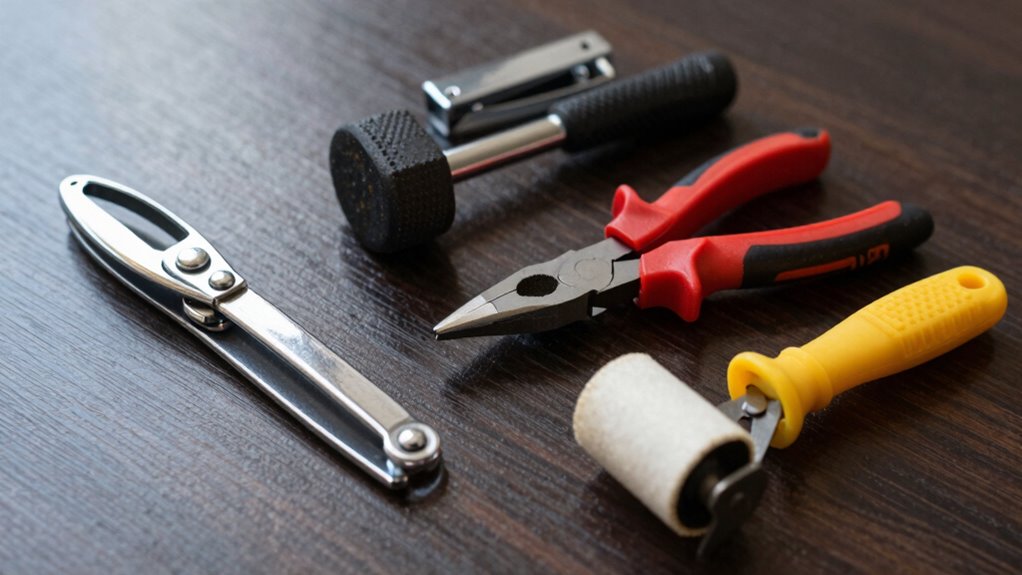

An upholstery tool kit for beginners includes essential tools like scissors, staple removers, and specialized cutting devices that make repair tasks easier and more precise. Using the right tools helps you work efficiently, prevents fabric damage, and produces a professional look. Match your tools with fabric types and follow proper maintenance practices to guarantee they last longer and work smoothly. If you keep exploring, you’ll gain even more tips to improve your upholstery projects.
Key Takeaways
- Upholstery tool kits contain essential tools like scissors, staple removers, and sewing tools for common repair tasks.
- Choosing the right tools based on fabric type and weight ensures efficient and damage-free repairs.
- Proper maintenance, such as sharpening scissors and cleaning staple removers, extends tool lifespan and performance.
- Matching tools to fabric characteristics helps achieve clean cuts and professional finishes.
- Understanding each tool’s function helps beginners troubleshoot issues and perform repairs effectively.
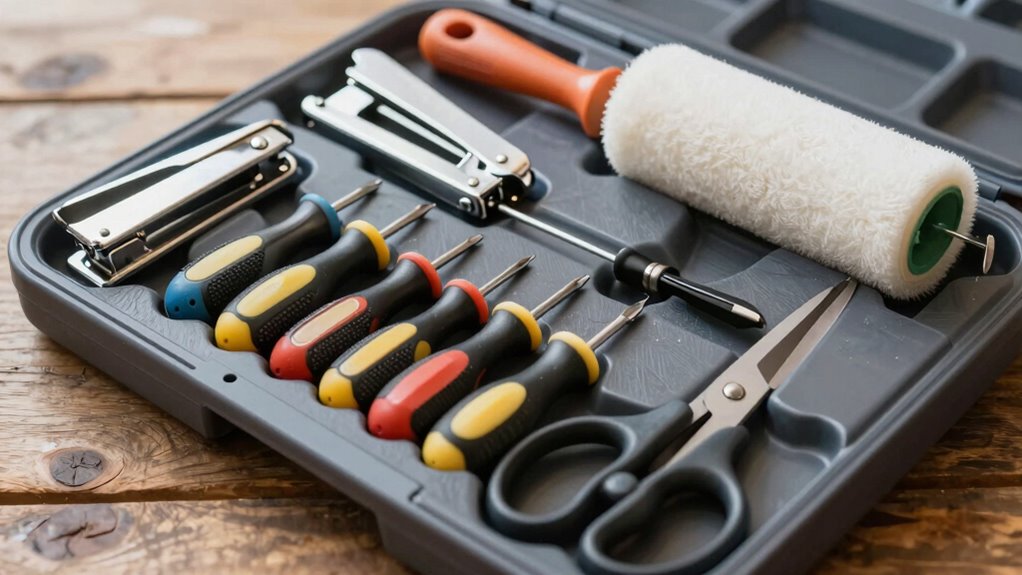
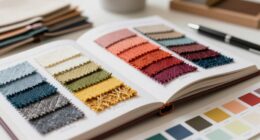
Ever wondered how to make upholstery repairs easier and more efficient? The key lies in understanding the right tools and how to use them effectively. When you’re starting out, an upholstery tool kit becomes your best friend. These kits typically include everything you need to tackle common repair tasks, but knowing how to choose the right tools and maintain them makes all the difference. First, focus on fabric selection. Picking the correct fabric is essential because it influences how easily you can work on the project and the overall durability of your repair. Softer fabrics may be easier to manipulate, but they might not withstand heavy use, while more robust fabrics require specific tools for cutting and sewing. Your upholstery tool kit should include scissors or snips designed for fabric, which help you make clean cuts without fraying the material. It’s also important to regularly practice tool maintenance—keeping your scissors sharp, your staple removers clean, and your sewing needles in good condition guarantees smooth operation and prevents damage to delicate fabrics. Proper tool maintenance ensures your toolkit remains effective and extends the lifespan of your tools. Additionally, understanding the different fabric types and their specific requirements can help you select the most suitable tools for each job. When you’re handling fabric, your choice of tools impacts the quality and efficiency of your repair. Sharp scissors or snips from your toolkit make it easier to cut through different fabric types cleanly, saving time and reducing frustration. Furthermore, selecting the right tools for specific fabric characteristics, such as weight and texture, can significantly improve your results. Also, familiarizing yourself with tool functionality can help you troubleshoot issues quickly and avoid damage during your projects. Properly understanding the correct tool for each task can streamline your work and prevent unnecessary mistakes. Additionally, using a staple remover properly helps you take out old staples without tearing the fabric, which is especially important if you plan to reuse the material or want a neat finish. Regularly maintaining your tools also extends their lifespan; for example, oiling mechanical parts of staple removers and sharpening scissors guarantees they stay in top shape. This not only makes your work easier but also results in a more professional look. When selecting fabric, consider the weight and texture, and match it with the appropriate tools from your kit to avoid damaging the material.

PLANTIONAL Upholstery Repair Sewing Kit, Heavy Duty Sewing Kit with Sewing Awl, Seam Ripper, Leather Hand Sewing/Stitching Needles, Sewing Thread for Car/Sofa/Backpack/Shoe, Craft DIY, 10 Color, 47Pc
【Heavy Duty Sewing Kit】- This comprehensive sewing kit includes 32 leather sewing needles, 10 leather sewing threads (30…
As an affiliate, we earn on qualifying purchases.
As an affiliate, we earn on qualifying purchases.
Frequently Asked Questions
Are Upholstery Tool Kits Suitable for Heavy-Duty or Professional Use?
Yes, upholstery tool kits can be suitable for heavy-duty or professional use if they feature high tool durability and include professional accessories. Look for kits made from sturdy materials like stainless steel or heavy-duty plastic, designed to withstand frequent use. Professional accessories such as specialized tacking tools or seam rippers enhance performance. While some beginner kits work for light projects, investing in a robust set guarantees longevity and effectiveness for demanding upholstery tasks.
Can I Use Upholstery Tools on All Fabric Types?
Yes, you can use upholstery tools on many fabric types, but it’s crucial to take into account fabric compatibility and tool versatility. Some fabrics like delicate silk or velvet may require gentle tools, while tougher materials like denim or leather need more robust tools. Always check your kit’s options and your fabric’s requirements to avoid damage. With the right tools and knowledge, you’ll handle various fabrics effectively and achieve professional results.
How Do I Maintain and Clean My Upholstery Tools Effectively?
To keep your upholstery tools in top shape, think of tool storage as your secret weapon, protecting them from dust and damage. Regularly clean your tools with gentle cleaning solutions tailored to their material—avoid harsh chemicals that could cause wear. After use, wipe them down, dry thoroughly, and store them properly. This routine extends their lifespan, ensuring you always have reliable tools ready for your next upholstery project.
Are There Specific Tools Needed for Antique or Delicate Furniture?
For antique furniture or delicate fabrics, you’ll need fine, gentle tools like soft-bristled brushes and small, precision tools to avoid damage. Use a vacuum with a soft brush attachment to carefully clean surfaces. For intricate detailing, consider micro-needles or delicate scrapers. Always test on a hidden area first, and avoid harsh chemicals. These specialized tools help preserve the beauty and integrity of your antique pieces and delicate fabrics.
What Safety Precautions Should I Take When Using Upholstery Tools?
You might think safety gear slows you down, but it’s vital for safe tool handling. Always wear gloves and eye protection to prevent injuries from sharp tools or flying debris. Keep your workspace clear and well-lit to avoid accidents. Take your time with each step, and follow manufacturer instructions carefully. Prioritizing safety gear and mindful tool handling guarantees you protect yourself while confidently transforming furniture.

Fabric Scissors Professional 10 inch Heavy Duty Scissors for Leather Sewing shears for Tailoring Industrial Strength High Carbon Steel Tailor Shears Sharp for Home Office Artists Dressmakers
ULTRA SHARP FABRIC SHEARS: Made of high carbon steel which is stronger than stainless steel, the craft scissors…
As an affiliate, we earn on qualifying purchases.
As an affiliate, we earn on qualifying purchases.
Conclusion
So, next time you consider tackling upholstery, remember that having the right tool kit can make all the difference. While some say you only need a few basic tools, investing in a thorough kit often leads to smoother projects and better results. The truth? Quality tools actually save you time and frustration in the long run. With the right kit, you’re well on your way to transforming and revitalizing your furniture with confidence.

Heavy Duty Staple Remover, Upholstery Staple Puller Lifter Tool for Carpet, Hardwood Floors, Furniture, Construction | COMBATCH
【Effortless Staple Removal】Designed with a 30° bent rod, this heavy-duty staple remover tool provides optimal leverage to easily…
As an affiliate, we earn on qualifying purchases.
As an affiliate, we earn on qualifying purchases.

BAGERLA Upholstery Repair Kit, 50 Pcs Heavy Duty Sewing Kit with 8 Colors Thread 32 Pcs Upholstery Needles, Sewing Awls for Hand Stitching Car Sofa Shoe Backpack Craft DIY
Complete Upholstery Repair Kit: The sewing kit includes 8 colors of sewing thread, 32 pcs needles, 2 pcs…
As an affiliate, we earn on qualifying purchases.
As an affiliate, we earn on qualifying purchases.