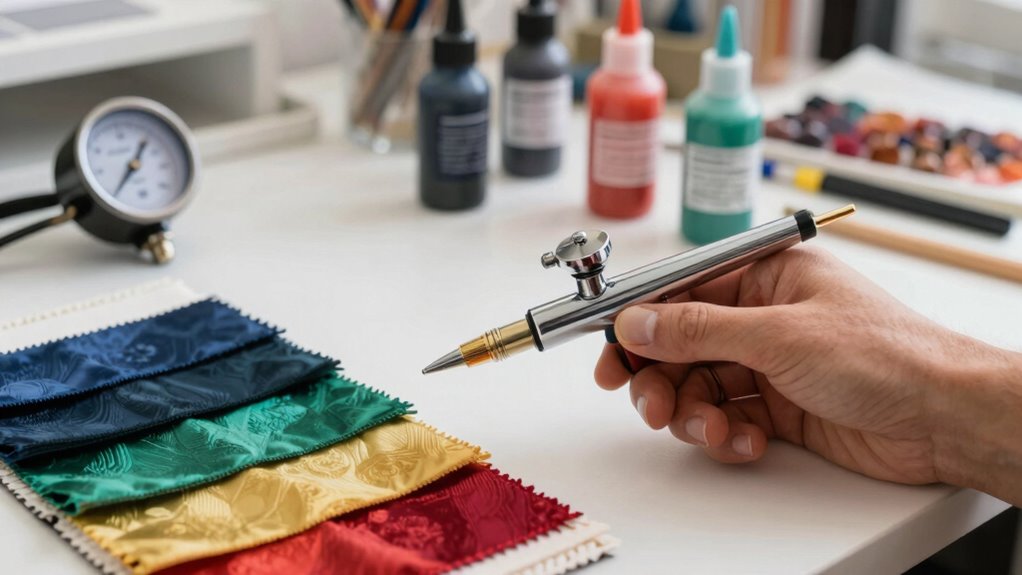

A good airbrush setup for textile art involves choosing a dual-action, gravity-fed airbrush for better control, detail, and even paint flow. Guarantee your compressor provides consistent airflow and is well-maintained to avoid pressure fluctuations. Regularly clean your tools and use the right accessories for comfort and precision. Properly mix and thin your paints for smooth application. By paying attention to these details, you’ll produce professional, vibrant designs—keep exploring to master the process.
Key Takeaways
- Use a dual-action, gravity-fed airbrush for precise control and smooth paint flow on textiles.
- Ensure the compressor delivers consistent airflow with adjustable pressure for detailed work.
- Regularly clean and maintain the airbrush and accessories to prevent clogs and ensure vibrant results.
- Mix and dilute textile paints properly for even application and sharp gradients.
- Test spray patterns and adjust pressure settings on scrap fabric before working on the final piece.
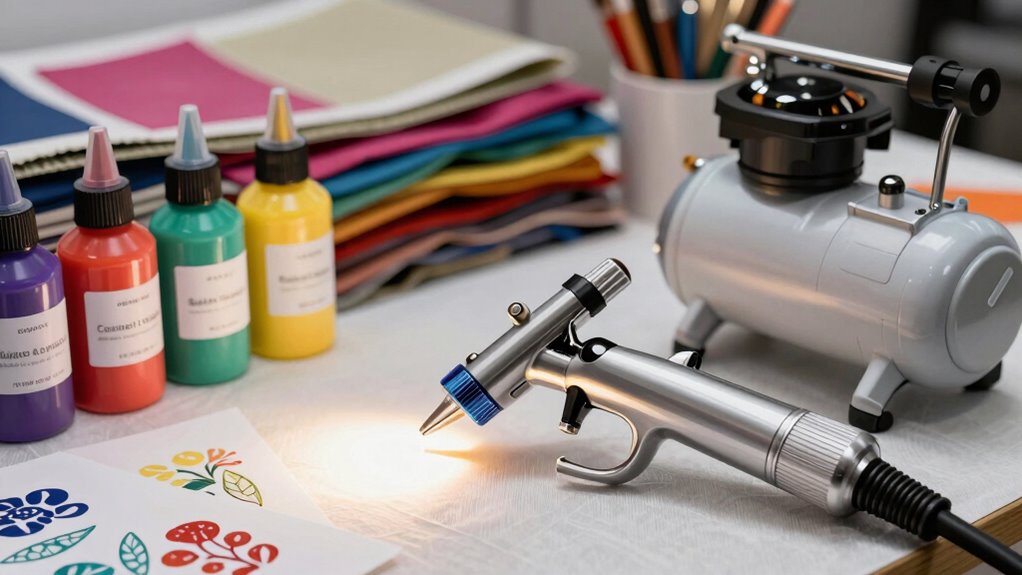
Setting up an airbrush for textile art involves more than just connecting the tool; it requires careful preparation to guarantee smooth and precise application. The first step is selecting the right airbrush for your needs. A dual-action, gravity-fed airbrush often works best because it allows better control over paint flow and detail. Before you start, verify your compressor provides consistent airflow without sudden pressure changes, as this consistency is essential for achieving even coverage and fine details.
Once your equipment is ready, focus on the airbrush itself. Regular airbrush maintenance is essential to keep your tool functioning smoothly. This includes cleaning the needle and nozzle thoroughly after each use to prevent clogging and paint buildup. Use appropriate cleaning solutions recommended for textile paints, and take care to disassemble and inspect parts regularly. Well-maintained equipment not only extends its lifespan but also guarantees that your lines stay crisp and your colors stay true. Proper equipment maintenance is fundamental for achieving professional results. Additionally, investing in quality airbrush accessories can help improve your overall control and comfort during extended projects.
Regularly clean and inspect your airbrush for crisp lines and vibrant colors.
Color mixing is another fundamental aspect of a good textile airbrush setup. Before you begin spraying on fabric, spend time preparing your paints. Mix colors thoroughly to achieve the desired hue, and consider diluting paints to the right consistency. Textile paints tend to be thicker than regular acrylics, so adding a small amount of textile medium or water can help create a smooth, sprayable consistency. Proper color mixing prevents uneven application, streaks, or clogging, which can ruin your design. Also, keep your palette organized to avoid accidental contamination of colors, especially when working with multiple shades. Ensuring proper paint consistency is key to achieving smooth gradients and sharp details. Incorporating air pressure adjustments during setup can also significantly impact the quality of your spray pattern and overall results. Furthermore, understanding the correct spray techniques can greatly enhance your control over the application and outcome of your textile art.
When setting up for a project, always test your spray pattern on a scrap piece of fabric first. This allows you to fine-tune the pressure settings, paint consistency, and nozzle adjustments. Adjust your air pressure to match the detail level of your design—lower pressure for fine lines, higher for background coverage. Consistent testing ensures you’re comfortable with the setup and helps avoid mistakes on your final piece. Remember, maintaining your airbrush regularly, especially cleaning after each session, keeps your spray pattern consistent and prevents clogging that can mess up your work.

Air Brush 0.3mm Gravity Feed Dual-Action Airbrush Paint Spray Gun Kit Set Airbrush Kit Air Brush Painting Set for Nails Painting Art Craft
This airbrush has a comfortable composite handle balance, the airbrush kit includes a 7cc colored cup with vented…
As an affiliate, we earn on qualifying purchases.
As an affiliate, we earn on qualifying purchases.
Frequently Asked Questions
How Do I Clean My Airbrush Properly After Textile Painting?
To clean your airbrush properly after textile painting, start with cleaning techniques like running water or a suitable cleaning solvent through the brush immediately after use. Disassemble the parts and gently brush out any residual paint. Follow maintenance tips such as regularly checking for clogs and lubricating moving parts. This guarantees your airbrush stays in top condition, prolongs its lifespan, and guarantees smooth, precise application for your future textile art projects.
What Type of Compressor Is Best for Textile Airbrushing?
Think of your compressor as the heartbeat of your textile art—choose a quiet, oil-free model with consistent pressure. A silent compressor minimizes noise, allowing you to focus on your creativity without distraction. It also simplifies airbrush maintenance, reducing the risk of clogging and uneven spray. Opt for a compact, lightweight compressor with adjustable pressure controls; this guarantees precise application and a smooth workflow, elevating your textile art to new heights.
Can I Use the Same Airbrush for Different Fabric Types?
Yes, you can use the same airbrush for different fabric types, but you need to take into account fabric preparation and paint compatibility. Always clean your airbrush thoroughly between projects to prevent color mixing. Adjust your paint consistency to match the fabric’s texture and make sure your paints are suitable for textiles. This way, you’ll achieve clean, vibrant results across various fabrics without damaging your equipment or artwork.
How Do I Prevent Paint Clogging in My Airbrush?
To prevent paint clogging, you should check the paint consistency, making sure it’s not too thick, which can cause blockages. Always clean your nozzle thoroughly after each use and perform regular nozzle maintenance to keep it clear. Using proper thinners and avoiding dried or old paint in the airbrush also helps prevent clogs. Consistent cleaning and maintaining the best paint consistency to guarantee smooth, clog-free spraying for your textile art projects.
What Safety Precautions Should I Take When Airbrushing Textiles?
When airbrushing textiles, you should prioritize ventilation safety by working in a well-ventilated area or using an exhaust system to avoid inhaling fumes. Always wear protective gear like a mask, goggles, and gloves to shield your skin and eyes from paint particles. Keep your workspace clean and well-organized, and avoid eating or drinking nearby. These precautions guarantee your safety and help you create art comfortably and responsibly.

Timbertech Airbrush Kit With Compressor AS18-2K Basic Start Kit With Air Hose, Cleaning Brushes, and Test Paints for Hobby, Body Tattoo, Model painting, Automotive Graphic, Make-up
Oil-less piston, maintenance free, portable, quiet (47db), Built-in carry handle. Perfect for nails paiting, temporary tattoos, cake decorating,…
As an affiliate, we earn on qualifying purchases.
As an affiliate, we earn on qualifying purchases.
Conclusion
With the right airbrush setup, you’re like an artist wielding a finely tuned instrument, ready to paint your textile canvas with precision and passion. Your tools become an extension of your creativity, turning blank fabric into a vibrant masterpiece. When your setup is optimized, every spray flows effortlessly, revealing endless possibilities. Remember, a good airbrush setup is the key to bringing your textile art dreams to life—like a compass guiding you through a sea of colorful potential.
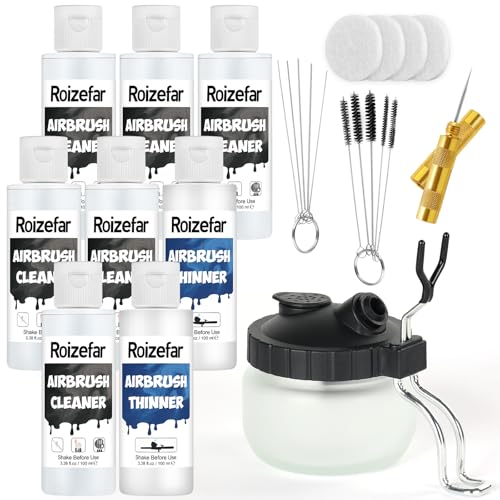
Roizefar Airbrush Cleaning Kit, Airbrush Cleaning Pot with 6 Airbrush Cleaner and 2 Thinner (3.38 oz/ 100 ml) Easily Works with Water-Based and Acrylic Paints, Perfect for Airbrushes and Art Tools
Airbrush Cleaning Kit: Roizefar cleaning kit contains 6 * 3.38 fl.oz airbrush cleaner, 2 * 3.38 fl.oz airbrush…
As an affiliate, we earn on qualifying purchases.
As an affiliate, we earn on qualifying purchases.

10PCS Palette Knife, Stainless Steel Painting Knife Set, Flexible Spatula Pallet Knife, Metal Artist Knives, Oil Painting Accessories Color Mixing Scraper for Oil, Canvas, Acrylic Painting By CUALORK
【RELIABLE QUALITY】This palette knife is sturdy and lightweight, blade made of stainless steel, it is resilience、flexible and anti-resistant;…
As an affiliate, we earn on qualifying purchases.
As an affiliate, we earn on qualifying purchases.