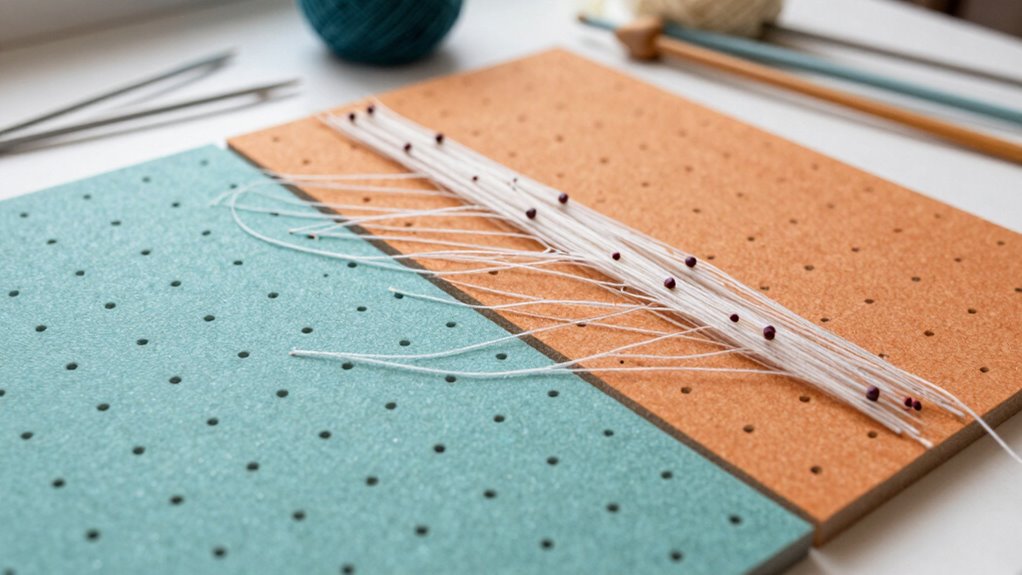
Using a blocking board helps you shape your fiber projects for a professional finish. It allows you to set pieces to the correct dimensions, smooth out uneven edges, and control yarn tension during shaping. Proper blocking improves stitch uniformity, enhances fabric drape, and creates a polished look. Different techniques suit various fibers, making your project look its best. Keep exploring to discover how the right blocking method can take your craftsmanship to the next level.
Key Takeaways
- Blocking boards shape and set finished pieces for a professional, polished appearance.
- They help achieve precise dimensions and proper sizing of fiber projects.
- Using a blocking board smooths out uneven stitches and edges for a clean finish.
- They enhance yarn tension control, improving the overall drape and pattern detail.
- Proper blocking with a board elevates the quality and presentation of knitted or crocheted items.

When you’re working on fiber projects like knitting or crochet, blocking boards become an essential tool to shape and set your finished pieces. They help you achieve the perfect dimensions, smooth out uneven stitches, and give your project a professional finish. One of the main reasons blocking boards are so valuable is because they allow you to control yarn tension effectively. As you work, maintaining consistent yarn tension is crucial for uniform stitches and proper sizing. But even the most even tension can result in slight irregularities or an unrefined look if the project isn’t properly blocked. That’s where blocking techniques come into play. By carefully stretching and pinning your piece to a blocking board, you can relax tight stitches, straighten edges, and ensure the final shape aligns with your pattern’s specifications. Proper fiber handling is essential to achieve the best results with blocking techniques.
Choosing the right blocking technique depends on the fiber type and the project’s goals. For example, wet blocking involves soaking your piece in water, gently squeezing out excess moisture, then laying it flat on a blocking board. You stretch and pin the piece to the desired measurements, allowing the fibers to set as they dry. This technique is especially effective for natural fibers like wool or cotton, which respond well to moisture and heat. On the other hand, steam blocking involves using steam from an iron or steamer to relax fibers without fully saturating the material. This method is quicker and ideal for delicate fibers or projects where you want to avoid water marks. Both techniques, when used with a blocking board, help you manipulate yarn tension and shape your project precisely. Proper fiber preparation can also enhance the effectiveness of your blocking process. Additionally, selecting the appropriate blocking surface can make a significant difference in achieving optimal results.
The benefit of using a blocking board extends beyond just shape. It also helps to even out tension across the entire piece, eliminating puckers or uneven edges that might have developed during knitting or crochet. When you pin your project to a blocking board, you can stretch the fibers gently to ensure all sides are even, which improves the overall look and drape. Proper blocking makes your stitches appear more uniform and highlights your pattern details. It’s an essential step to elevate your fiber projects, especially if you plan to gift or sell your work. By mastering blocking techniques and paying attention to yarn tension throughout your process, you’ll find that your finished projects look more polished, professional, and ready to showcase.
As an affiliate, we earn on qualifying purchases.
Frequently Asked Questions
Can I Use a Regular Board Instead of a Blocking Board?
You can use a regular board as a DIY solution, but it’s not ideal for blocking fiber projects. Alternative materials like foam boards or cork boards work better because they provide a gentle, even surface without damaging your work. Regular boards might be too rigid or uneven, affecting your project’s shape. For the best results, choose a surface specifically designed for blocking or create a suitable DIY alternative to guarantee your project maintains its intended form.
How Do I Choose the Right Size Blocking Board?
You should choose a blocking board size based on your project’s dimensions, ensuring it’s large enough to accommodate your work with some extra space for manipulation. While blocking board alternatives exist, essential tools like a properly sized blocking board make the process easier and more precise. Look for a size that matches your projects, whether small or large, and provides enough room for stretching and shaping fibers without crowding.
Is a Blocking Board Necessary for All Fiber Projects?
A blocking board isn’t necessary for all fiber projects, but it’s highly recommended for achieving professional, polished results. Blocking techniques help set the shape, size, and drape of your finished piece, making your project look neat and consistent. For complex or delicate fibers, fiber project tips suggest using a blocking board to prevent distortion and guarantee proper sizing. So, while not always vital, a blocking board can make a big difference.
How Do I Clean and Maintain My Blocking Board?
To keep your blocking board clean and well-maintained, start with gentle cleaning techniques like wiping it down with a damp cloth after each use. Avoid harsh chemicals that could damage the surface. Regular maintenance tips include dusting it regularly and checking for any warping or damage. Store it in a dry, cool place to prevent warping and prolong its lifespan. Proper care guarantees your board stays in top shape for your next project.
Can I Reuse My Blocking Board for Different Projects?
Yes, you can reuse your blocking board for different projects, but you should consider project storage and material compatibility first. Make sure your board’s surface is clean and free of residue to prevent damage or distortion to new fibers. For different projects, adjust your pins and layout accordingly. While reuse is practical, always inspect the board for wear, and clean it thoroughly to maintain its effectiveness across various fiber projects.
Conclusion
You might think blocking boards are just a convenient tool, but they’re actually essential for shaping perfect fiber projects. Some believe blocking is unnecessary, but studies show it markedly improves the final look and feel of your work. Embracing blocking boards isn’t just about aesthetics—it’s about ensuring durability and precision. So next time you finish a fiber piece, remember: a simple blocking board could be the key to achieving professional-quality results you’ll love to show off.