
In busy sewing setups, bobbin winders are your go-to tools for quick, consistent threading. They automate winding onto bobbins, saving you time and effort. Manual models work for basic needs, while electric ones suit high-volume tasks. Proper tension is key to prevent thread issues, and choosing compatible, eco-friendly materials helps improve your sewing results. If you’re curious about how different types work and tips for ideal use, keep exploring further.
Key Takeaways
- Bobbin winders automate thread winding, increasing efficiency and consistency in busy sewing environments.
- They come in manual and electric models, catering to different project scales and skill levels.
- Proper thread tension control is vital for secure, even winding and high-quality bobbins.
- Material compatibility ensures damage-free winding and optimal sewing results.
- Using bobbin winders saves time, reduces frustration, and enhances overall sewing productivity.
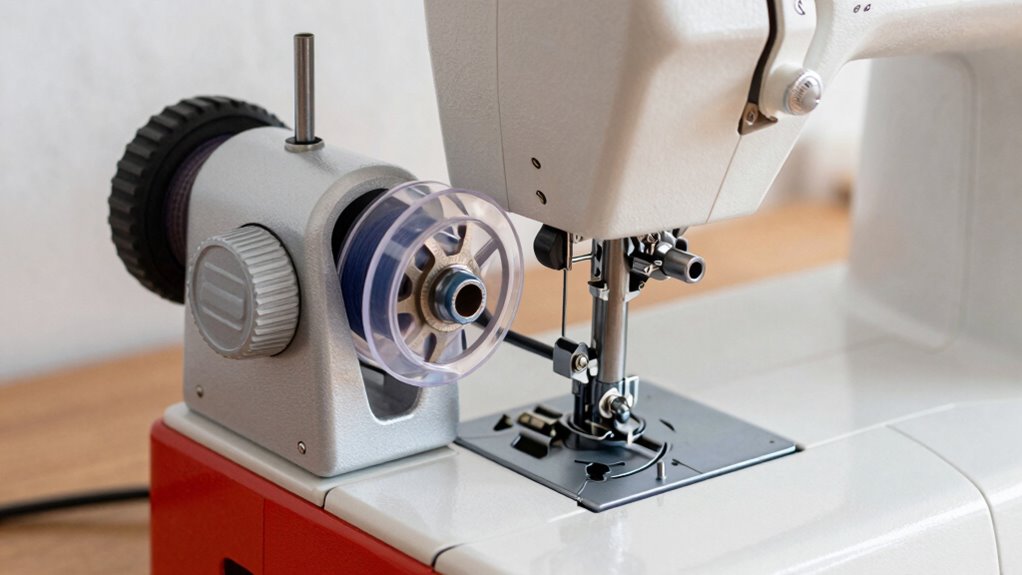
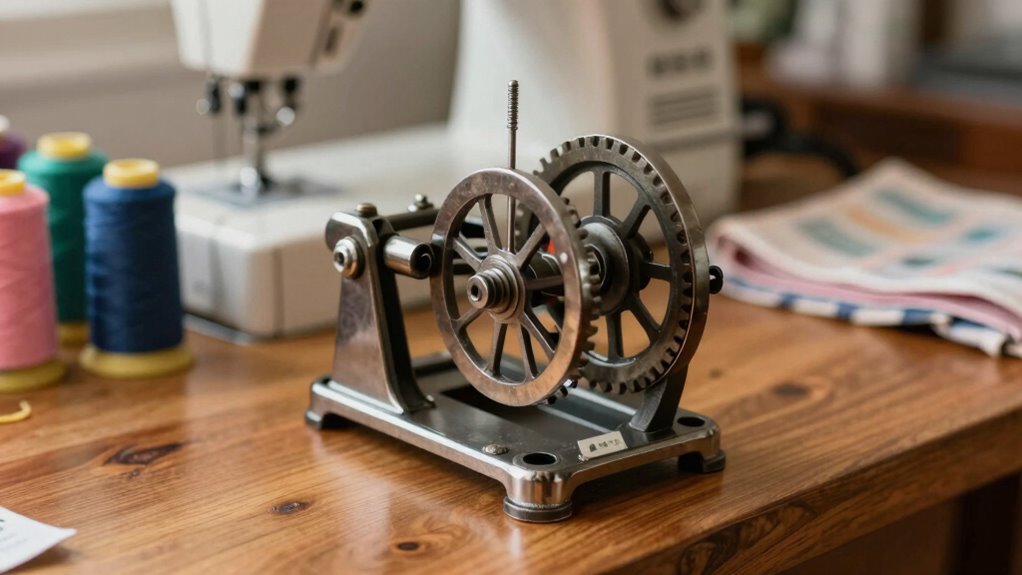
Have you ever wondered how spools of thread or yarn are neatly wound and ready for use? It’s all thanks to bobbin winders—tools that make the process quick, efficient, and consistent. When you’re juggling multiple projects or running a busy sewing setup, having a reliable bobbin winder can save you a lot of time and frustration. These devices automatically wind thread onto bobbins, guaranteeing each one is prepared for sewing without you needing to manually do the job. They come in various styles, from simple manual models to sophisticated electric machines, but their core function remains the same: to produce uniform, high-quality bobbins efficiently.
One of the most vital aspects to think about when using a bobbin winder is thread tension. Proper tension ensures that the thread winds smoothly onto the bobbin without slack or tightness, which could lead to issues during sewing. If the tension is too loose, the thread might unravel or cause uneven stitches. On the other hand, if it’s too tight, it can strain the thread or damage the bobbin. Many bobbin winders come with tension control features, allowing you to fine-tune the tension to suit different types of thread. This control is especially helpful if you work with a variety of materials, as different fabrics and threads require specific tension settings to achieve the best results. Understanding material compatibility is crucial for ensuring your threads are wound securely and without damage. Additionally, being aware of the biodiversity related to thread production can inspire more sustainable choices in your sewing practices. Recognizing the environmental impact of thread manufacturing can also influence your selection of eco-friendly materials and practices.

LRDCREEE Automatic Bobbin Winder Bobbin Winding Machine with Auto Stop Sensor, Large Spool Thread Holder and Extra 25 Pcs Class 15 Bobbins for Sewing Machine Thread Winding Use
- Compact and Portable Design: Ideal for quick, on-the-go winding
- Large Spool Holder: Fits various spool sizes for versatility
- Auto Stop Sensor: Prevents overfilling and thread wastage
As an affiliate, we earn on qualifying purchases.
As an affiliate, we earn on qualifying purchases.
Frequently Asked Questions
Can Bobbin Winders Be Used for All Types of Thread?
Yes, you can use bobbin winders for most types of thread, but consider your thread storage and winding speed. Some threads, like metallic or specialty ones, need gentle handling to prevent damage. A good bobbin winder adjusts winding speed smoothly, ensuring even tension. This helps you quickly switch between thread types without risking thread breakage or uneven winding, making your sewing setup more efficient and organized.
How Do I Choose the Right Bobbin Winder for My Sewing Machine?
Choosing the right bobbin winder means balancing precision with efficiency. You want a machine that maintains proper thread tension without sacrificing winding speed, especially during busy projects. Look for features like adjustable tension controls and quick winding options to match your sewing machine’s compatibility. Consider your typical workload—if you sew often, invest in a durable, high-speed winder. Ultimately, the best choice guarantees smooth, consistent bobbins every time you sew.
Are Automatic Bobbin Winders Compatible With Hand-Sewing Threads?
Automatic bobbin winders are typically not compatible with hand-sewing threads because of thread compatibility issues. They’re designed for standard machine threads, and using delicate or specialty hand-sewing threads can cause jams or damage. If you prefer manual winding for delicate threads, it provides you with better control and reduces the risk of tangling or breakage. Always check your winder’s specifications to confirm compatibility before trying to wind hand-sewing threads automatically.
What Maintenance Is Required for a Bobbin Winder?
You need to regularly check your bobbin winder’s thread tension and winding speed to guarantee smooth operation. Clean the machine’s parts to prevent dust buildup, tighten any loose screws, and lubricate moving components as needed. Replace worn-out parts promptly, and avoid overloading the winder to prevent damage. By maintaining proper thread tension and consistent winding speed, you keep your bobbin winder functioning efficiently and prolong its lifespan.
Can a Bobbin Winder Improve Sewing Project Efficiency?
Yes, a bobbin winder can improve your sewing project efficiency. It allows you to quickly wind multiple bobbins, saving time during your sewing sessions. By adjusting thread tension and winding speed, you guarantee consistent, high-quality bobbins, reducing thread breakage and interruptions. This streamlined process helps you stay focused and productive, especially during busy projects where efficiency counts.
Conclusion
Once, I watched a sewing enthusiast meticulously wind bobbins by hand, frustration mounting with each loop. Then, they discovered a bobbin winder, transforming that tedious task into a quick, smooth process—like switching from a slow trickle to a steady stream. Just as a reliable water pump keeps your garden thriving, a good bobbin winder keeps your sewing setup flowing effortlessly. Invest in one, and you’ll find your sewing day becomes less about fuss and more about creating.