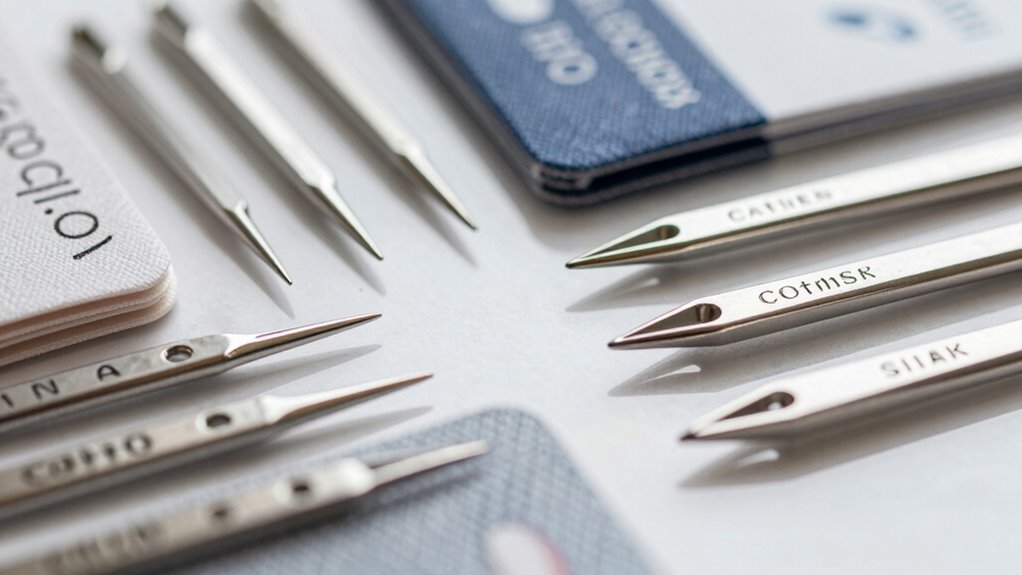

Choosing the right machine needle set depends on your fabric type. For delicate fabrics like silk or chiffon, use fine needles like size 60/8 or 70/10 to prevent puckering. For thicker materials like denim or canvas, opt for sturdier needles such as size 100/16 or 110/18. Stretch fabrics like spandex need ballpoint needles to avoid runs and snags. Understanding these differences helps you sew more professionally. Keep exploring to discover how each needle type improves your projects even further.

Get your wardrobe favorites delivered free with Prime
- Fast, free delivery on millions of items
- Prime Video, Amazon Music and more included
- Member-only deals all year
Key Takeaways
- Different fabric types require specific needle sets, such as fine needles for delicate fabrics and sturdier ones for heavier materials.
- Needle sets are categorized by fabric compatibility, including stretch, woven, or embroidery-specific options.
- Using the correct needle set ensures optimal stitch quality, fabric response, and machine performance.
- Properly organized needle sets help easily select the right needle for each fabric type and project.
- Regularly inspecting and replacing needles within sets maintains sewing precision across various fabric applications.
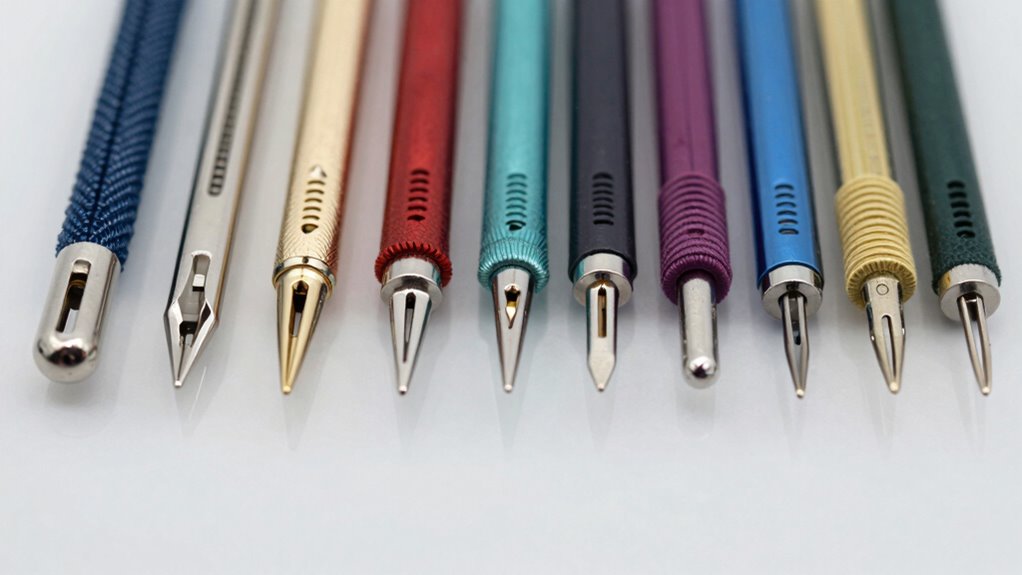
If you’re serious about sewing or embroidery, understanding machine needle sets is essential for achieving professional results. The right needle can make a significant difference in how your fabric responds, how your stitches look, and how smoothly your machine runs. When selecting needle sets, it’s crucial to consider the type of fabric you’ll be working with. Different materials demand specific needle types and sizes to ensure optimal embroidery techniques and to prevent issues like skipped stitches, puckering, or fabric damage. Having a good knowledge of fabric-specific needles also helps you make the most of your machine’s capabilities and produce clean, precise designs.
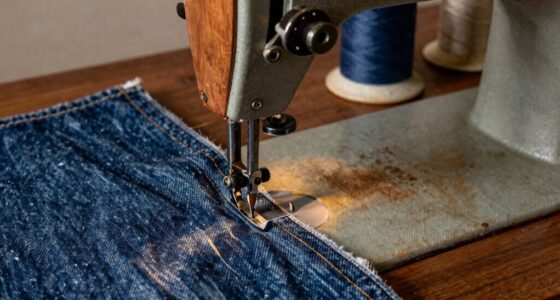
For delicate fabrics such as silk or chiffon, choose fine needles like size 60/8 or 70/10. These needles are sharp enough to penetrate lightweight materials without causing tears or runs. On the other hand, thicker fabrics like denim or canvas require sturdier needles, such as size 100/16 or 110/18, which provide the strength needed to sew through multiple layers without bending. For stretch fabrics like spandex or lycra, ballpoint needles are ideal because they push between the fibers rather than pierce them, avoiding runs or snags. When working with embroidery techniques that involve dense stitching, such as monograms or intricate designs, consider using embroidery needles designed to reduce thread breakage and improve thread flow. Proper needle selection is fundamental to achieving high-quality results and maintaining your machine’s longevity.
Having a well-organized needle storage solution is just as important as choosing the right needles. Proper storage prevents needles from becoming dull or bent and keeps your workspace tidy. Small, labeled containers or magnetic cases are excellent for sorting needles by size and type, making it easy to find the right one quickly. It’s also wise to keep a dedicated space for your needle sets, especially if you switch between fabrics often, so that you always have the correct needle on hand for each project. Proper storage solutions also help you keep track of your needles’ condition and prevent accidental injuries from rusty or bent needles. Additionally, maintaining your needles by regularly inspecting for signs of wear ensures consistent, high-quality stitching. Proper needle maintenance and using appropriate cleaning tools can also prolong the life of your needles and keep your machine running smoothly. By maintaining good needle storage solutions, you minimize the risk of errors and extend the life of your needles, saving you time and money. Additionally, regularly inspecting your needles for signs of wear ensures consistent, high-quality stitching.
machine sewing needle set for delicate fabrics
As an affiliate, we earn on qualifying purchases.
As an affiliate, we earn on qualifying purchases.
Frequently Asked Questions
How Often Should I Change My Machine Needles?
You should change your machine needles after every 8-12 hours of sewing or with each project, especially if you notice skipped stitches or uneven tension. Regularly check thread tension and needle alignment, as a dull or bent needle can cause fabric damage and poor stitch quality. Replacing needles frequently guarantees smooth sewing, consistent tension, and proper needle alignment, preventing issues and extending your machine’s life.
Can I Use a Universal Needle for All Fabric Types?
Think of a universal needle as a Swiss Army knife—designed to handle many tasks, but not all with perfection. While it offers universal compatibility, it’s best for general sewing. For delicate silk or heavy denim, fabric-specific needles provide the precision needed, ensuring smooth stitches and preventing damage. So, while you can use a universal needle across fabrics, investing in specific ones guarantees better results and sewing comfort.
What Are the Signs of a Dull Sewing Machine Needle?
You’ll notice a dull sewing machine needle by skipped stitches, snags, or uneven tension. As needle quality declines, it struggles to pierce fabric smoothly, affecting sewing speed and stitch quality. You might also see fabric puckering or thread breaking more often. To keep your machine running well, change needles regularly—especially if you notice these signs—to maintain peak sewing performance and prevent damage to your fabric or machine.
Are Special Needles Needed for Quilting or Embroidery?
Yes, you need special needles for quilting or embroidery. For quilting, use quilt-specific needles designed to handle multiple layers and thicker fabrics smoothly. For embroidery, select embroidery needle types, which have a larger eye to accommodate thicker embroidery threads and prevent breakage. These specialized needles help you achieve cleaner stitches, reduce thread breakage, and improve overall stitch quality, making your projects easier and more professional-looking.
How Do I Store Unused Needle Sets Properly?
To store unused needle sets properly, keep them in a clean, dry container to prevent rust and damage. Use needle storage cases that organize by size and type, making it easy to select the right needle later. Make certain the needles are stored with fabric compatibility in mind, avoiding exposure to moisture or extreme temperatures. Proper needle storage prolongs their life and maintains ideal performance for your sewing projects.
Conclusion
Remember, choosing the correct machine needle set for your fabric isn’t just a decision—it’s a difference-maker. By matching materials with the right needle, you guarantee seamless stitches, superior strength, and a smooth sewing experience. Don’t forget, using the proper needle set turns tedious tasks into terrific triumphs. So, stay savvy, select smartly, and sew with confidence—because the right needle nurtures perfection in every project, making your fabric feats flawless and fabulous.
Halloween Picks
halloween
As an affiliate, we earn on qualifying purchases.