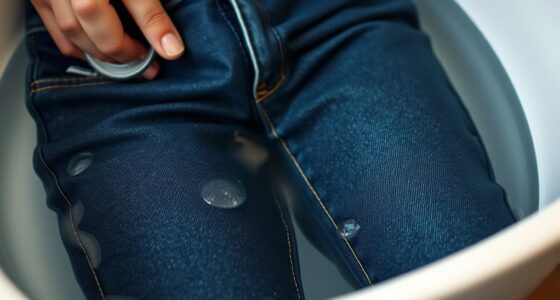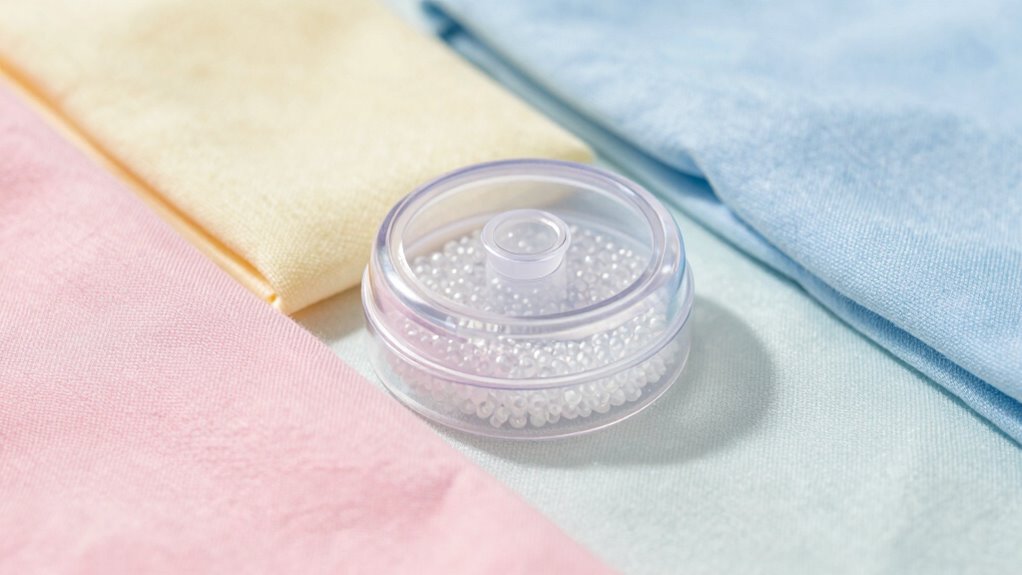

To protect your fabrics from moisture damage, using silica gel packs is a smart choice. These small packets absorb excess humidity, preventing mold, mildew, and fiber deterioration. Place them in drawers, storage bins, or garment bags for added safety. Since silica gel can become saturated over time, regular checks and recharging help maintain the best protection. Keep your textiles in top condition and discover more tips to maximize fabric preservation as you continue exploring.

Get your wardrobe favorites delivered free — and shop member deals
- Fast, free delivery on millions of items
- Access to Prime Big Deal Days deals on October 6–7
- Prime Video, Amazon Music and more included
Key Takeaways
- Silica gel effectively absorbs excess moisture, preventing mold, mildew, and fabric deterioration in storage.
- Small silica gel packets are easy to place in drawers, bins, or garment bags for continuous humidity control.
- Regularly check and recharge silica gel packs to maintain optimal moisture absorption and fabric protection.
- Proper humidity management with silica gel extends textile lifespan and preserves fabric quality over time.
- Besides silica gel, other humidity control options exist, but it remains a reliable, affordable solution for fabric storage.

When storing fabrics, excess moisture can quickly lead to mold, mildew, and fabric damage. That’s why using moisture absorbers is a clever move for anyone looking to preserve their textiles. Among the most effective options is silica gel, which is widely recognized for its excellent humidity control. You might have seen small packets labeled “Do Not Eat” in new shoes or electronics—those are silica gel packets, and they’re perfect for fabric storage, too. These tiny beads actively absorb moisture from the air, creating a drier environment that protects your fabrics from the dangers of excess humidity.
Humidity control is critical because even a small amount of moisture can cause fabrics to deteriorate over time. When you include silica gel in your storage containers, it works silently in the background, pulling moisture out of the air and trapping it within its pores. This not only prevents mold and mildew but also reduces the risk of fabric fibers weakening or discoloring. You don’t need large or complicated systems—small silica gel packs are easy to place within drawers, storage bins, or garment bags, offering an extra layer of protection without taking up much space. Proper humidity management is essential for maintaining the longevity of your stored textiles. Additionally, understanding the moisture absorption process can help you better maintain an optimal environment for your textiles.
To maximize effectiveness, it’s important to replace or recharge silica gel packs periodically. Over time, they become saturated with moisture and lose their ability to control humidity. Fortunately, many silica gel packs can be dried out and reused—simply heat them in an oven as directed, and they’ll regain their moisture-absorbing powers. Regularly checking your moisture absorbers ensures your fabrics stay in top condition. Besides silica gel, you can also look into other humidity control options, but silica gel remains one of the most dependable and affordable solutions for everyday fabric storage needs. Proper humidity management not only prolongs the life of your fabrics but also contributes to a healthier storage environment overall.
silica gel moisture absorber packs for fabric storage
As an affiliate, we earn on qualifying purchases.
As an affiliate, we earn on qualifying purchases.
Frequently Asked Questions
Are Moisture Absorbers Safe for All Fabric Types?
Moisture absorbers are generally safe for most fabric types, but you should check their chemical composition first. Some contain silica gel or calcium chloride, which can be harmful if ingested or if they leak onto fabrics. Always follow safety precautions, such as keeping them out of reach of children and pets, and avoid direct contact with delicate or sensitive fabrics. Proper usage minimizes risks and keeps your fabrics protected.
How Long Do Moisture Absorbers Typically Last?
Moisture absorbers typically last around 1 to 3 months, depending on humidity control and the absorber lifespan. You’ll notice them losing effectiveness as they become saturated, so it’s vital to replace or recharge them regularly. Factors like high humidity levels can shorten their lifespan, while lower humidity helps extend it. Keep an eye on their condition to guarantee your fabrics stay protected from moisture damage.
Can Moisture Absorbers Be Reused After Drying?
Yes, moisture absorbers can be reused after drying, offering incredible reusability benefits that save you money and reduce waste. To restore them, you’ll want to employ effective drying techniques like air drying or using a low-temperature oven. Once thoroughly dried, they regain their moisture-absorbing power, making them a smart, eco-friendly choice for ongoing fabric storage protection. Your efforts turn simple absorbers into long-lasting, sustainable guardians of your textiles.
Do Moisture Absorbers Affect Fabric Colors or Finishes?
Moisture absorbers generally don’t affect fabric colors or finishes if used properly. They’re designed to trap moisture without coming into direct contact with your fabrics, helping to maintain color preservation and finish protection. Just confirm you place them away from delicate dyes or finishes, and follow the instructions. When used correctly, they provide extra protection, keeping your fabrics safe from mold and mildew without risking damage to their appearance.
Are There Eco-Friendly Moisture Absorber Options Available?
Did you know that eco-friendly packaging options have increased by 40% in the last three years? Yes, there are eco-friendly moisture absorber options made from sustainable materials like clay, silica gel, or plant-based ingredients. These options help protect your fabrics without harming the environment. Using sustainable materials not only preserves your fabrics but also supports eco-conscious choices, making your storage both effective and environmentally responsible.
Conclusion
By using moisture absorbers, you can protect your fabrics from mold and mildew, ensuring they stay pristine longer. Did you know that humidity levels above 60% considerably increase the risk of fabric damage? Incorporating these smart solutions provides extra protection and peace of mind. So next time you store your favorite textiles, remember that a simple moisture absorber can make all the difference in maintaining their quality and longevity.
Fall Picks
fall essentials
As an affiliate, we earn on qualifying purchases.