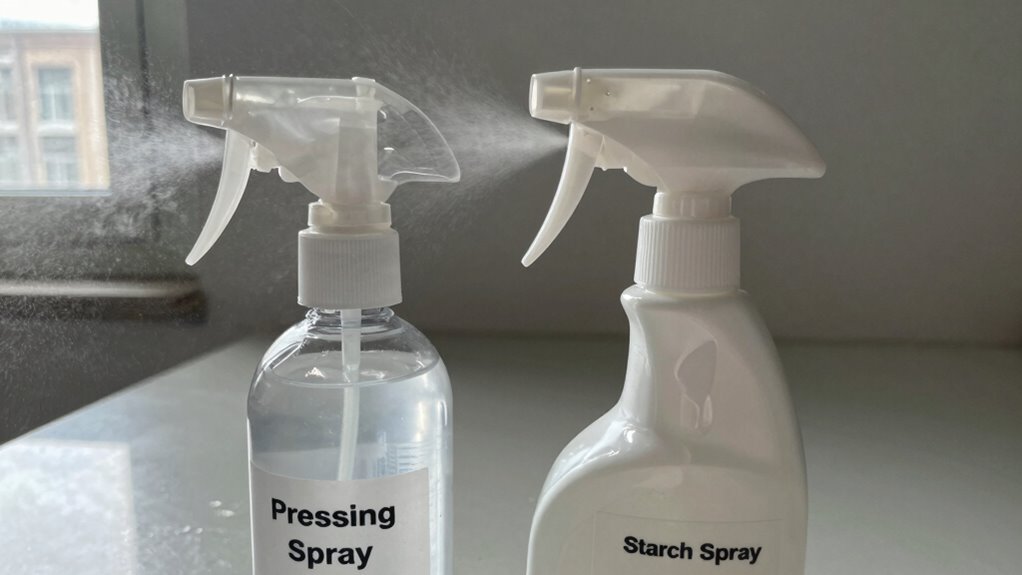

Pressing sprays help you achieve a smooth, wrinkle-free surface by relaxing fabric fibers and reducing static, perfect for finishing delicate items. Starch sprays, on the other hand, add stiffness and structure to garments, giving them a crisp, polished look, especially on shirts or collars. Both products serve different purposes—pressing sprays focus on smoothness, while starch sprays focus on shaping. To master each technique and get the best results, continue exploring their differences and proper usage.

Get your wardrobe favorites delivered free — and shop member deals
- Fast, free delivery on millions of items
- Access to Prime Big Deal Days deals on October 6–7
- Prime Video, Amazon Music and more included
Key Takeaways
- Pressing sprays relax fabric fibers for smoother ironing, while starch sprays add stiffness and structure.
- Pressing sprays create a light mist for finishing, whereas starch sprays are thicker and used to shape garments.
- Pressing sprays reduce static and prevent damage, while starch sprays help maintain crisp lines and a professional look.
- Overuse of starch can make fabric stiff and plasticky; pressing sprays mainly improve ironing ease.
- Choosing the right spray depends on whether the goal is a smooth finish or a crisp, structured appearance.
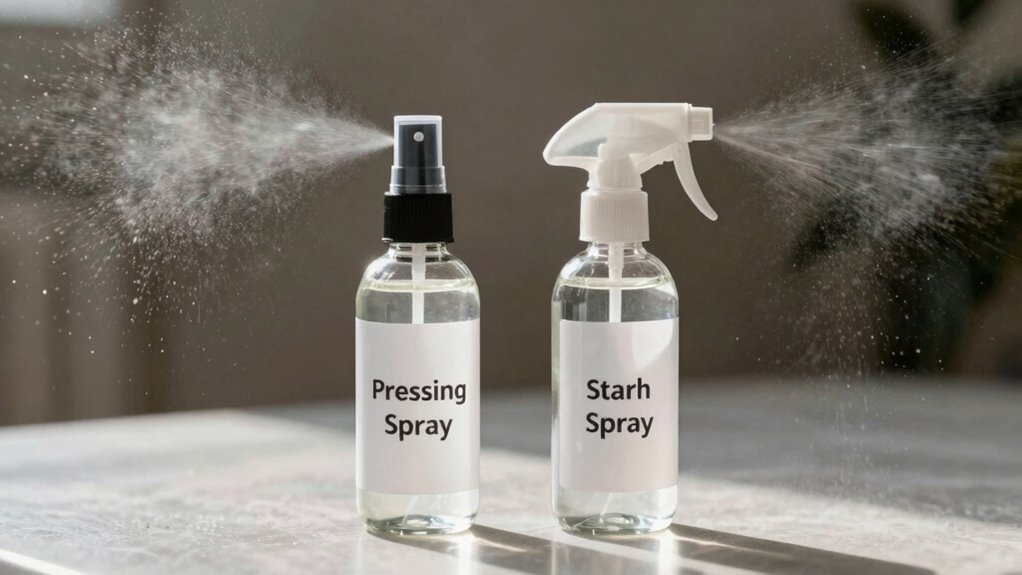
Have you ever wondered how professional stylists achieve crisp, wrinkle-free garments with ease? The secret often lies in the strategic use of pressing sprays and starch sprays. While they might seem similar, they serve distinct purposes in the process of fabric finishing and garment shaping. Understanding the difference helps you use each product effectively, guaranteeing your clothes look polished and professional every time.
Pressing sprays are designed to make the ironing process smoother and more efficient. They work by dampening the fabric slightly, which helps relax fibers and release stubborn wrinkles. When you spray a pressing spray onto your garment, it creates a light mist that penetrates the fabric, allowing the iron to glide effortlessly across the surface. This not only speeds up the pressing process but also minimizes the risk of shining or scorching delicate fabrics. The primary goal here is fabric finishing—achieving that smooth, flawless surface without damaging the material. Pressing sprays are also handy for setting pleats or creases, helping them hold their shape longer. They’re especially useful for fabrics prone to static or static cling, which can make ironing more challenging. By providing a bit of lubrication, pressing sprays ensure your ironing experience is smoother and results are cleaner. Additionally, proper fabric finishing can help extend the lifespan of your garments by maintaining their appearance over time. Using the right application techniques can further enhance the effectiveness of these products and ensure a professional look. Incorporating a proper spraying technique can improve the overall effectiveness and help you achieve better results.
Pressing sprays smooth fabrics, relax fibers, and make ironing faster and safer for delicate materials.
On the other hand, starch sprays are more focused on garment shaping. They contain thicker, more concentrated starch solutions that help stiffen fabric, giving it a crisp, structured feel. When you spray starch onto your garment, it creates a firm barrier that holds its shape, which is particularly beneficial for dress shirts, collar stays, or any item requiring a sharp, defined look. The key with starch sprays is to apply them evenly and in moderation; too much can lead to a stiff, plasticky texture. The goal here is to enhance the garment’s form, making it look freshly pressed and maintaining its tailored appearance throughout the day. Starch sprays are also helpful for adding body to lightweight fabrics that tend to look limp or floppy. They are integral to garment shaping, allowing you to create clean lines and crisp edges that elevate your overall style. Proper application of starch can also prevent fabric from becoming overly brittle or prone to cracking. To avoid an overly stiff finish, many stylists recommend testing on a small section first to gauge the desired level of stiffness.
In essence, while both pressing sprays and starch sprays contribute to a polished appearance, they do so in different ways. Pressing sprays focus on fabric finishing—making the surface smooth and wrinkle-free—whereas starch sprays are mainly about garment shaping—adding stiffness and structure. Using each correctly helps you achieve professional-looking results, whether you’re pressing a delicate silk blouse or shaping a crisp cotton shirt. Mastering their differences ensures your clothes not only look great but also maintain their shape and finish longer. Recognizing the difference in their functions allows you to better select the appropriate product for your specific fabric and desired outcome.
pressing fabric spray for ironing
As an affiliate, we earn on qualifying purchases.
As an affiliate, we earn on qualifying purchases.
Frequently Asked Questions
Can Pressing Sprays Damage Delicate Fabrics?
Yes, pressing sprays can damage delicate fabrics if you’re not careful. The fabric safety depends on the chemical composition of the spray; some contain alcohol or other harsh chemicals that may weaken or discolor fragile materials. Always check the label and test on a small, inconspicuous area first. Using the right spray for delicate fabrics and applying it sparingly helps prevent damage and keeps your fabrics looking their best.
Are Starch Sprays Suitable for All Types of Clothing?
Starch sprays aren’t suitable for all types of clothing because fabric compatibility varies. You should check labels before applying starch, as delicate fabrics like silk or wool may get damaged. For sturdy fabrics like cotton or linen, starch application works well to add crispness and hold. Always test a small area first to prevent staining or damage. When used correctly, starch sprays can enhance your garments’ appearance without harm.
How Long Does the Effect of Pressing Spray Last?
The fabric finish from pressing spray can dance on your clothes for about a day or two, depending on wear and washing. Spray longevity varies like a fleeting breeze—hot and humid conditions shorten it, while gentle handling helps it stay. Think of it as a delicate shield, offering crispness and shine, but it requires touch-ups to keep that polished look alive, especially after wearing or laundering.
Can Starch Sprays Be Used on Upholstery or Drapes?
You can use starch sprays on upholstery or drapes, but you should be cautious. Starch sprays can cause fabric damage over time or leave chemical residue that’s hard to remove. Always test a small, hidden area first to see how the fabric reacts. If the fabric is delicate or prone to damage, avoid using starch sprays altogether. Proper testing helps prevent unintended damage and keeps your textiles looking their best.
Are There Any Health Risks Associated With Inhaling Starch Spray Fumes?
Think of starch spray fumes as silent invaders—they can pose health hazards if inhaled regularly. You might experience respiratory risks like coughing or irritation, especially if you’re sensitive or expose yourself often. While occasional use isn’t usually dangerous, prolonged inhalation could lead to breathing issues. Always guarantee proper ventilation and consider wearing a mask when spraying to minimize respiratory risks and safeguard your health.
Conclusion
In short, understanding the difference between pressing sprays and starch sprays helps you achieve better fabric care and finishing results. For example, if you want crisp, wrinkle-free shirts, starch sprays can give you that sharp look. On the other hand, pressing sprays are better for delicate fabrics, providing smoothness without stiffness. By choosing the right spray for your needs, you’ll always leave your clothes looking polished and professional, just like a seasoned tailor.
Fall Picks
fall essentials
As an affiliate, we earn on qualifying purchases.