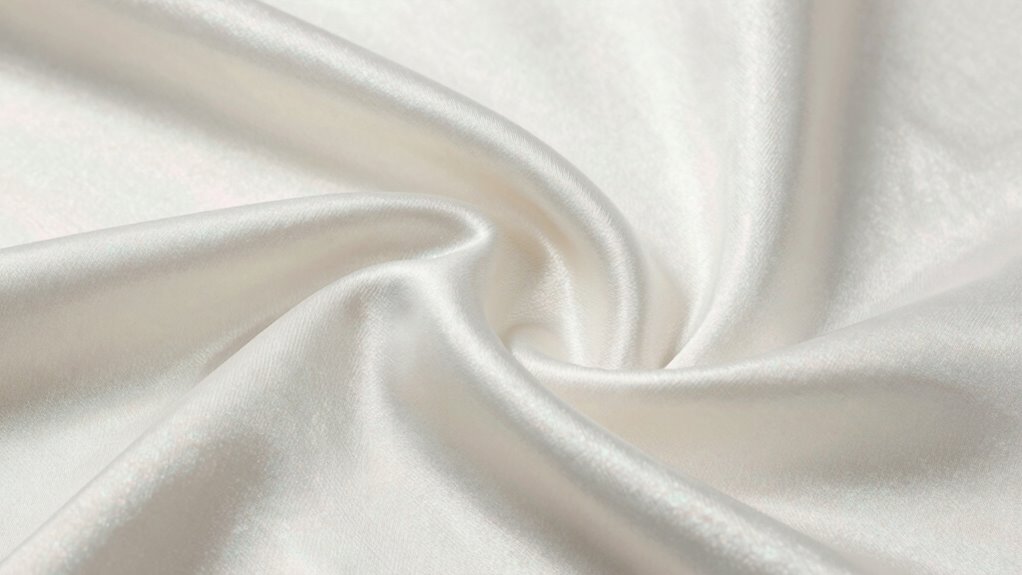
Bias cut fabric moves so differently because it’s cut at a 45-degree angle to the grain, giving it more stretch and flexibility. This allows the fabric to mold and flow along your body’s curves smoothly. The diagonal weave makes the fabric feel more elastic, creating a graceful, effortless movement. If you want to understand how this technique enhances fabric’s natural properties and design, keep exploring the fascinating details behind this timeless method.
Key Takeaways
- Bias cut fabric is sliced at a 45-degree angle to the weave, allowing for greater stretch and flexibility.
- The diagonal grain exploits the inherent stretch of woven textiles, enhancing movement and drape.
- This cut enables the fabric to mold closely to the body, creating a fluid, body-contouring fit.
- The diagonal orientation increases elasticity, making garments feel more comfortable and naturally flowing.
- Bias-cut garments move effortlessly, showcasing the fabric’s natural fluidity and elegance.

Ever wondered why bias cut fabric creates garments that cling and flow so beautifully? The secret lies in its unique design and the way it interacts with fabric elasticity. The history behind this technique, known as the bias cut, dates back to the early 20th century when designers began exploring innovative ways to enhance the natural drape and movement of textiles. Its origins are rooted in the desire to make clothing that feels more fluid and contours to the body more naturally. Unlike traditional cuts aligned with the grain of the fabric, bias cut involves slicing the fabric diagonally, at a 45-degree angle to the weave. This method allows the fabric to stretch and mold with greater freedom, resulting in garments that seem to move effortlessly with your body. The fabric elasticity unlocked by this technique is further enhanced by the way the bias cut exploits the inherent stretch of woven textiles, which are most flexible along the diagonal. The key to understanding why bias cut fabric behaves so differently from straight-grain cuts is found in fabric elasticity. When you cut on the bias, you leverage the inherent stretch of woven textiles, which are most flexible along the diagonal. This diagonal stretch grants the fabric an almost elastic quality, even if the material isn’t technically elastic. As a result, garments made from bias cut fabric are naturally more form-fitting and graceful. They cling gently to your curves, accentuating your shape without restricting movement. The fabric’s ability to stretch and flow is what makes bias cut clothing feel so luxurious and alive. Additionally, the stretch properties of woven textiles are most effectively utilized through this diagonal cut, enhancing the garment’s natural behavior. The analysis of fabric behavior reveals that the way textiles respond to being cut on the bias is fundamental to understanding their movement and fit. This technique not only relies on the fabric’s innate properties but also on the design principles that maximize these qualities for a refined silhouette. Throughout history, designers like Madeleine Vionnet popularized the use of bias cut techniques, pushing fashion into a new domain of elegance and fluidity. Her mastery demonstrated how the bias cut could transform simple fabrics into garments that drape and sway with an almost hypnotic grace. Today, this technique remains a favorite among couture and ready-to-wear designers because it offers a combination of comfort, sophistication, and artistry. When you wear bias cut clothing, you’re experiencing a craft that has evolved over decades — one that celebrates the natural elasticity of fabric and the timeless beauty of a well-cut garment. In essence, the way bias cut fabric moves so differently is a tribute to its historical ingenuity and the inherent elasticity of textiles. It’s about more than just cutting fabric at an angle; it’s about harnessing the natural properties of the material to create clothing that feels alive and moves with you. That’s why garments made from bias cut fabric seem to breathe, flow, and cling in all the right ways — a perfect blend of tradition and innovation.

Bias-Cut Dressmaking: A Step-by-Step Introduction
As an affiliate, we earn on qualifying purchases.
As an affiliate, we earn on qualifying purchases.
Frequently Asked Questions
How Does Bias Cut Fabric Affect Garment Durability?
Bias cut fabric can impact garment durability because it offers less stretch resistance along the cut edges, making it more prone to stretching out or losing shape over time. However, its excellent drape quality allows the fabric to move fluidly, creating elegant silhouettes. While beautiful, garments made from bias cut fabric might need more careful handling and reinforcement to maintain their integrity and durability through wear.
Can Bias Cut Fabric Be Used for All Clothing Types?
You can’t use bias cut fabric for every clothing type, as its delicate dance of pattern alignment and fabric stretch makes it suited for certain designs. It drapes like a gentle wave, but may struggle with structure or heavy-duty wear. Think of it as a fluid artist’s brushstroke—beautiful for flowing dresses, but less reliable for tailored pants or rugged outerwear. Choose wisely to let its elegance shine.
What Are Common Mistakes When Sewing With Bias Cut Fabric?
When sewing with bias cut fabric, you often make mistakes like misaligning the grain, which causes uneven draping, or not stabilizing seams, leading to stretching. You should always guarantee proper grain alignment before cutting to maintain the fabric’s natural stretch. Additionally, avoid pulling fabric while sewing, as it can distort seams and cause unwanted stretching. Using appropriate seam finishes also helps prevent distortion and maintains the fabric’s smooth flow.
How Does Fabric Type Influence Bias Cut Behavior?
Think of fabric type as the personality behind a dance; it influences how the bias moves. Stretch properties vary—some fabrics stretch more, making them lively and unpredictable, while others are more controlled. Grain alignment is like the rhythm; if aligned correctly, the fabric flows smoothly, but misaligned grain causes erratic movement. Understanding these factors helps you sew with confidence, knowing how your chosen fabric will behave on the bias.
Is Bias Cut Fabric More Expensive Than Traditional Cuts?
Yes, bias cut fabric often costs more than traditional cuts because it requires greater cutting accuracy and skill. The fabric stretch along the bias makes it more challenging to handle, leading to more precise cutting techniques. This meticulous process guarantees the garment drapes beautifully and fits perfectly, but it also means more time and effort, which increases the overall price. So, your investment reflects the craftsmanship involved.

60" Wide Rayon Spandex Jersey Knit Fabric by The Yard – 4-Way Stretch, 200GSM, Medium Weight -Soft & Breathable – Apparel, Accessories, Maternity & Decorations
A 95% rayon and 5% spandex jersey knit fabric is a blend that combines the softness and breathability…
As an affiliate, we earn on qualifying purchases.
As an affiliate, we earn on qualifying purchases.
Conclusion
Understanding bias cut fabric is like learning to dance with a partner—you need to move in harmony with its unique rhythm. This technique allows the fabric to flow and cling in ways that feel almost alive, giving your creations a graceful, effortless drape. Embrace its unpredictable nature, and you’ll see how it transforms simple textiles into stunning, wearable art. When you master the bias cut, you’re not just sewing—you’re conducting a symphony of fabric that moves beautifully with every step.

KIKITEXTILES Premium Essential Pongee Lining Fabric – Lightweight 100% Polyester, 58”–60” Wide, Non-Stretch Smooth Fluid Drape for Dresses, Jackets, Coats, Bridal & Formal Garments (Taupe, 2 Yard)
✿ [Premium Essential Pongee Lining Fabric] – High-quality professional lining designed to complement structured and non-stretch garments. Smooth,…
As an affiliate, we earn on qualifying purchases.
As an affiliate, we earn on qualifying purchases.

Jeimier 5 Sizes Bias Tape Makers, Upgraded Bias Binding Tape Making Tool for Fabric Quilting Sewing, Quickly Customize, Solidly Bias Quilting Tool, 1/4IN 3/8IN 1/2IN 3/4IN 1IN
QUICKLY MAKE BIAS BINDING: The Jeimier 5 sizes professional Bias Tape Makers out of any fabric to match…
As an affiliate, we earn on qualifying purchases.
As an affiliate, we earn on qualifying purchases.