Fabric opacity refers to how much light passes through and how much privacy it offers. Sheer fabrics let in plenty of natural light, creating an airy feel, while opaque fabrics block most or all light for privacy and darkness. Semi-sheer options strike a balance, providing some light while maintaining concealment. Understanding these types helps you choose the right fabric for your space’s look and function. Keep exploring to discover how different textures and weaves influence opacity even further.
Key Takeaways
- Sheer fabrics allow most light through, creating an airy, open feel with minimal privacy.
- Semi-sheer fabrics balance light filtration and privacy, offering some transparency.
- Opaque fabrics block out most or all light, providing maximum privacy and darkness.
- Fabric weave and texture significantly influence opacity levels and visual appearance.
- Choosing the right opacity depends on desired light control, privacy, and aesthetic preferences.
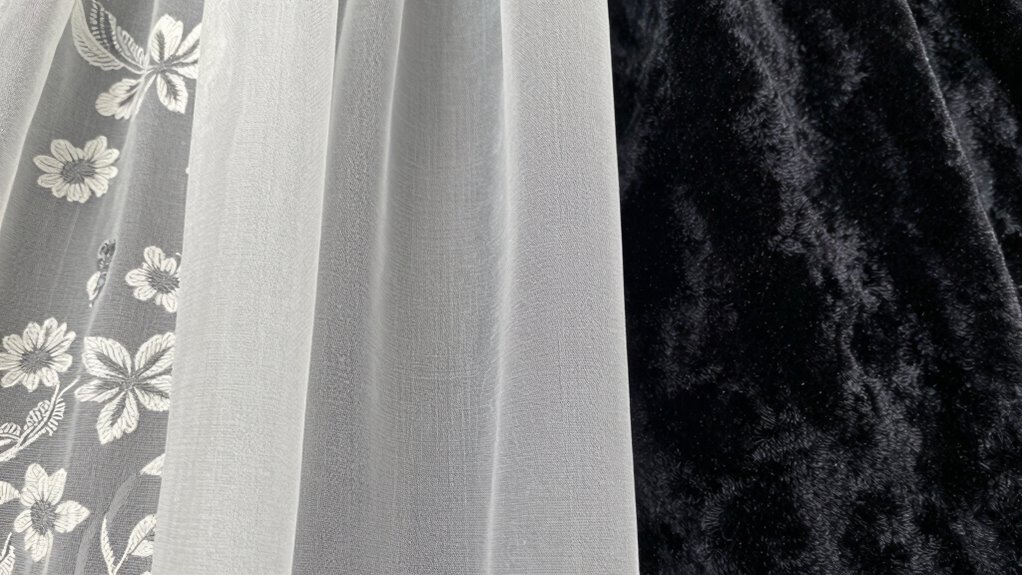
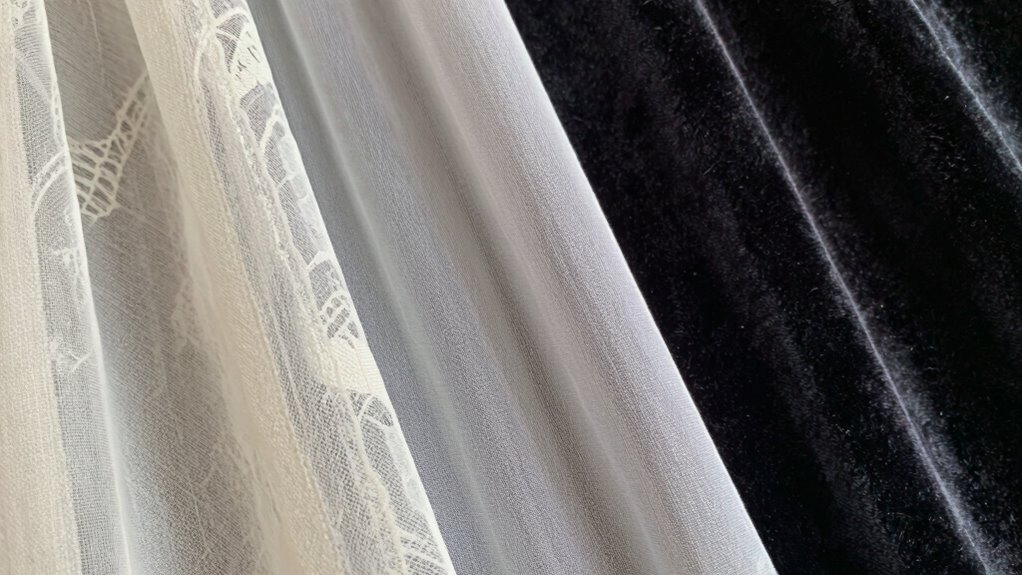
Fabric opacity refers to how much a fabric conceals what’s behind it. When choosing materials for your home or project, understanding opacity helps you pick the right fabric for your needs. If you’re designing drapery applications, the level of opacity determines whether you want a room filled with soft, filtered light or complete privacy. Sheer fabrics allow plenty of light to pass through, creating an airy, open feel, while opaque fabrics block out most or all light, offering privacy and darkness. Semi-sheer fabrics strike a balance, letting in some light but still providing a degree of concealment. Knowing these distinctions helps you tailor your space to your preferences.
In drapery applications, fabric opacity plays a critical role. For example, sheer curtains are often used to soften natural light while maintaining a sense of openness. They’re perfect for rooms where you want brightness without sacrificing privacy entirely. On the other hand, blackout curtains, which are opaque, are ideal for bedrooms or media rooms where you need complete darkness. Semi-sheer options work well in living rooms or offices, where you want some light to come in but still want a degree of privacy. Beyond aesthetics and privacy, fabric durability also influences your choice. Heavier, more durable fabrics tend to be more opaque and are suitable for long-term use, especially in high-traffic areas or where frequent handling occurs. Lighter, sheer fabrics, while delicate, may not stand up as well over time but excel in creating a subtle, elegant ambiance. Fabric composition also plays a role in how well a fabric maintains its opacity over time.
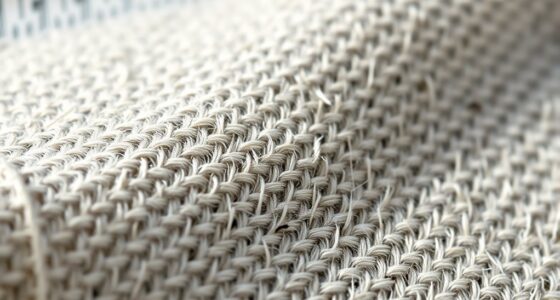
Additionally, understanding how fabric weave and texture influence opacity can help you select the most appropriate material for your specific needs. You also need to think about how the fabric’s opacity interacts with its texture and weave. Tight weaves tend to be more opaque, offering better privacy and light-blocking capabilities. Looser weaves, like those in sheer fabrics, are more transparent and better suited for decorative purposes rather than privacy. This understanding can also guide you in choosing fabrics that balance aesthetics and function, ensuring your space looks good while serving its purpose effectively. When considering fabric durability, choosing high-quality materials ensures that your fabric maintains its opacity and appearance over time, even with regular use. Additionally, sustainable options are increasingly available, allowing you to select fabrics that are both environmentally friendly and long-lasting. Ultimately, the right balance between opacity, durability, and aesthetics will create a space that’s both functional and visually appealing, tailored precisely to your needs.

OWENIE White Sheer Curtains 84 inches Long 2 Panels Set, Sheer White Curtains for Living Room/Bedroom, Rod Pocket Voile Sheer Panel Drapes, 2pcs, Each 42" Width x 84" Long
- Set Includes Two Panels: Two 42-inch wide, 84-inch long curtains
- High-Quality Polyester Fabric: Lightweight, smooth, and sun-filtering material
- Easy to Install: Dual rod pocket design for simple hanging
As an affiliate, we earn on qualifying purchases.
As an affiliate, we earn on qualifying purchases.
Frequently Asked Questions
How Does Fabric Opacity Affect Sun Protection?
Fabric opacity directly influences sun protection; opaque fabrics offer better UV protection because they block more sunlight than sheer or semi-sheer materials. When choosing clothing, you’ll find that denser, durable fabrics are more effective at shielding your skin from harmful rays, enhancing UV protection. Keep in mind, fabric durability also plays a role—long-lasting, tightly woven fabrics maintain their sun-blocking qualities over time, ensuring you stay protected during outdoor activities.
Can Fabric Opacity Change Over Time With Wear?
You might notice fabric opacity changing as you wear it due to aging effects and wear and tear. Over time, fibers weaken, stretch, or fray, causing sheer fabrics to become more opaque or vice versa. This accidental transformation reminds you that materials evolve, just like life’s experiences. So, your favorite piece could tell a different story after months of use, reflecting the subtle, beautiful changes that come with time.
Which Fabrics Are Best for Layering?
You should choose fabrics with varying transparency levels for layering, like lightweight chiffons or fine cottons, which work well with layering techniques. Sheer fabrics create a delicate, airy base, while semi-sheer or opaque materials add depth and coverage. Using these fabrics thoughtfully allows you to play with fabric transparency, creating interesting textures and visual effects. Layering with different opacity levels enhances your outfit’s dimension and style, making it versatile and chic.
How Does Fabric Dyeing Impact Opacity?
Imagine fabric as a canvas, where dye penetration paints every fiber. Deeply dyed fabrics become more opaque, blocking light like a sturdy wall, while shallow dyeing leaves them semi-transparent like a frosted window. The dye’s depth influences color fastness, ensuring your fabric stays vibrant and doesn’t fade easily. So, dyeing transforms fabrics into sturdy barriers or delicate veils, depending on how thoroughly the color is absorbed, shaping their opacity and durability.
Is There a Difference in Opacity Between Natural and Synthetic Fibers?
Yes, natural fibers generally offer more transparency perception and vary in opacity compared to synthetic fibers. Natural fibers like cotton and silk tend to be more opaque due to their fiber composition, which allows less light to pass through. In contrast, synthetic fibers like nylon or polyester can be more transparent or semi-sheer, depending on their weave and dyeing process. Your choice of fiber impacts the overall opacity and transparency perception of the fabric.
Conclusion
Now that you know the ins and outs of fabric opacity—from sheer to opaque—you can confidently choose the perfect material for any occasion. Whether you want to channel a Victorian vibe or keep things modern, understanding fabric opacity makes your wardrobe smarter. Think of it as your fashion compass, guiding you through style choices like a trusty GPS in a world full of fabric mysteries. So go ahead, make your fabric choices with confidence—your wardrobe will thank you!