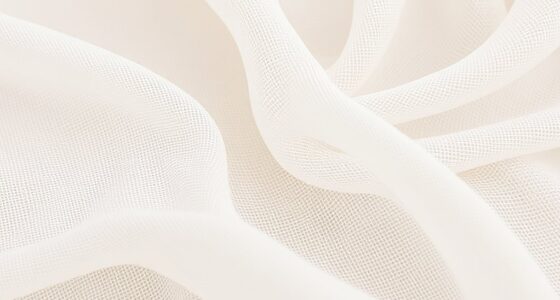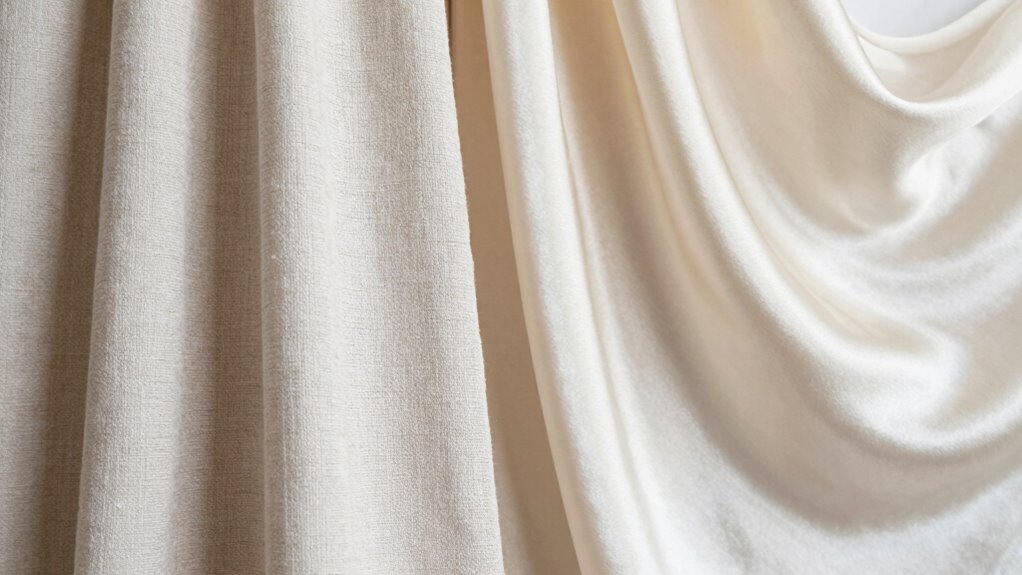
To choose fabric for structure, opt for heavyweight textiles like canvas, heavy cotton, or polyester blends that hold their shape and offer support. For flow, select lightweight, fluid fabrics like silk, chiffon, or fine crepe that drape softly. Pay attention to fiber durability and color retention to guarantee your project stays vibrant and long-lasting. Understanding these fabric qualities helps create the perfect look and feel—keep exploring to learn more about matching fabrics to your design goals.
Key Takeaways
- Select heavyweight, tightly woven fabrics with high fiber durability for structured designs to maintain support and shape.
- Opt for lightweight, fluid textiles with good color retention for flowing garments to achieve softness and draping effect.
- Consider fabric stiffness and support features when aiming for a sculpted, crisp silhouette.
- Prioritize fabrics with strong color retention to ensure vibrancy in both structured and flowing projects.
- Match fabric properties with project purpose, ensuring durability and ease of maintenance for long-lasting results.
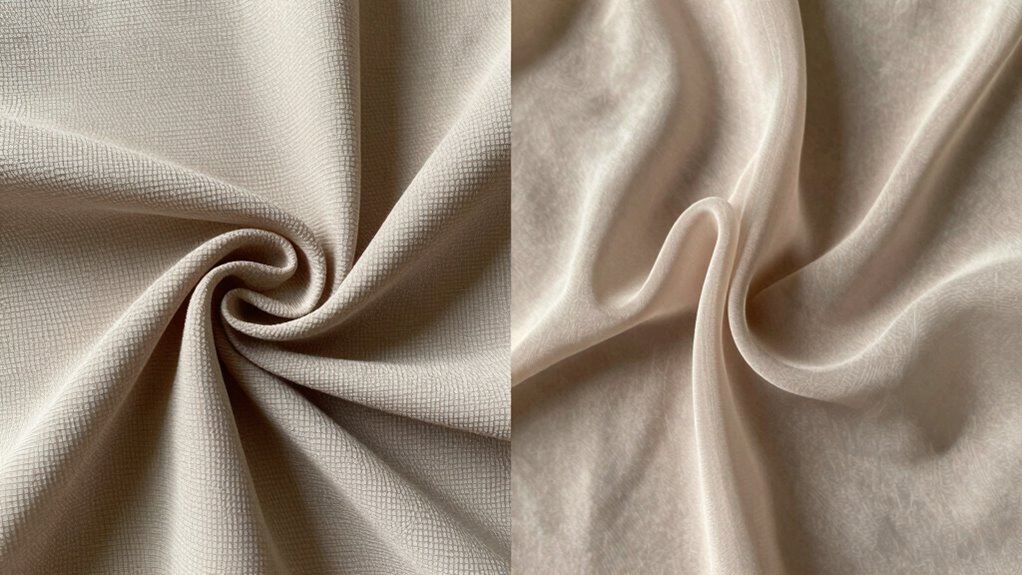
When selecting fabric for a project, understanding whether you need structure or flow can make all the difference. The choice hinges on how you want your finished piece to look and feel. If you’re aiming for a stiff, sculpted silhouette, you’ll want fabrics that provide plenty of support. Conversely, if you prefer a soft, draping effect, lighter and more fluid textiles will serve you best. Recognizing the characteristics of your fabric—especially fiber durability and color retention—is essential to achieving your desired outcome. Durable fibers ensure your project withstands regular use, while strong color retention keeps your fabric looking vibrant over time. Additionally, understanding digital concepts can help you better analyze fabric properties through technological tools. For structured garments or home decor that require crisp lines, you’ll need fabrics with high fiber durability. Materials like heavyweight cotton, canvas, or certain polyester blends tend to hold their shape well, resisting sagging or wrinkling. These fabrics often have a tighter weave, which contributes to both their durability and their ability to maintain a firm form. When considering fiber durability, think about how long the fabric will last under stress, washing, or exposure to sunlight. Fabrics with good fiber durability won’t just last longer—they’ll also retain their shape and support the design’s structure. Modern fabric technology has made it easier to select textiles with both excellent durability and color retention, ensuring your projects stay beautiful over time. Color retention plays a crucial role in both structured and flowing fabrics. For projects where the fabric will be prominent, vibrant color is often a priority. Look for textiles dyed with high-quality dyes that resist fading after multiple washes or exposure to sunlight. This is especially important for structured pieces, where sharp lines and defined shapes draw attention to the fabric’s true color. For flowing fabrics, color retention ensures that the soft, delicate appearance remains consistent over time, maintaining the overall aesthetic. Poor color retention can lead to a dull, washed-out look, undermining the effort you’ve put into your project. When choosing fabric, consider how the fiber’s durability and color retention align with your project’s purpose. Structured pieces benefit from sturdy fabrics that keep their shape and color over years of use. Flowing designs, on the other hand, thrive on lightweight, flexible fabrics that still hold their color well. By understanding these qualities, you can select textiles that not only look beautiful but also stand up to the demands of your project, offering lasting satisfaction. Incorporating fiber durability in your decision-making process ensures your fabric will perform well over time, especially in demanding applications. Additionally, knowing how different fabrics respond to care methods can help you select textiles suitable for easy maintenance, which is often crucial for everyday wear or frequently used projects.
heavyweight cotton fabric for upholstery
As an affiliate, we earn on qualifying purchases.
As an affiliate, we earn on qualifying purchases.
Frequently Asked Questions
How Does Fabric Weight Impact Garment Durability?
Fabric weight considerably impacts garment durability; heavier fabrics tend to be more durable because they withstand wear and tear better. When you choose a fabric with a higher weight, your garment will generally last longer and resist damage from frequent use. Lighter fabrics, while more flowing and comfortable, may tear or wear out faster. So, for durability, opt for fabrics with a substantial weight that match your garment’s intended use.
Can Fabric Type Influence Comfort for Different Climates?
You might think fabric type doesn’t affect comfort across climates, but climate-specific fabrics prove otherwise. Breathable material choices, like linen or lightweight cotton, genuinely enhance comfort in hot weather, while thicker wool or fleece keep you warm in cold climates. Research supports that selecting the right fabric type based on your climate improves comfort and performance, making your clothing more functional and enjoyable year-round.
What Are Eco-Friendly Fabric Options for Structure and Flow?
For eco-friendly options, you can choose biodegradable fibers like hemp, linen, or Tencel, which break down naturally and reduce environmental impact. Sustainable dyeing methods, such as low-impact or natural dyes, further lessen pollution. These fabrics work well for both structure and flow, offering durability and softness without harming the planet. By selecting these sustainable options, you support eco-conscious fashion and guarantee your garments are both beautiful and environmentally responsible.
How Do Fabric Finishes Affect Drape and Stiffness?
Imagine you’ve stepped into a modern workshop—fabric finishes are your secret tools. They profoundly affect fabric drape and stiffness; a fabric finish effect can enhance or reduce stiffness, altering its drape. For flowy fabrics, a soft finish boosts fluidity, while for structured fabrics, a stiffening finish maintains shape. Understanding how each finish impacts drape alteration helps you craft garments with the perfect movement and form.
Are Synthetic Fabrics Suitable for Structural Designs?
Synthetic fabrics are suitable for structural designs because they offer excellent durability and shape retention. You’ll find that materials like polyester or nylon hold their form well, making them ideal for structured garments. However, be aware of durability concerns—some synthetics may degrade or lose stiffness over time. To guarantee longevity, choose high-quality options and consider fabric finishes that enhance stiffness and resilience, keeping your designs looking sharp and maintaining their structure.
Conclusion
As you wrap yourself in fabric that flows like a gentle stream or stands firm like a mountain peak, remember your choice shapes the energy of your space. Imagine the fabric draping softly around you, whispering movement, or standing tall with unwavering strength. Your fabric selection becomes the silent language of your environment—crafting a sanctuary that echoes your desired mood. Embrace the textures and qualities that breathe life into your vision, making your space uniquely yours.