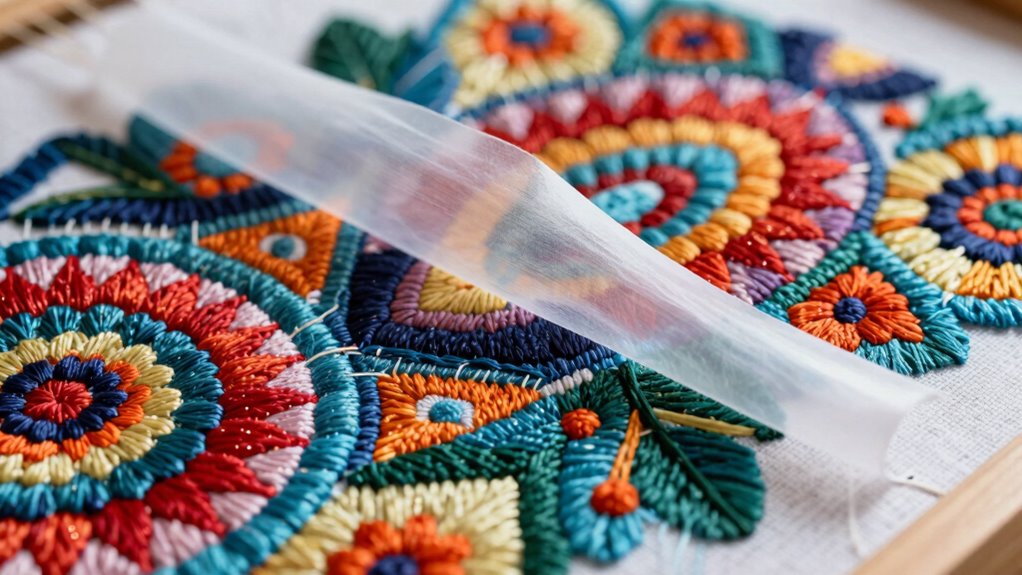

Tear-away stabilizer works best by providing temporary support to your fabrics, helping your stitches stay crisp, precise, and well-aligned, especially on stable woven fabrics. It prevents puckering and distortion during embroidery, ensuring a clean, professional finish. Adjusting machine settings and applying it carefully makes removal easy and leaves no residue. If you want to master how to maximize its benefits and achieve perfect results every time, continue exploring these essential tips.
Key Takeaways
- Provides temporary support to prevent fabric puckering and distortion during embroidery on stable, woven fabrics.
- Ensures crisp, clean designs by stabilizing stitches without leaving residue after removal.
- Ideal for detailed, small, or intricate designs needing precise stitch placement.
- Facilitates easy removal without damaging the fabric or embroidery.
- Enhances overall embroidery quality by maintaining stitch alignment and stability.
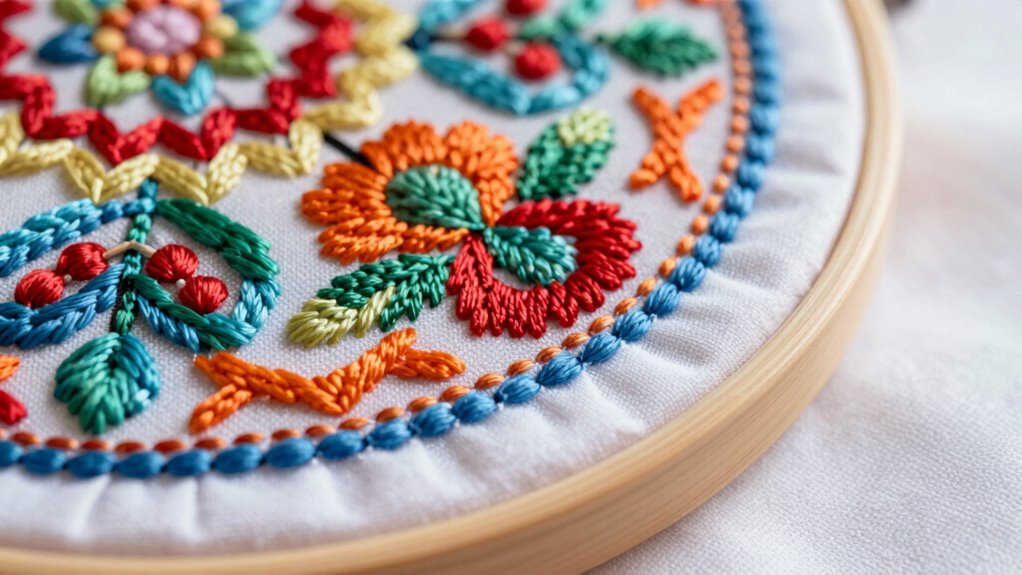
Tear-away stabilizer is an essential tool in embroidery that helps guarantee your designs come out crisp and professional. When you’re working with tear-away stabilizer, proper fabric preparation is key. Before you even hoop your fabric, make sure it’s clean, smooth, and free of wrinkles. This ensures the stabilizer can work effectively and your design remains stable throughout the embroidery process. Choosing the right stabilizer weight and type for your fabric is equally important—lighter fabrics like linen or silk may need a softer stabilizer, while thicker materials like denim might require a sturdier option. Proper fabric preparation sets the foundation for a clean, precise stitch, minimizing puckering or misalignment.
Once your fabric is prepared, you’ll want to focus on your machine settings. Correct machine settings are crucial when using tear-away stabilizer because they influence how the stabilizer interacts with your fabric and design. Adjust the tension and stitch length accordingly—generally, a slightly looser tension and a standard or slightly longer stitch length work best for stabilizer use. This prevents puckering and ensures the stitches are secure without pulling the fabric or stabilizer. Also, check your bobbin tension and needle size; using a sharp needle and a correctly tensioned bobbin helps avoid skipped stitches or thread breaks, which can compromise your design’s crispness. Additionally, understanding the types of stabilizers and their specific applications can significantly improve your embroidery results. Knowing the appropriate stabilizer for each project can help you achieve the best possible outcome.
Tear-away stabilizer excels at providing a temporary support system that’s easy to remove once the embroidery is complete. It’s particularly effective for designs on stable, woven fabrics where you want a clean finish without a lot of residual stabilizer. When you’ve finished stitching, carefully tear away the stabilizer along the edges of your design. The key here is to do it gently, pulling in the direction of the stitches to avoid distorting or damaging the embroidery. If you notice small bits of stabilizer remaining, you can use tweezers or a gentle brush to remove them, ensuring your design remains smooth and professional-looking. Using the correct stabilizer for your fabric type can also help prevent fabric distortion during the embroidery process.

New brothread Tear Away Embroidery Stabilizer 12" x 50 Yd Roll
- Temporary Stabilizer: Provides easy tear-away support for embroidery
- Wide Applications: Suitable for natural fibers and various embroidery styles
- Skin-Friendly Material: Made from 100% polyester, safe for skin
As an affiliate, we earn on qualifying purchases.
As an affiliate, we earn on qualifying purchases.
Frequently Asked Questions
Can Tear-Away Stabilizer Be Reused After Embroidery?
Tear-away stabilizer isn’t really reusable because it loses its stability after embroidery, making reusing it unreliable. Reusability concerns arise because the stabilizer becomes torn or compressed, compromising its support. While reusing might seem environmentally friendly, it’s often ineffective and could affect embroidery quality. To reduce environmental impact, choose biodegradable stabilizers or use what’s necessary for each project, rather than trying to reuse tear-away stabilizer.
How Does Tear-Away Stabilizer Affect Fabric Texture?
Tear-away stabilizer can slightly affect fabric softness and texture preservation, especially if used in excess or if adhesive residues remain. It may leave a subtle feel on the fabric’s surface, impacting its natural texture. To minimize this, choose a lightweight stabilizer and remove it carefully after embroidery. This helps maintain the fabric’s original softness and preserves its natural texture, ensuring your finished piece feels and looks professional.
Is Tear-Away Stabilizer Suitable for All Fabric Types?
Tear-away stabilizer isn’t suitable for all fabric types, especially those with significant stretch, as it can cause puckering or distortion. For dense stitches, it provides excellent support, but on delicate or stretchy fabrics, you might need a more flexible stabilizer. Always consider fabric stretch and stitch density when choosing stabilizers. Testing on a scrap piece first helps guarantee proper results without damaging your fabric.
How Do I Prevent Tearing Issues During Removal?
Think of tear-away stabilizer like a delicate thread—you want it to hold firm without snapping. To prevent tearing issues during removal, guarantee your tear strength matches your fabric and design. Use gentle removal techniques, like peeling slowly or applying a bit of moisture, to avoid ripping. Taking your time and understanding your stabilizer’s properties helps you achieve a clean finish without damaging your embroidery.
What Are Alternatives to Tear-Away Stabilizer?
You can consider water-soluble or cut-away stabilizers as alternatives to tear-away stabilizer. Water-soluble stabilizers are great for delicate fabrics because they dissolve completely, leaving no residue. Cut-away stabilizers offer more stability and are ideal for complex designs, especially on stretchy fabrics. Comparing stabilizers helps you choose based on fabric compatibility and project needs, ensuring your embroidery remains smooth and professional without tearing issues during removal.
Conclusion
Tear-away stabilizer truly shines in embroidery, acting like a reliable safety net that catches every stitch. It’s your go-to for crisp, clean designs, especially on woven fabrics. When you tear away the excess, it’s like revealing a hidden gem beneath the surface. With tear-away stabilizer, your projects stay perfectly in place, making your embroidery process smoother than silk. Trust it to make your creations look polished, just like a masterpiece emerging from the shadows.