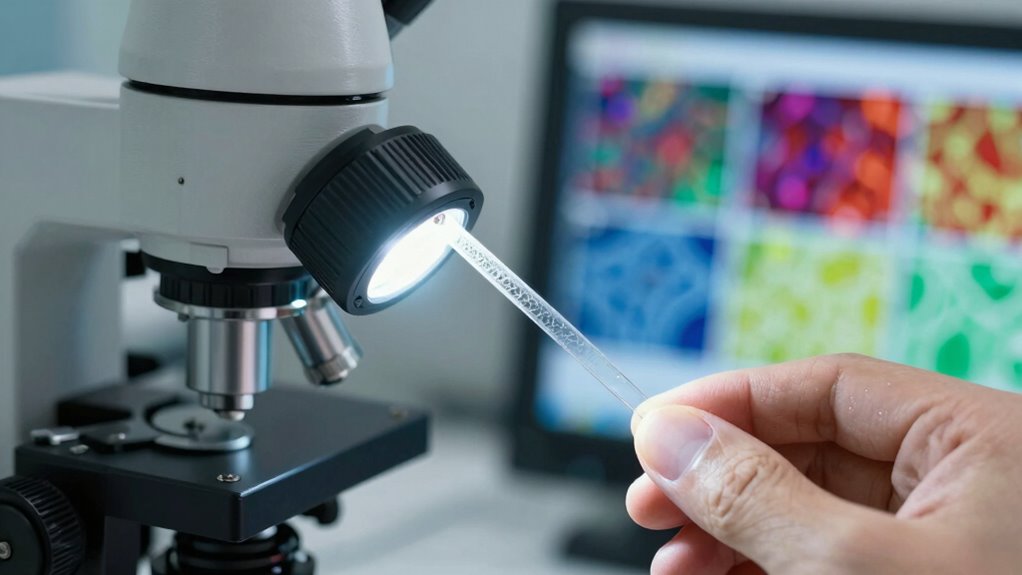

If you’re curious about fiber analysis tools, you’ll find that microscopes, especially polarized light microscopes, are essential for examining fiber structures, surface details, and cross-sections. Infrared spectroscopy helps identify chemical compositions and manufacturing clues, while chromatography reveals dyes and additives. These tools give you a detailed view of a textile’s origin, age, and craftsmanship. Exploring further will uncover even more fascinating insights into historical fabrics and textile technology.

Get your wardrobe favorites delivered free — and shop member deals
- Fast, free delivery on millions of items
- Access to Prime Big Deal Days deals on October 6–7
- Prime Video, Amazon Music and more included
Key Takeaways
- Microscopy, especially polarized light microscopes, reveals fiber surface features and cross-sectional structures to identify fiber types.
- Infrared spectroscopy provides molecular fingerprints, distinguishing natural from synthetic fibers.
- Chromatography analyzes chemical dyes and additives, offering clues about manufacturing processes and origins.
- Physical characteristics like fiber thickness and surface morphology help determine age, source, and historical context.
- Advanced techniques like chemical analysis and dating improve accuracy in fiber identification and preservation efforts.
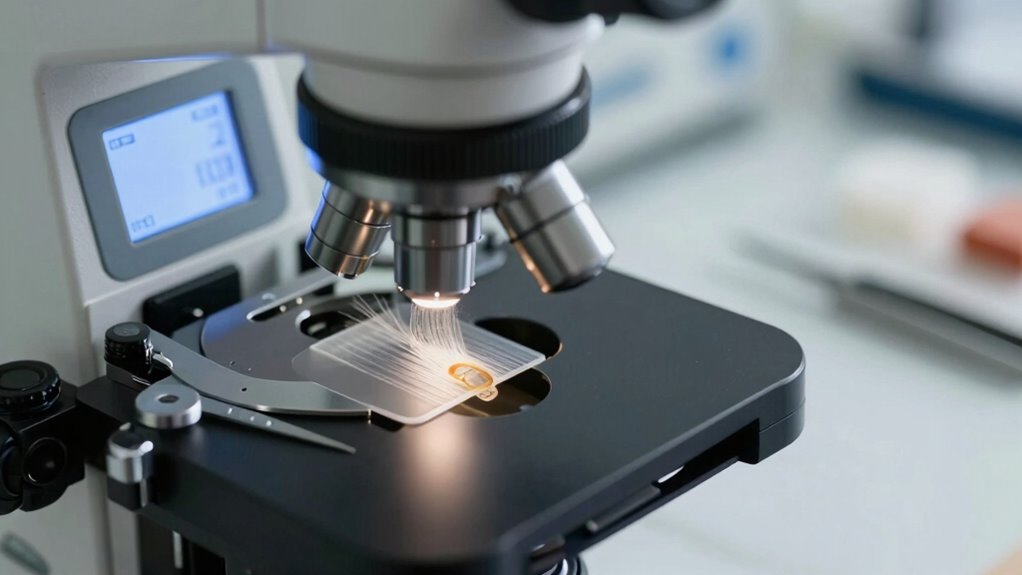
Historical fiber identification is equally fascinating. If you’re examining antique textiles or archaeological finds, fiber analysis tools help you uncover what materials were used centuries ago. By analyzing fiber characteristics—such as thickness, surface morphology, and chemical composition—you can identify whether a fabric is linen, silk, cotton, or wool. These insights allow you to piece together historical trade routes, cultural practices, and technological advancements. Understanding the fiber’s origin also aids in preservation efforts, ensuring that artifacts are maintained appropriately for future generations.
You’ll find that microscopy is one of the most common tools used in fiber analysis. Polarized light microscopes reveal the fiber’s physical structure, showing cross-sections and surface features that distinguish natural from synthetic fibers. Infrared spectroscopy, on the other hand, provides a molecular fingerprint, confirming whether a fiber is cellulose-based or synthetic. Chromatography techniques can analyze chemical additives or dyes, offering clues to the fiber’s manufacturing process or age. These tools work together to give you an all-encompassing picture of the fiber’s identity, origin, and history.
In practical terms, fiber analysis tools empower you to make informed decisions about textiles. Whether you’re authenticating a vintage piece, studying the evolution of textile technology, or simply satisfying your curiosity about fabrics, these methods provide reliable, scientific insights. You gain a deeper appreciation for the materials you handle or collect, understanding not just their aesthetic qualities but also their chemical and historical backgrounds. Modern fiber analysis techniques have enhanced our ability to precisely identify and date fibers, further enriching the stories behind each textile. Additionally, advancements in fiber identification techniques continue to improve accuracy and efficiency in research and preservation efforts. Staying updated on these technological innovations allows for more accurate historical interpretations, which deepen our understanding of textile heritage.
polarized light microscope for textile analysis
As an affiliate, we earn on qualifying purchases.
As an affiliate, we earn on qualifying purchases.
Frequently Asked Questions
How Accurate Are Fiber Analysis Tools Compared to Traditional Methods?
Fiber analysis tools are quite accurate, especially for verifying fiber authenticity and detecting dyes. They often provide quicker, more precise results than traditional methods like microscopy or burn tests. You can rely on these tools to identify fiber types and distinguish genuine materials from imitations, making them invaluable for quality control. While traditional methods still have their place, modern fiber analysis tools markedly enhance accuracy in fiber authenticity and dye detection.
Can Fiber Analysis Tools Identify Synthetic Versus Natural Fibers?
Did you know fiber analysis tools can identify synthetic versus natural fibers with over 90% accuracy? When it comes to synthetic identification and natural fiber detection, these tools analyze fiber structure and chemical composition, making it easy to distinguish between the two. They use advanced techniques like spectroscopy, ensuring you can confidently classify fibers, whether they’re man-made or naturally occurring. This makes fiber analysis essential for quality control and authentication.
What Is the Cost Range for Professional Fiber Analysis Equipment?
You can expect professional fiber analysis equipment to cost anywhere from $10,000 to over $100,000, depending on the complexity and features. These tools help you assess fiber quality and understand environmental impact, guiding sustainable choices. Higher-end models offer precise analysis for both natural and synthetic fibers, while more affordable options suit smaller labs or hobbyists. Investing in quality equipment guarantees reliable results, aiding in eco-friendly and high-quality textile production.
Are Fiber Analysis Tools Safe to Use for All Textile Types?
Think of fiber analysis tools as guardians, carefully steering through a garden of diverse plants. They’re generally safe, but you must consider fiber safety and textile compatibility. Some tools work better with delicate silk, while others suit sturdy wool. Always check the manufacturer’s guidelines to guarantee compatibility, and handle equipment with care. When used correctly, these tools protect your textiles and help you explore their fibers safely and effectively.
How Quickly Can Fiber Analysis Tools Deliver Results?
Fiber analysis tools typically deliver results within a few hours to a day, depending on the complexity of your fiber sample preparation and analysis process. Efficient sample prep speeds up analysis time, allowing you to get insights faster. Many modern tools are designed for quick analysis time efficiency, enabling you to make informed decisions promptly. Keep in mind, some tests might take longer if the sample requires extensive preparation or detailed examination.
Conclusion
By understanding fiber analysis tools, you gain insight into fiber origins, improve identification skills, and appreciate textile quality. These tools sharpen your eye, enhance your knowledge, and deepen your passion. Embrace the power of microscopy, spectroscopy, and other techniques to explore fibers more thoroughly, to analyze more accurately, and to appreciate more fully. With these tools in hand, you’ll become more confident, more curious, and more connected to the fascinating world of textiles.
Evergreen bestsellers Picks
bestsellers
As an affiliate, we earn on qualifying purchases.