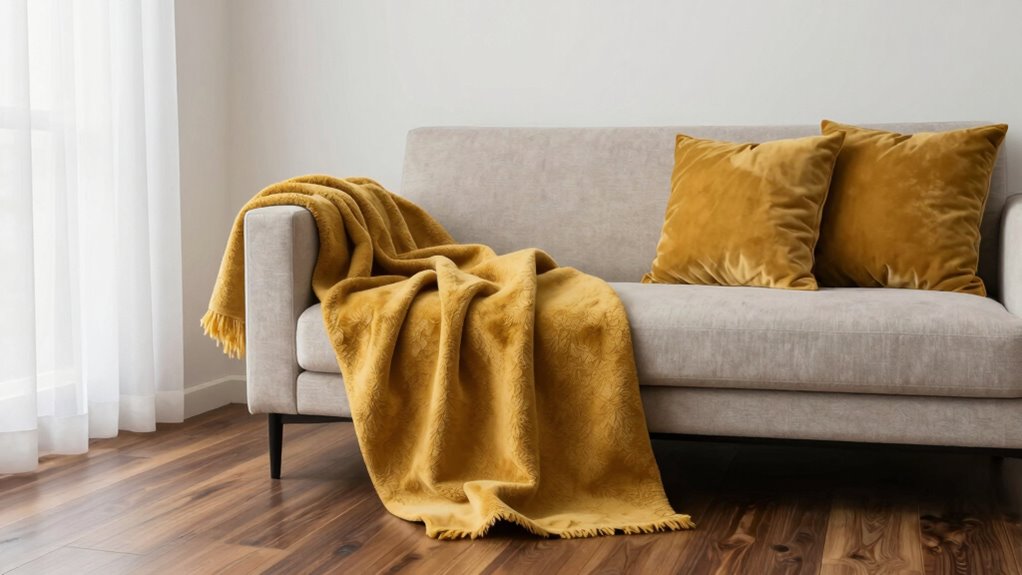
You can add warmth to your space solely through textile choices by using plush, textured fabrics like wool, fleece, or velvet, which trap air and create insulating layers. Darker shades absorb more heat, while layered textiles like throws, cushions, and rugs boost both visual and tactile coziness. Combining textures and warm hues enhances comfort and warmth without any structural changes. To discover more ways textiles transform your space into a cozy retreat, keep exploring what’s possible.
Key Takeaways
- Layer plush textiles like throws, cushions, and rugs to increase insulation and create a cozy atmosphere.
- Use darker, warm-toned fabrics to absorb more heat and evoke a sense of warmth indoors.
- Incorporate textured fabrics such as velvet or fleece to trap air and enhance thermal insulation.
- Arrange textiles strategically to visually and tactilely enhance perceived warmth without structural changes.
- Select fabrics with suitable insulation properties and light interaction to optimize indoor heat retention.
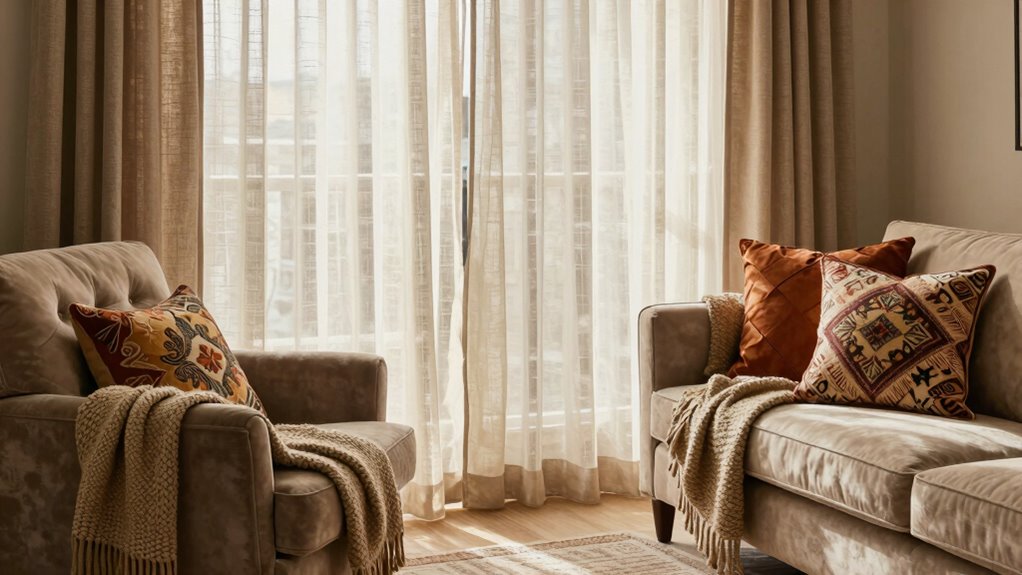
Have you ever wondered why some fabrics keep you warm while others don’t? It all comes down to the textile textures and how they interact with your body. Thick, plush textiles like wool and fleece trap air close to your skin, creating an insulating layer that holds in heat. Meanwhile, smoother fabrics such as silk or lightweight cotton allow heat to escape more easily, making them less effective at providing warmth. The texture of the fabric influences how much air is retained within its fibers, and this air acts as a barrier to cold. When choosing fabrics, pay attention to their textures—fuzzy, nubby, or densely woven textiles tend to be warmer because they hold onto heat better than sleek, thin materials. Additionally, layering different textiles can enhance insulation and comfort further.
Thick, plush fabrics trap air, creating insulation that keeps you warmer than smooth, lightweight textiles.
Color palettes also play a surprisingly significant role in how warm you feel in different fabrics. Darker shades absorb more heat from sunlight, which can help you stay warmer outdoors, especially during colder months. Conversely, lighter hues reflect sunlight, providing less heat retention but offering a cooler feel in warm environments. Even in indoor settings, darker fabrics can psychologically make you feel warmer, as they’re often associated with coziness and comfort. When selecting textiles for warmth, consider not just the material but also the color palette. Combining thicker, textured fabrics in darker tones can enhance the sensation of warmth, while lighter colors and smoother textures might be better suited for spaces where you want to keep cool.
You can also leverage textile textures and color palettes to add a sense of warmth without altering the architecture of a room. Layering different textiles—think plush throws, velvet cushions, or shaggy rugs—creates visual and tactile warmth that transforms the space into a cozy haven. Using warm-toned fabrics in deep colors, like burgundy or mustard, amplifies this effect, making even a minimalist room feel inviting. The interplay of textures and hues influences how warm a space appears and feels, allowing you to craft an environment that radiates comfort without needing to change structural elements. Understanding fabric insulation properties can help you select the most effective materials for creating a cozy atmosphere. Knowing how different textiles trap heat and how textile textures interact with light can further refine your choices.
Ultimately, it’s about understanding how textile textures trap heat and how color palettes influence heat absorption and perception. By choosing the right fabrics with the appropriate textures and colors, you can make any space feel warmer and more inviting—no construction work required. You have the power to instantly change the ambiance and comfort level through thoughtful fabric selection, creating a cozy atmosphere that welcomes you every time you walk in.

ACUSHLA Merino Wool Blanket Warm Throw for Camping Bed Outdoor Travel Car
- 100% ODOR FREE – The Acushla merino wool…
- PREMIUM QUALITY – Circular Knitting Machine and hemmed…
- MACHINE WASHABLE – machine washable and tumble dry…
As an affiliate, we earn on qualifying purchases.
As an affiliate, we earn on qualifying purchases.
Frequently Asked Questions
Can Fabric Insulation Improve Energy Efficiency?
Yes, fabric insulation can improve energy efficiency through innovative applications. By adding fabric layers, you create extra barriers that reduce heat loss, keeping your space warmer. Plus, fabric offers aesthetic considerations, allowing you to customize your environment without altering the architecture. This approach is easy to install, cost-effective, and versatile, helping you save energy while enhancing your space’s style and comfort.
Which Fabrics Are Best for Thermal Insulation?
You should consider natural fibers like wool, fleece, or alpaca for thermal insulation, as they trap heat effectively. Synthetic blends, such as polyester mixes, also provide good warmth and durability. Both options work well for insulating curtains, drapes, or cushions. Natural fibers offer eco-friendly warmth, while synthetic blends often come at a more affordable price point with added resilience. Choose based on your needs for comfort, sustainability, and budget.
Does Fabric Insulation Affect Indoor Air Quality?
Did you know that poorly chosen fabric insulation can impact indoor air quality? While it generally doesn’t release harmful chemicals, some fabrics may reduce fabric breathability, trapping allergens and pollutants indoors. If you’re concerned about allergen buildup, opt for natural, breathable fabrics like cotton or wool, which promote better air circulation. This way, you keep your space warm without risking allergen concerns or compromising indoor air quality.
How Durable Is Fabric Insulation Over Time?
Fabric insulation is quite durable over time, especially when it offers moisture resistance, which prevents mold and degradation. Its aesthetic flexibility allows you to choose styles and colors that suit your space, maintaining visual appeal. With proper installation and maintenance, fabric insulation can last many years, providing consistent warmth and comfort. Keep in mind, selecting high-quality, moisture-resistant fabrics guarantees longevity and keeps your indoor environment healthy.
Is Fabric Insulation Pest-Resistant?
Fabric insulation offers decent pest resistance when treated properly. Fabric barriers act as a first line of defense, discouraging pests from penetrating your space. While fabric naturally resists some pests, it’s wise to reinforce it with pest-resistant coatings or treatments. Regular inspections help identify potential issues early. Overall, with the right treatments, fabric insulation can be a pest-resistant, protective, and practical choice, adding warmth without inviting unwanted visitors.
Conclusion
By simply choosing the right fabrics, you can invite warmth into your space without altering its structure. Fabrics act as silent guardians, wrapping your home in comfort and coziness, proving that warmth isn’t always about the walls we build but the layers we add. So, embrace textiles as your secret allies—because sometimes, the softest touch can make the biggest difference, reminding us that true warmth comes from the gentle, unseen layers we choose to surround ourselves with.