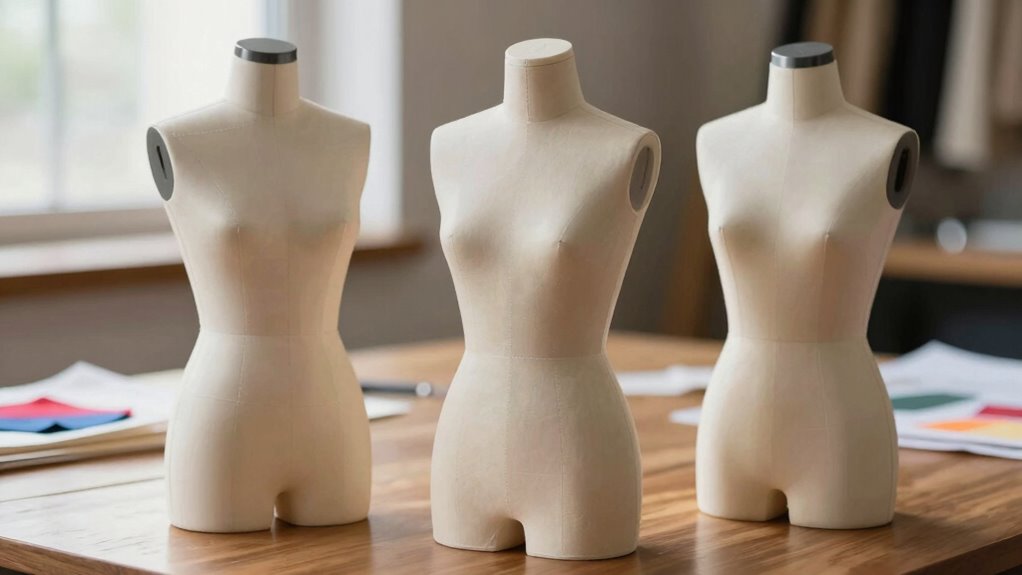

Half-scale dress forms help you precisely manipulate fabrics, refine fit, and quickly test design ideas without using full-size materials. They make pinning, draping, and pattern adjustments easier, all while saving time and space in your studio. These forms boost your understanding of fabric behavior and proportion, encouraging creative experimentation. Using a half-scale form sharpens your design skills and accuracy. Keep exploring to discover how this versatile tool can elevate your craftsmanship even further.

Get your wardrobe favorites delivered free — and shop member deals
- Fast, free delivery on millions of items
- Access to Prime Big Deal Days deals on October 6–7
- Prime Video, Amazon Music and more included
Key Takeaways
- Facilitates detailed fabric manipulation, draping, and testing techniques on a manageable scale.
- Supports accurate pattern drafting, fitting, and adjustments before full-size production.
- Saves space, making them ideal for small studios and quick experimentation.
- Encourages creative exploration of unconventional fabric manipulations and design ideas.
- Enhances precision in pattern development and understanding of garment fit.
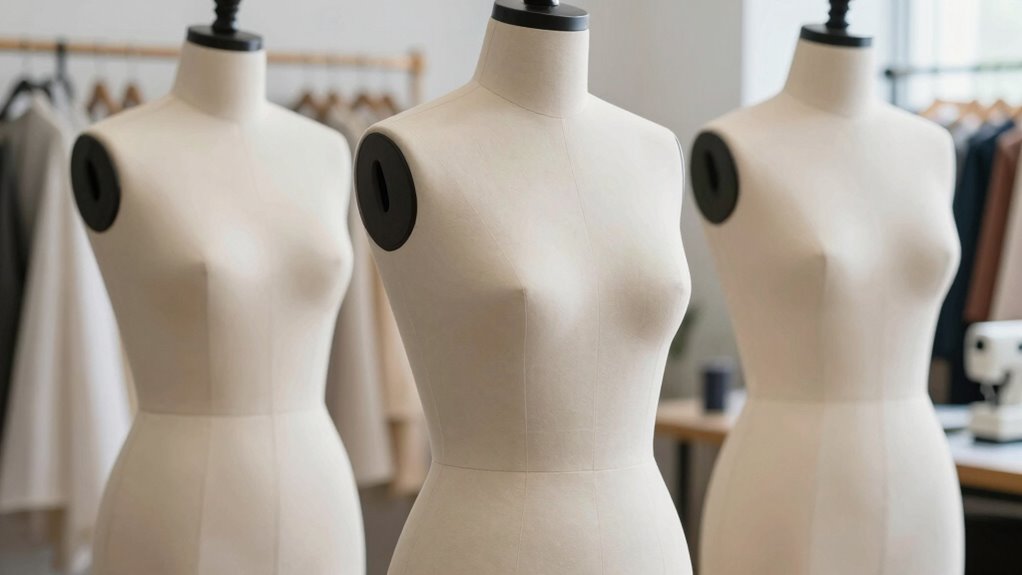
As a designer, having the right dress form can transform your creative process, making fitting and draping much more precise and efficient. One tool that’s especially valuable is the half-scale dress form. These smaller versions of full-size mannequins allow you to work with incredible detail and control, especially when it comes to fabric manipulation and pattern drafting. They’re perfect for experimenting with design ideas on a manageable scale before you commit to full-size garments.
Using a half-scale dress form means you can quickly test out fabric manipulation techniques. You can pin, drape, and manipulate fabrics to see how they respond without the hassle of working on a life-sized mannequin. This smaller size encourages you to focus on the intricacies of fabric behavior—how a fabric gathers, stretches, or drapes—so you can better understand how those qualities will translate into your full-scale designs. It’s easier to make adjustments at this stage, saving you time and material waste later.
Testing fabric techniques on a half-scale form saves time and material, enhancing your understanding of fabric behavior.
Pattern drafting also becomes more manageable with a half-scale dress form. When creating patterns, you can pin your muslin or fabric samples directly onto the form, observing how the pattern pieces fit and fall on a three-dimensional surface. This helps you identify fitting issues early and refine your pattern shapes with greater accuracy. Since the form is scaled down, you can easily mark and modify seam lines, darts, and princess seams, ensuring that your patterns will translate well when scaled up to full size. Additionally, many designers use scaling techniques to ensure their patterns are proportionally accurate, which is crucial for professional results. Employing accurate measurements is essential to maintain consistency throughout the design process. Moreover, utilizing measurement techniques can further improve the precision of your scaled patterns and ensure better fit. Incorporating digital tools such as pattern software can also complement traditional methods, providing even more accuracy and efficiency.
Another advantage is that half-scale dress forms are portable and space-efficient. If you work in a small studio or share space with other designers, these forms are easy to store and move around. Their size makes them ideal for quick modifications and for testing out new design concepts without cluttering your workspace. Plus, they offer a tactile experience that helps you develop your eye for proportion and fit on a miniature scale, which directly improves your pattern drafting skills. This hands-on approach can significantly enhance your understanding of garment construction and fit.
Most importantly, a half-scale dress form enhances your ability to experiment freely. You can try unconventional fabric manipulations, explore new draping techniques, and perfect your pattern drafting skills without the pressure of working on a full-size piece. CAD and 3D scanning technologies can also be used to create custom forms tailored to specific measurements, further elevating your design process. This iterative process deepens your understanding of fabric behavior and garment construction, ultimately elevating your design quality. In short, half-scale dress forms serve as an invaluable tool that promotes precision, creativity, and efficiency in your design process.
half scale dress form for fashion design
As an affiliate, we earn on qualifying purchases.
As an affiliate, we earn on qualifying purchases.
Frequently Asked Questions
Are Half-Scale Dress Forms Suitable for All Clothing Types?
Half-scale dress forms aren’t suitable for all clothing types, especially those requiring precise fit or full-size proportions. However, they’re great for cost-effective options and artistic display considerations, as they allow you to showcase designs creatively without the expense of full-size forms. Keep in mind, for complex or tailored garments, full-scale forms may be necessary, but for visual presentations and initial designs, half-scale forms work well.
How Durable Are Half-Scale Dress Forms Over Time?
Ever wonder how long your half-scale dress form will last? Their durability depends on the material used; some plastics or fiberglass offer excellent longevity, while softer materials may wear faster. Proper storage considerations, like keeping it in a dry, stable environment and avoiding excessive handling, can considerably extend its life. With proper care, your dress form can serve you well for years, maintaining its shape and functionality.
Can Half-Scale Dress Forms Be Customized for Specific Measurements?
Yes, you can customize half-scale dress forms for specific measurements. You’ll need to adjust measurements carefully to guarantee a perfect fit, which often involves repositioning or reshaping certain areas. Many models also offer custom fabric options, allowing you to choose materials that match your design needs or aesthetic preferences. This customization helps you create tailored garments and perfect your designs with greater precision and ease.
What Materials Are Commonly Used in Half-Scale Dress Forms?
You’ll find that common materials for half-scale dress forms include foam, papier-mâché, and fiberglass, which provide durability and ease of shaping. Fabric options like muslin or canvas are often used for covering, offering a smooth surface for pinning and draping. Assembly techniques involve layering glue or tape for stability, and using sewing or stapling methods to attach fabrics, ensuring the form maintains its shape during design processes.
How Do I Choose the Right Size of a Half-Scale Dress Form?
Imagine you’re designing a dress for a petite client; choosing a half-scale dress form that matches her measurements guarantees a perfect fit. When selecting the right size, consider fabric compatibility—thicker fabrics may require a sturdier form—and storage considerations, as a smaller, lightweight form fits easily in your workspace. Measure your project’s dimensions carefully, and opt for a form that closely aligns with your design needs.
Conclusion
Next time you see a designer sketching or adjusting a miniature dress form, remember—it’s no coincidence. These half-scale dress forms are tiny tools that release big creativity, helping designers perfect every stitch and fit. Just like finding the perfect fabric at the right moment, discovering these forms feels serendipitous. So, whether you’re a budding designer or just curious, realize that sometimes, the smallest details make the biggest difference—much like this clever little tool.
Fall Picks
fall essentials
As an affiliate, we earn on qualifying purchases.