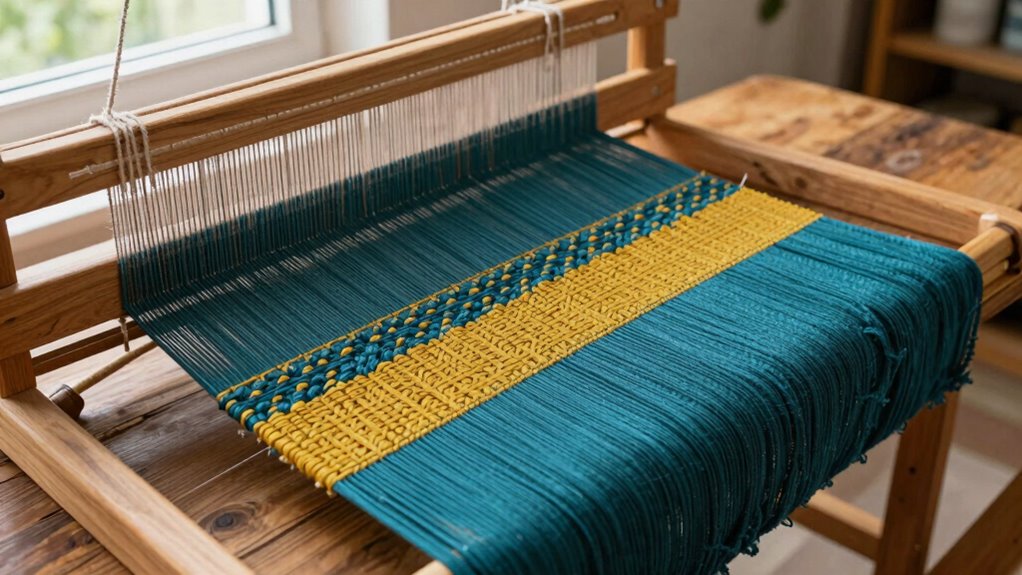

When starting home weaving, choose a lightweight, portable loom like a table or lap loom, perfect for beginners. These looms make it easier to learn basic techniques and experiment with different fibers like wool, cotton, or silk. Look for models with adjustable parts to explore various styles and simplify threading. Picking the right loom helps you build confidence and develop your skills steadily. Keep exploring further details to guarantee you make the best choice for your weaving journey.
Listen free for 30 days with Audible
Thousands of audiobooks and originals — cancel anytime.
As an affiliate, we earn on qualifying purchases.
Key Takeaways
- Choose portable, simple looms like table or lap looms to ease learning and space constraints.
- Select a loom with adjustable parts to explore various weaving techniques and fiber types.
- Match the loom to your skill level and project goals to ensure ease of use and skill development.
- Consider fiber properties—wool, cotton, silk—based on project needs and finished appearance.
- Utilize additional resources to learn fiber characteristics and techniques for better project outcomes.

If you’ve ever considered bringing your creative ideas to life through weaving, choosing the right loom is essential for home use. The type of loom you select can substantially impact your ability to experiment with different fiber types and weaving techniques, so understanding your options is key. For beginners, portable and easy-to-use looms like table looms or lap looms are great starting points. They’re lightweight, don’t take up much space, and allow you to learn the basics without feeling overwhelmed. When you’re just starting, it’s helpful to think about the fiber types you want to work with, such as wool, cotton, silk, or synthetic fibers. Different fibers have unique properties that influence your weaving process; for example, wool is warm and elastic, making it ideal for scarves and blankets, while cotton is lightweight and breathable, perfect for summer accessories. Your choice of fiber impacts not only the look and feel of your finished piece but also the weaving techniques you’ll use.
Selecting a loom that matches your skill level and project ambitions is vital. Many beginner looms come with straightforward mechanisms that let you focus on mastering fundamental weaving techniques like plain weave or twill. As you grow more comfortable, you can explore more complex techniques such as rya or leno, which add texture and visual interest. The right loom also allows you to work comfortably, so consider factors like height, ease of threading, and accessibility. Some looms come with adjustable parts, enabling you to experiment with different weaving styles and fiber types without needing to invest in multiple tools. Understanding the variety of fiber types available can help you choose the most suitable materials for your projects and develop your skills more effectively. Additionally, learning about fiber properties can aid in selecting the best fibers for specific projects and techniques, ensuring successful and satisfying results. Exploring the different weaving techniques can also provide inspiration and help you choose the most appropriate loom to support your creative growth. Moreover, considering the weaving techniques you wish to learn will help determine the most appropriate loom for your needs. Developing a foundational knowledge of fiber characteristics can significantly enhance your ability to select the right materials and achieve the desired outcomes in your weaving projects.
As an affiliate, we earn on qualifying purchases.
Frequently Asked Questions
How Much Space Do I Need for a Home Loom?
You’ll need about 3 to 4 feet of space in width and length for a home loom, plus extra room for loom maintenance and movement. Consider the loom’s size and your comfort when setting up. Knowing weaving history helps you appreciate the craft’s evolution, but make sure your space allows easy access for repairs or adjustments. Creating a dedicated, organized area makes weaving enjoyable and keeps your loom in good shape.
What Safety Precautions Are Necessary When Operating a Loom?
Operating a loom is like steering a delicate dance—safety is key. Always wear safety gear, such as goggles and gloves, to protect your eyes and hands. Keep emergency procedures in mind, like turning off the machine quickly if something goes wrong. Stay alert, avoid distractions, and maintain a clean workspace to prevent accidents. These precautions help you weave safely and confidently into your creative journey.
Can I Upgrade or Expand My Home Loom Later?
Yes, you can upgrade or expand your home loom later. Adding loom accessories, like new heddles or beams, can enhance your weaving capabilities. You might also explore decorative techniques, incorporating different yarns or embellishments to diversify your projects. Upgrading your loom allows you to experiment with more complex patterns and textures, making your weaving experience more enjoyable and rewarding as your skills grow.
What Are the Best Materials for Beginner Weaving Projects?
Imagine soft, inviting clouds or sturdy, rustic bark—your fiber selection shapes your project’s feel and look. For beginners, choose natural fibers like cotton, wool, or linen—they’re easy to work with and forgiving. Prioritize tool maintenance to keep your loom in top shape; clean and oil it regularly. These materials and care techniques make your weaving journey smoother, helping you create beautiful, lasting pieces right at home.
How Long Does It Take to Learn Basic Weaving Techniques?
You can learn basic weaving techniques in a few weeks with consistent practice, but mastering weaving history and loom maintenance takes longer. As you practice, you’ll understand different weaving styles and improve your skills. Regularly maintaining your loom guarantees smooth weaving and prolongs its life. Stay patient, enjoy the process, and soon you’ll be creating beautiful woven pieces while gaining a deeper appreciation for weaving’s rich history.
Conclusion
Now that you know the basics of choosing a loom, understanding its parts, and getting started, you’re ready to create your own woven masterpieces. Embrace the process, enjoy the learning curve, and celebrate each woven piece as a sign of your progress. Remember, a loom is not just a tool—it’s your gateway to creativity, patience, and self-expression. So, pick your loom, weave your story, and let your passion for weaving grow with every thread.
Flea & tick season Picks
flea and tick prevention
As an affiliate, we earn on qualifying purchases.