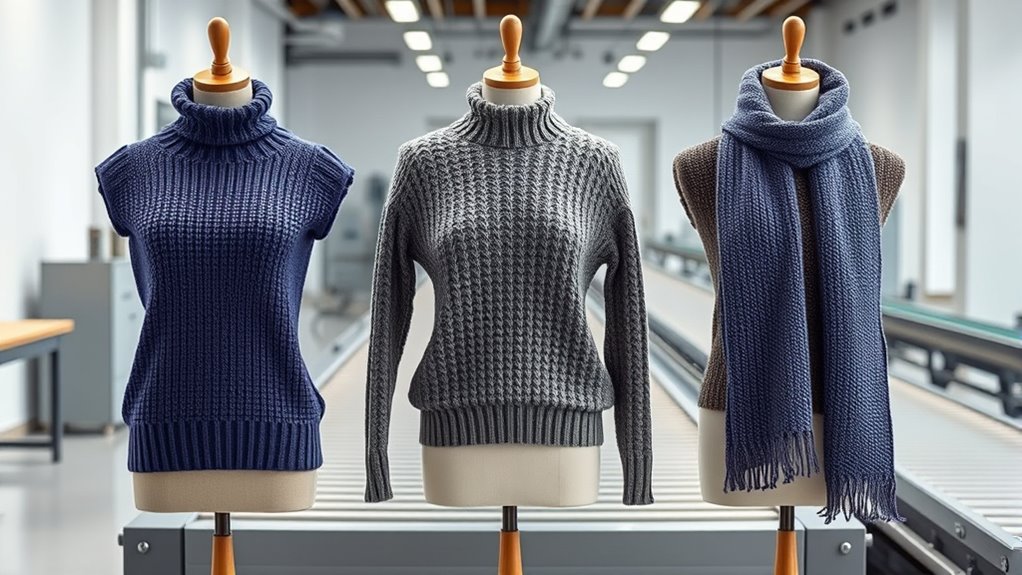
3D knitted garments support on-demand production, helping you create custom, stylish pieces with minimal waste. By using innovative seamless knitting techniques and eco-friendly fibers, you reduce material waste and energy consumption, making your fashion choices more sustainable. This approach allows for quick adaptation to trends and personalized designs while promoting a circular, responsible system. If you want to explore how these advancements are shaping eco-conscious fashion, you’ll find more insights ahead.
Key Takeaways
- 3D knitting enables on-demand production, reducing excess inventory and minimizing waste in garment manufacturing.
- Seamless knitting techniques lower material waste and energy use, promoting environmentally sustainable clothing.
- Use of eco-friendly, recycled, or organic fibers enhances the sustainability of 3D knitted garments.
- Customization options allow quick adaptation to trends, decreasing overproduction and supporting circular fashion.
- Overall, 3D knitting combines efficient, waste-reducing processes with sustainable materials for eco-conscious apparel.
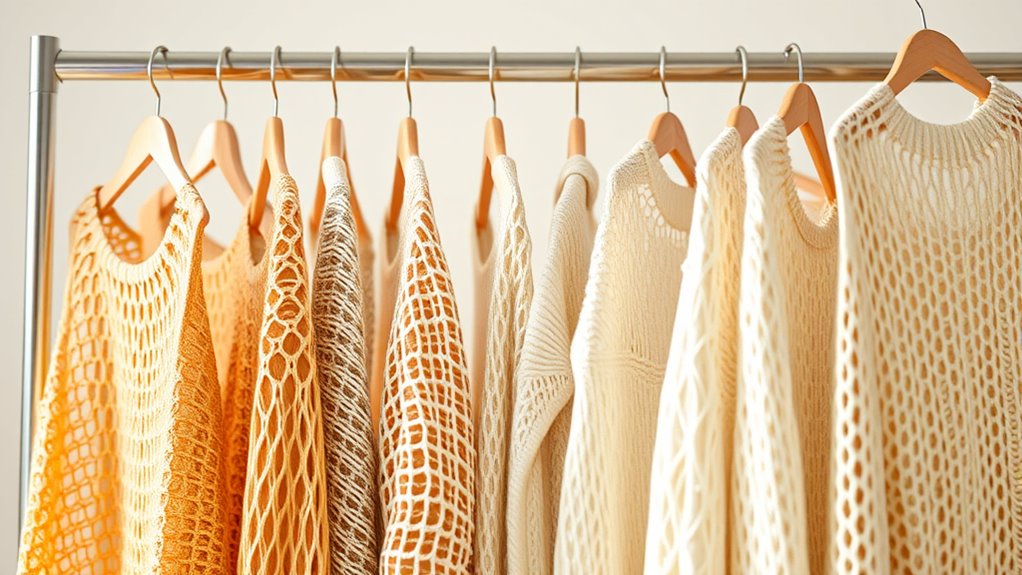
3D knitted garments are revolutionizing the fashion industry by offering innovative, customizable, and sustainable options for consumers. As you explore this technology, you’ll notice how it transforms traditional manufacturing. One of the key advantages is sustainable fiber sourcing. Instead of relying on bulk-produced, environmentally taxing materials, 3D knitting allows you to select fibers that are eco-friendly, recycled, or organic. This means less waste and a smaller carbon footprint for every garment. By choosing sustainable fibers, you’re actively participating in reducing environmental impact while enjoying high-quality, durable clothing that’s built to last.
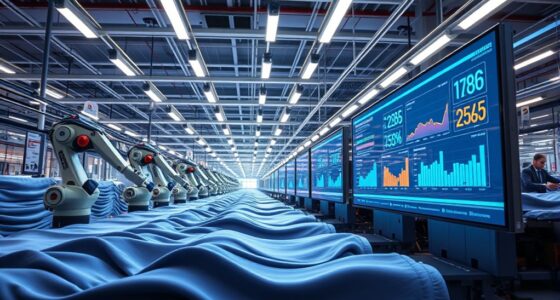
The use of innovative knitting techniques is at the core of this revolution. Unlike conventional methods that often produce excess material and require multiple manufacturing steps, 3D knitting creates entire garments in a single, seamless process. This reduces waste considerably, aligning with your desire for more sustainable fashion choices. These advanced knitting techniques enable you to customize your garments precisely—altering patterns, textures, and fit without the need for multiple prototypes or labor-intensive adjustments. The ability to produce on-demand means you can order exactly what you want, minimizing overproduction, excess inventory, and unsold stock that usually ends up in landfills.
With 3D knitting, you have the power to influence the entire lifecycle of your clothing. The precise control over fiber placement and garment construction means fewer seams, less material waste, and improved comfort. Plus, because the process is digital and automated, it reduces energy consumption compared to traditional manufacturing. This aligns with your eco-conscious values, making each piece not only stylish and functional but also environmentally responsible.
Furthermore, the integration of sustainable fiber sourcing with innovative knitting techniques allows for rapid adaptation to new trends and personal preferences. You can have a custom piece made quickly, without waiting weeks or months for mass production cycles. This on-demand approach cuts down on excess inventory, which is often discarded due to fast-changing fashion cycles. As a result, 3D knitted garments promote a more circular and responsible fashion system, empowering you to make choices that support sustainability without sacrificing style.
In essence, the combination of sustainable fiber sourcing and innovative knitting techniques makes 3D garments a forward-thinking solution. It offers you a way to enjoy personalized, high-quality fashion while actively reducing waste and environmental impact. As you embrace this technology, you become part of a movement toward more mindful, sustainable, and efficient clothing production—one that values quality, customization, and environmental responsibility equally.
Frequently Asked Questions
How Does 3D Knitting Impact Traditional Manufacturing Jobs?
You might notice that 3D knitting impacts traditional manufacturing jobs by automating many processes, which can reduce the need for manual labor. This automation impact shifts the required skills, meaning workers need to adapt to higher-tech roles rather than manual production. While some jobs may decline, new opportunities emerge in design, machine operation, and maintenance, encouraging a skill shift that benefits those willing to learn new technologies.
What Are the Cost Differences Between 3D Knitting and Conventional Methods?
You’ll find that 3D knitting generally has higher initial investment costs due to advanced machinery, but it offers better cost comparison over time because it reduces material waste and labor expenses. Conventional methods often have lower setup costs but can be more expensive long-term because of higher material waste and slower production. Overall, 3D knitting can be more cost-effective for on-demand, sustainable manufacturing, especially as technology advances and economies of scale improve.
How Can Consumers Verify the Sustainability of 3D Knitted Garments?
Think of verifying sustainability like shining a flashlight on a hidden trail. You can check supply chain transparency to see where materials come from and guarantee ethical practices. Eco label verification helps confirm that the garment meets recognized environmental standards. By researching brands that provide clear supply chain info and trusted eco labels, you can confidently choose 3D knitted garments that genuinely support sustainability.
What Are the Limitations of 3D Knitting for Complex Designs?
You might find 3D knitting has limitations for complex designs due to restricted design flexibility and material constraints. The technology excels with simpler, repetitive patterns but struggles with intricate details that require multiple textures or color changes. Material options can also limit creativity, as not all fibers are compatible with 3D knitting processes. These factors can hinder the production of highly detailed, complex garments using this method.
How Scalable Is 3D Knitting for Mass Production?
You might be surprised to learn that 3D knitting can scale for mass production, with some factories producing thousands of units weekly. Its automation potential allows for faster, more efficient manufacturing, reducing waste. Plus, customization flexibility means you can easily adapt designs for large orders or personalized items. While initial setup costs are high, ongoing production can be highly scalable, making it a promising option for brands aiming to grow sustainably.
Conclusion
By embracing 3D knitted garments, you’re stepping into a future where on-demand production weaves sustainability into every stitch. This innovative approach reduces waste and energy use, making your fashion choices more mindful. Think of it as planting seeds for a greener planet—each piece crafted precisely when needed. As technology advances, you’ll find that sustainable fashion isn’t just a dream but a fabric of reality, holding the promise of a more conscious wardrobe for generations to come.