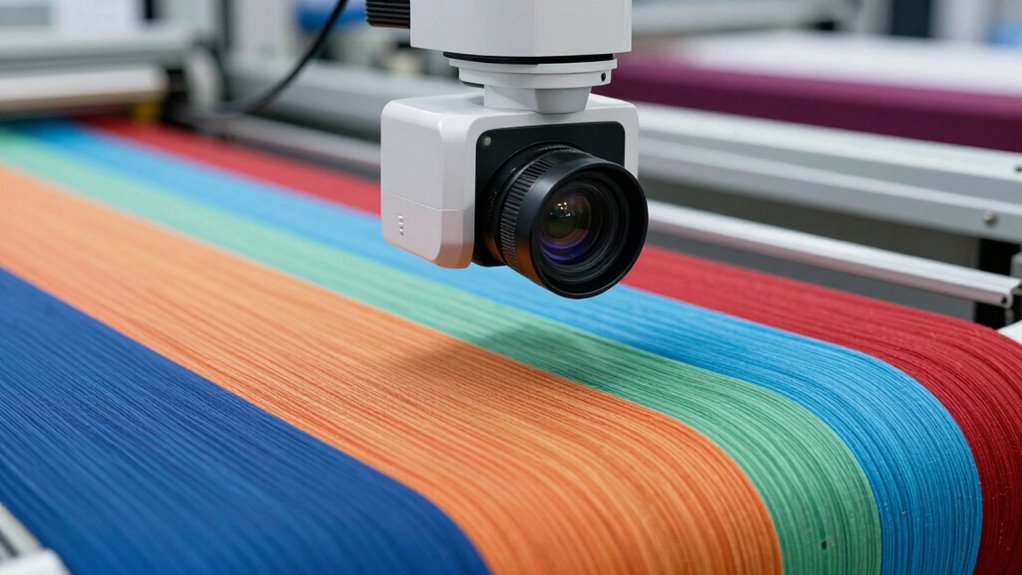

AI-based quality control helps you catch textile defects faster and more accurately than manual checks. It uses machine learning to analyze data from production lines, identifying issues like tears or stains early. Real-time monitoring with sensors provides immediate feedback, reducing waste and rework costs. Over time, the system improves its accuracy, minimizing false alarms. This technology also scales easily to different production sizes, making your entire process more efficient and consistent. Keep exploring to discover how it can transform your operations further.
Key Takeaways
- AI systems detect textile defects more accurately and consistently than manual inspections by analyzing large data sets and recognizing defect patterns.
- Real-time monitoring with cameras enables instant defect identification, preventing defective products from progressing further.
- Continuous learning improves defect recognition, reducing false positives and negatives, ensuring higher product quality.
- AI scalability allows quality control across various production volumes, maintaining high accuracy regardless of batch size.
- Automation reduces manual inspection efforts, freeing staff for strategic tasks and increasing overall production efficiency.
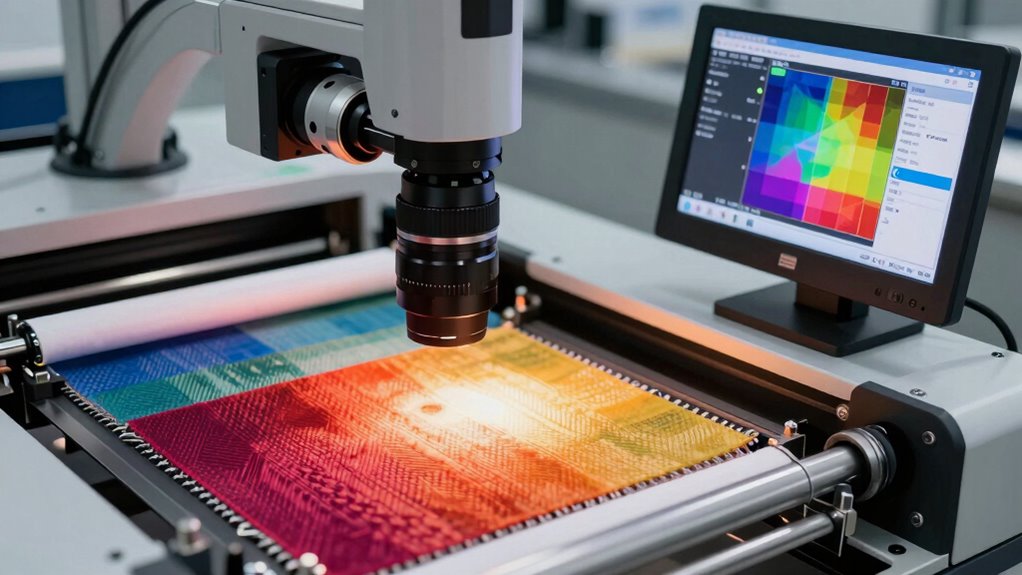
Artificial intelligence is transforming the textile industry by revolutionizing quality control processes. With AI-powered systems, you can now detect defects more efficiently and accurately than traditional methods. Machine learning, a core component of AI, enables these systems to analyze vast amounts of data from production lines, identifying patterns that signal potential issues. This technology continuously learns from new data, improving its defect detection capabilities over time. Instead of relying solely on human inspection, which can be subjective and inconsistent, AI systems provide a consistent and objective assessment of fabric quality.
AI enhances textile quality control with consistent, objective defect detection and continuous learning for improved accuracy over time
When you implement AI-based quality control, defect detection becomes faster and more precise. Cameras and sensors installed along your production line capture high-resolution images of textiles in real-time. These images are then processed by machine learning algorithms trained to recognize various defects, such as tears, stains, or weaving irregularities. Because these algorithms can analyze thousands of images rapidly, they spot issues almost instantaneously, preventing defective products from progressing further down the line. This immediate feedback allows you to address problems at their source, reducing waste and rework costs.
Moreover, AI’s ability to learn from each defect it encounters means your quality control process becomes increasingly refined. As the system gathers more data, it sharpens its ability to distinguish between acceptable variations and actual defects, minimizing false positives and negatives. This continuous improvement ensures that only high-quality textiles reach your customers, enhancing your reputation and reducing returns or complaints.
Another advantage of AI-based quality control is its scalability. Whether you’re producing small batches or large volumes, machine learning models adapt seamlessly, maintaining high accuracy levels. This scalability means you can expand your operations without sacrificing quality, as the AI system handles increased data loads without fatigue or loss of performance. Additionally, integrating AI into your production line minimizes the reliance on manual inspections, freeing up your staff to focus on more strategic tasks, such as process optimization or innovation.

Automation in Garment Manufacturing (The Textile Institute Book)
As an affiliate, we earn on qualifying purchases.
As an affiliate, we earn on qualifying purchases.
Frequently Asked Questions
How Does AI Detect Subtle Fabric Imperfections?
You can see AI detects subtle fabric imperfections through advanced fabric anomaly detection techniques. It uses high-resolution cameras to capture detailed images and algorithms to spot tiny irregularities. AI then classifies defects automatically, distinguishing between different types of flaws with precision. This automated defect classification streamlines quality checks, reduces human error, and guarantees that even the most subtle imperfections are identified quickly, maintaining high-quality standards in textile production.
What Are the Costs of Implementing AI Quality Control Systems?
Sure, diving into AI quality control costs feels like choosing between a private jet and a bicycle. You’ll face hefty initial investments in advanced equipment, software, and staff training, making the cost analysis intimidating. Implementation challenges include integrating AI smoothly into existing workflows and overcoming resistance from staff. However, long-term savings in reduced defects and increased efficiency often justify the upfront expenses, turning these challenges into worthwhile investments.
Can AI Adapt to New Textile Defect Types Automatically?
Yes, AI adaptability allows systems to automatically detect new textile defect types. Advanced AI models use defect prediction techniques to recognize patterns, even when encountering unfamiliar defects. As you implement these systems, they’ll learn from new data, improving accuracy over time. This ongoing adaptability helps reduce textile defects by ensuring your quality control evolves with emerging defect types, minimizing manual intervention and maintaining high product standards.
How Does AI Handle High-Volume Textile Production?
AI handles high-volume textile production like a seasoned conductor, orchestrating seamless operations. With textile automation and AI integration, you can monitor thousands of items swiftly, catching defects before they spread. AI systems process data in real-time, ensuring quality remains consistent even at peak speeds. This combination boosts efficiency, reduces waste, and maintains high standards, making large-scale manufacturing smoother and more reliable—like a well-oiled machine working in harmony.
What Training Is Required for Staff to Operate AI Systems?
You need to undergo staff training focused on system integration and AI operation. This includes understanding how the AI systems work, interpreting data outputs, and troubleshooting common issues. Hands-on training helps you become comfortable with the interface and functionalities. Regular updates and continuous learning guarantee you’re equipped to manage and optimize AI tools effectively, ultimately improving quality control processes in textile production.
Conclusion
Imagine steering a ship through turbulent waters, with AI as your vigilant lighthouse guiding you past hidden rocks of defects. By harnessing AI-based quality control, you become the captain who spots trouble early and navigates smoothly toward flawless fabrics. Just as a lighthouse guarantees safe passage, this technology illuminates imperfections before they reach your customer, guaranteeing your textiles shine with excellence. Embrace AI, and steer your textile journey toward a future of impeccable quality.