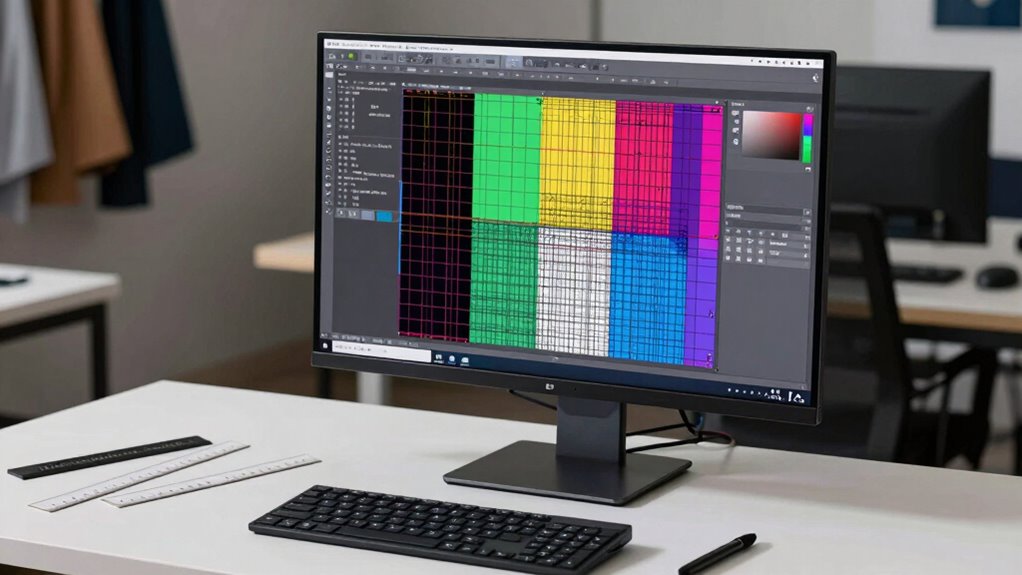

In serious apparel work, setting up your pattern-making CAD involves selecting the right fabric properties, creating precise templates, and using proper grading techniques. You’ll input fabric stretch, weight, and drape for accurate visualization and adjustments. Customizing patterns based on fabrics helps prevent rework. A well-structured setup guarantees consistency across sizes, reduces errors, and streamlines your process. Keep exploring to discover how these elements can elevate your pattern-making precision even further.
Key Takeaways
- Proper CAD setup ensures pattern accuracy, consistency, and scalability across multiple sizes in apparel production.
- Integrating fabric properties early in CAD aids precise pattern adjustments and reduces sampling errors.
- Using templates with grading marks and notches maintains pattern integrity during size variations.
- Customizing patterns based on fabric type optimizes seam allowances and construction details.
- A well-structured CAD workflow streamlines design, boosts communication, and minimizes waste and rework.
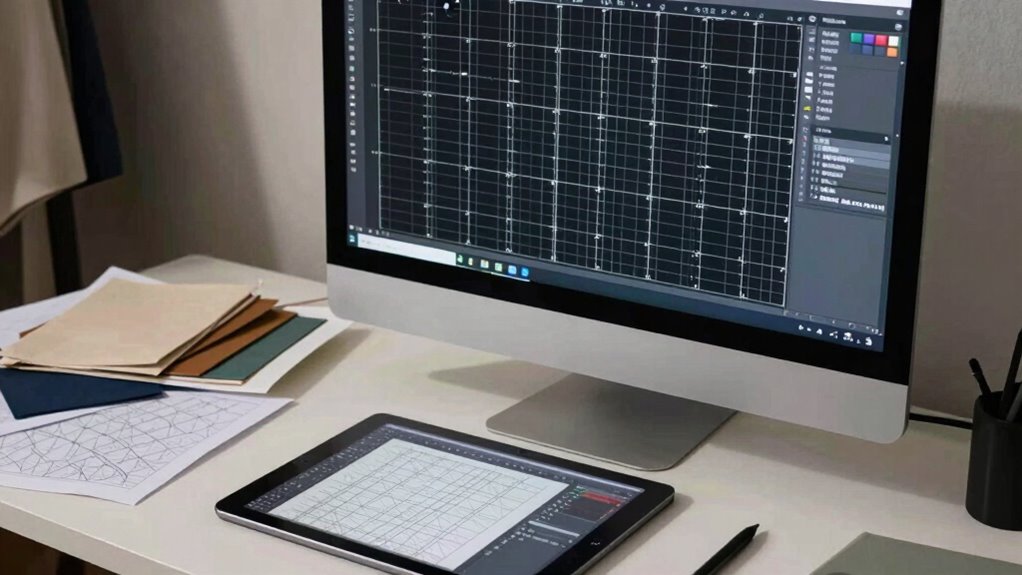
Creating effective pattern-making CAD setups is essential for streamlining your design process and guaranteeing precision. When you’re setting up your CAD environment, paying close attention to how you handle fabric selection and grading techniques can make all the difference. Fabric selection influences how your pattern will behave during production, so integrating detailed fabric specifications into your CAD system helps you visualize true-to-life results. You can input fabric stretch, weight, and drape properties early on, which allows you to make more accurate adjustments to your pattern pieces. This step minimizes surprises later and saves time on fitting sessions or fabric waste. Incorporating biodiversity principles into sustainable fabric choices can support environmentally responsible sourcing and manufacturing practices.
Grading techniques are equally important in your CAD setup because they determine how you size your patterns for different body measurements or size ranges. When you establish a grading system within your CAD software, you create a consistent, scalable template that can be effortlessly adapted for various sizes. This not only guarantees uniformity across your collections but also speeds up the production process. A well-structured grading setup means you can quickly generate size variants, compare them side-by-side, and make necessary tweaks with precision. This reduces errors and streamlines communication with manufacturers, who often rely on clear, accurate grading marks.
As you configure your CAD system, it’s essential to customize your pattern templates to include grading marks and notches aligned with your grading rules. These visual guides help you maintain pattern integrity during size adjustments and make sewing and assembly more straightforward. Incorporate your grading techniques into the software’s automation features—many CAD programs allow you to set rules for incremental size changes—so that adjustments are consistent across your entire range. This consistency is key for maintaining fit quality and reducing sample iterations.
Fabric selection also influences the complexity of your CAD setup. Heavier fabrics or those with unique stretch properties may require different seam allowances or pattern modifications. By creating specific templates for different fabric types within your CAD, you ensure that each pattern reflects the actual construction needs. This proactive approach helps you avoid costly rework and guarantees that your final patterns are optimized for the fabric you plan to use.

Custom Pattern Making with PatternMaker Software: A Step-by-Step Manual for the Professional Studio With an Introduction to Macro Generator
As an affiliate, we earn on qualifying purchases.
As an affiliate, we earn on qualifying purchases.
Frequently Asked Questions
What Are the Best Hardware Specifications for Pattern-Making CAD?
To optimize your pattern-making CAD, guarantee your hardware has robust specifications, including a fast processor, at least 16GB of RAM, and a dedicated graphics card for smooth rendering. Prioritize hardware optimization and check software compatibility to avoid glitches. A high-resolution monitor also helps you see details clearly. Upgrading these components ensures your system handles complex designs efficiently, making your pattern creation process more precise and less frustrating.
How Do I Choose the Right CAD Software for Apparel Design?
To choose the right CAD software for apparel design, focus on digital drafting capabilities and software compatibility with your hardware. You want a program that’s user-friendly yet powerful enough for detailed pattern-making. Consider industry standards like Gerber or Optitex, and make sure it integrates smoothly with your existing tools. Test demos if available, and choose software that matches your skill level and project needs for seamless, efficient design workflows.
What Training Is Recommended for Mastering CAD Pattern-Making?
You should pursue specialized training in pattern drafting and fabric simulation to master CAD pattern-making. Look for courses that cover digital pattern drafting techniques, 3D fabric simulation, and how to manipulate digital patterns efficiently. Practice regularly, explore software tutorials, and seek workshops or online classes that focus on realistic fabric behavior and pattern adjustments. This hands-on approach will enhance your skills and boost your confidence in creating precise, professional apparel designs.
How Do I Troubleshoot Common CAD Setup Issues?
Troubleshooting CAD setup issues is like fine-tuning an instrument—you need precision. First, check your paperless workflow to guarantee files sync correctly across devices. Next, verify your color calibration to avoid mismatched shades. If problems persist, restart the software, update drivers, or reset preferences. These steps help you identify whether the issue stems from hardware, software, or workflow, keeping your pattern-making process smooth and on track.
Can CAD Setups Be Customized for Different Garment Types?
Yes, you can customize CAD setups for different garment types. You should use garment-specific templates that match each design’s unique features, ensuring accuracy and efficiency. Additionally, adapt your material settings to match the fabric’s properties, like stretch or weight, for precise pattern creation. This tailored approach streamlines your workflow, improves fit, and helps you produce high-quality patterns suited to each garment’s specific requirements.
Conclusion
Mastering your pattern-making CAD setups is key to efficient, precise apparel creation. As the saying goes, “Practice makes perfect.” With consistent effort and attention to detail, you’ll streamline your workflow and elevate your designs. Embrace these tools and techniques, knowing that every setback is a step toward mastery. Keep refining your skills, and soon, you’ll turn your vision into reality with confidence and clarity.