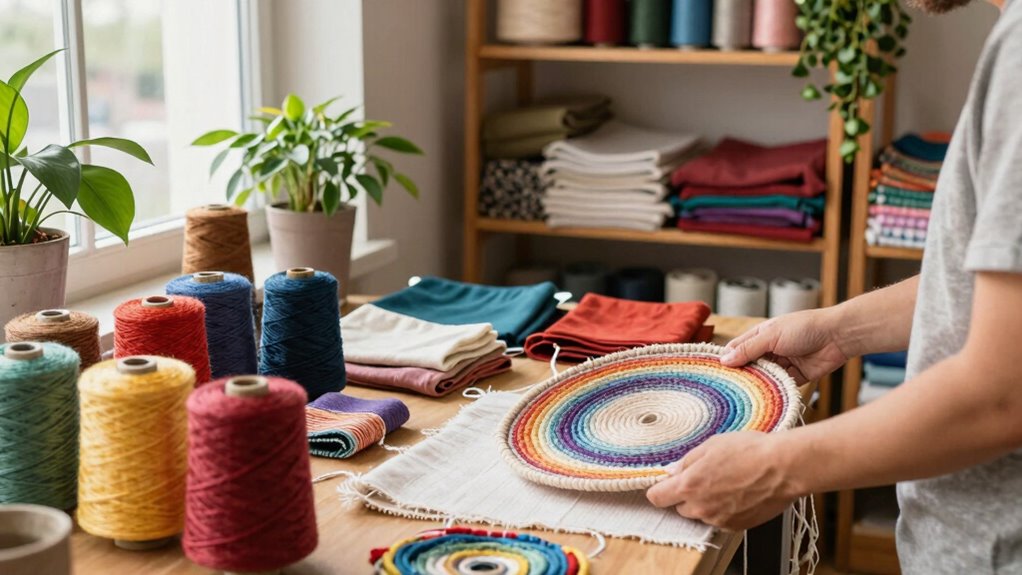

Circular textile thinking is gaining momentum because it offers a way to make fashion more sustainable and resource-efficient. It encourages designing clothes for easy reuse, disassembly, and recycling, helping you reduce waste and minimize environmental impact. Advances in technology, like biodegradable fibers and fabric recycling, support these efforts. As brands and consumers increasingly value eco-friendly practices, this approach is becoming essential for a responsible industry. Stick around to explore how this shift impacts the future of fashion and what it means for you.
Key Takeaways
- Growing environmental awareness drives the shift toward sustainable, circular practices in the fashion industry.
- Circular thinking extends resource lifespan, reduces waste, and minimizes ecological footprints.
- Technological innovations enable fabric recycling, biodegradable fibers, and eco-friendly dyeing methods.
- Consumers increasingly support brands committed to responsible production and environmental values.
- Industry recognizes circular textile practices as essential for long-term sustainability and resilience.
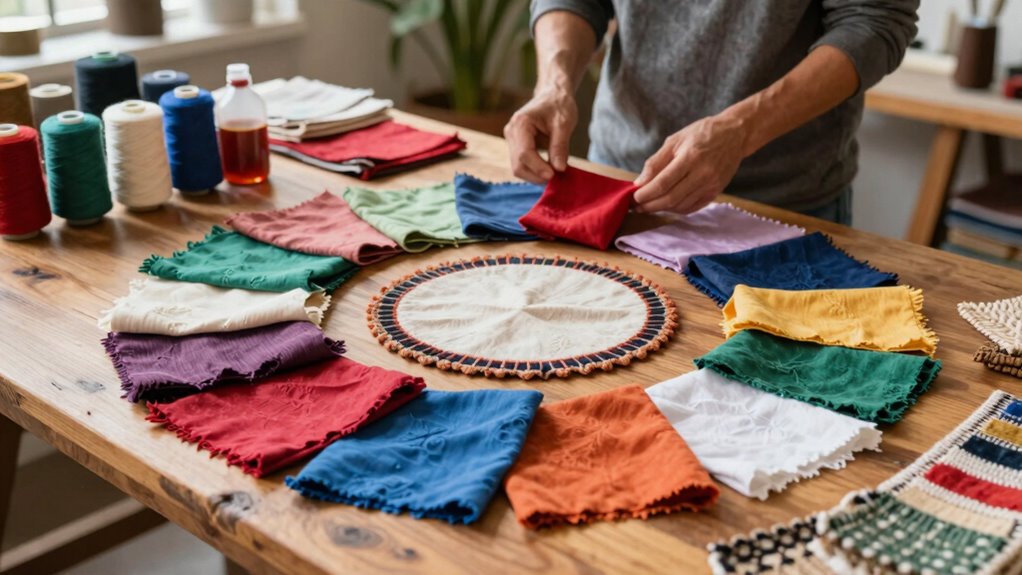
Have you noticed how the fashion industry is shifting toward sustainability? It’s a movement driven by a growing awareness of environmental impacts and a desire for change. One of the most compelling aspects of this shift is the rise of circular textile thinking, which emphasizes designing and producing textiles with the entire lifecycle in mind. This approach isn’t just about recycling at the end; it’s about sustainable innovation—finding new ways to create textiles that minimize waste and use resources more efficiently from the start. By integrating resource efficiency into every stage of production, brands can reduce their ecological footprint while still delivering stylish, functional products.
Circular textile thinking promotes sustainable innovation by designing for the entire lifecycle, reducing waste and resource use from the start.
Circular textile thinking encourages you to rethink traditional supply chains. Instead of the linear model of take, make, dispose, it promotes a closed-loop system. This means designing garments that can be easily disassembled and reused, or made from materials that can be regenerated back into new textiles. It’s a practical way to extend the life of resources and reduce landfill waste. When companies prioritize resource efficiency, they’re not only cutting costs but also decreasing their reliance on raw materials, which often come with environmental costs like deforestation, water pollution, and energy consumption. This shift helps create a more resilient industry that’s less vulnerable to resource scarcity and price fluctuations.
You’ll also notice that sustainable innovation plays an essential role here. It’s about pushing the boundaries of traditional textile manufacturing by exploring biodegradable fibers, plant-based dyes, and renewable energy sources. These innovations allow you to participate in a more circular economy, where materials continuously circulate in a loop instead of becoming waste. Additionally, technological advances like fabric recycling and bio-engineered textiles are making it easier for brands to adopt circular practices. Recognizing the importance of resource efficiency can further drive the adoption of environmentally conscious methods. It’s also crucial to consider how life cycle analysis can help identify areas for improvement throughout the textile’s lifespan, leading to more sustainable decisions. Incorporating technological advancements can help accelerate this transition and improve overall sustainability. This isn’t just good for the planet; it also appeals to consumers who increasingly want to support brands that align with their values. Embracing color accuracy and other technological advancements can further enhance the quality and appeal of sustainable textiles, making them more attractive to conscious shoppers. Moreover, integrating eco-friendly practices like natural filtration systems can help maintain water quality in textile processing.
As the momentum grows, more designers, manufacturers, and consumers are recognizing that circular textile thinking isn’t a passing trend but a necessary evolution. It combines sustainable innovation with resource efficiency, creating a more responsible way to produce and consume fashion. By embracing these principles, you’re helping to build an industry that values longevity, reduces environmental harm, and fosters creativity through smarter, more sustainable practices. This shift isn’t just about saving resources—it’s about redefining what fashion can be in a world that demands more accountability and care for the planet.

Roadmap to Sustainable Textiles and Clothing: Eco-friendly Raw Materials, Technologies, and Processing Methods (Textile Science and Clothing Technology)
As an affiliate, we earn on qualifying purchases.
As an affiliate, we earn on qualifying purchases.
Frequently Asked Questions
How Does Circular Textile Thinking Impact Global Textile Waste Levels?
Circular textile thinking reduces global textile waste levels by enhancing recycling efficiency, allowing more fibers to be reused instead of discarded. It also strengthens supply chain resilience, as materials are recycled locally, reducing reliance on new resources and waste exports. By adopting circular principles, you help minimize landfill buildup and environmental harm, making the industry more sustainable. This shift encourages responsible consumption and creates a closed-loop system that benefits both the planet and your business.
What Challenges Do Companies Face Adopting Circular Textile Practices?
You face challenges like managing complex supply chains and educating consumers about circular practices. Supply chain intricacies make it tough to track and reuse materials efficiently, while consumer education requires clear communication to shift habits toward sustainability. Balancing cost, logistics, and awareness efforts demands significant effort and resources. Overcoming these hurdles is essential for adopting circular textile practices, ultimately reducing waste and promoting eco-friendly choices in the industry.
How Can Consumers Contribute to Circular Textile Initiatives?
You can play a crucial role in circular textile initiatives by embracing recycling education and boosting consumer awareness. Instead of discarding old clothes, recycle or donate them to extend their lifespan. Stay informed about sustainable practices and brands committed to circularity. Your choices matter—opt for eco-friendly fabrics and support companies that prioritize recycling. By making conscious decisions, you help reduce waste and promote a more sustainable fashion industry.
Are There Cost Differences Between Circular and Traditional Textiles?
Yes, there are cost differences between circular and traditional textiles. Circular textiles often involve sustainable material sourcing and advanced recycling technology, which can initially be more expensive due to innovative processes and high-quality materials. However, over time, costs may decrease as recycling technology improves and economies of scale develop. While the upfront costs might be higher, the long-term benefits include reduced waste and resource savings, making circular textiles a smarter investment.
What Innovative Materials Are Emerging in Circular Textiles?
You’ll find innovative materials like sustainable fibers and biodegradable fabrics leading the charge in circular textiles. These materials are designed to reduce environmental impact, with sustainable fibers sourced from recycled or renewable resources, and biodegradable fabrics that break down naturally after use. As you explore circular textile options, you’ll notice brands increasingly adopting these materials to create eco-friendly, durable products that support a closed-loop system and promote sustainability.
Conclusion
As you embrace circular textile thinking, you’re not just weaving fabric—you’re threading hope into a sustainable future. Like a circle that never ends, this mindset symbolizes renewal, resilience, and endless possibilities. Each choice you make becomes a stitch in the fabric of change, empowering you to transform waste into wonder. Together, you and this movement are crafting a world where sustainability is the perpetual pattern, and your actions are the essential, vibrant threads that hold it all together.