Many people believe computerized sewing machines are complicated and hard to use, but that’s a misconception. They’re actually designed to make sewing easier and more precise, blending manual control with advanced technology. You can adjust stitch length, width, and tension easily, while automatic features save time. They’re user-friendly for beginners and versatile for experienced sewists. If you want to discover how these machines truly work and how they can benefit you, there’s more to explore.
Key Takeaways
- Computerized sewing machines are user-friendly and designed to simplify sewing, not just complicated or difficult to operate.
- They offer a balance of manual control and automatic functions for customized stitching and precise results.
- Features like touchscreens and automatic threading make complex tasks easier, catering to both beginners and experienced sewists.
- They support real-time adjustments, allowing flexibility for different fabrics and project requirements.
- Despite advanced technology, they maintain familiarity through manual controls, ensuring a smooth transition from traditional machines.
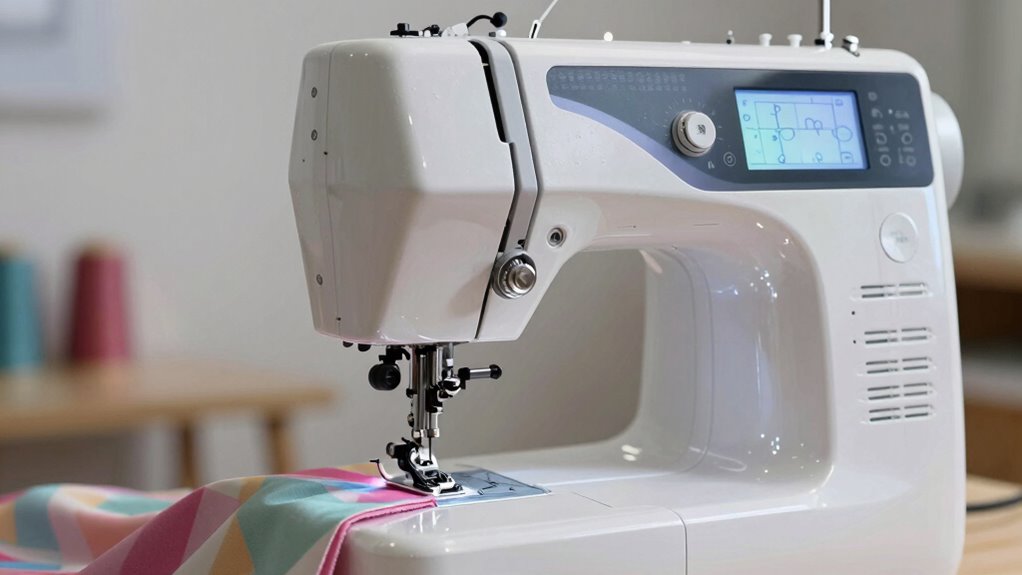
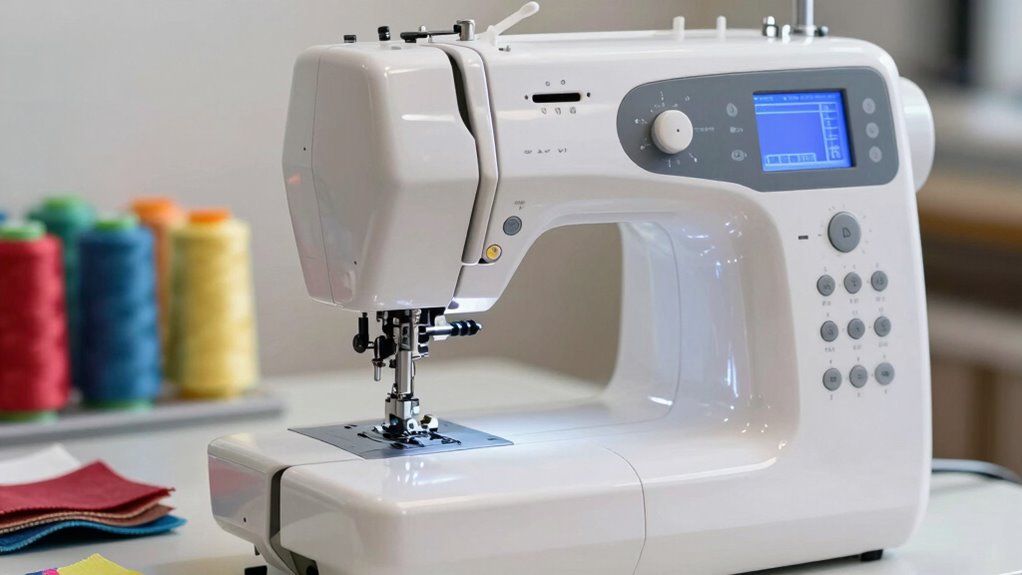
Many people assume that computerized sewing machines are complicated and difficult to use, but in reality, they offer a range of features designed to make sewing easier and more precise. One of the main benefits is the balance between manual control and advanced technology. While these machines come with automatic functions, you still have the option to take manual control when needed. This means you can adjust stitch length, width, and tension manually, giving you a sense of familiarity and control that traditional sewing machines provide. If you’re comfortable with mechanical features, you’ll find that many computerized models include user-friendly dials, buttons, and touchscreens that simplify complex tasks.
You don’t have to rely solely on automatic settings; you can customize stitches and settings to suit your project. For example, if you want a specific decorative stitch or need to fine-tune tension for delicate fabrics, manual control allows you to do so with ease. This flexibility is especially helpful when working with different materials, ensuring that your sewing is precise and professional-looking. The mechanical features incorporated into these machines are designed to enhance your sewing experience without overwhelming you. Many models include adjustable presser foot pressure, built-in needle threaders, and automatic bobbin winding, which streamline your workflow.
Moreover, the mechanical features are often intuitive, making it easy for beginners to get started while still offering advanced options for seasoned sewists. For instance, some computerized machines come with adjustable stitch length and width controls that you can set manually, giving you more creative control over your projects. You don’t have to rely solely on preset patterns; instead, you can modify stitches on the fly, ensuring your work meets your exact specifications. This blend of manual control and mechanized features means you can switch seamlessly between automatic and manual modes, depending on what your project demands. Additionally, understanding the user-friendly interface of these machines can significantly improve your sewing experience.
Furthermore, many models include customizable features, allowing you to tailor the machine’s performance even further for complex or specialized projects. Incorporating advanced technology into these machines ensures that they remain versatile and adaptable to various sewing needs.
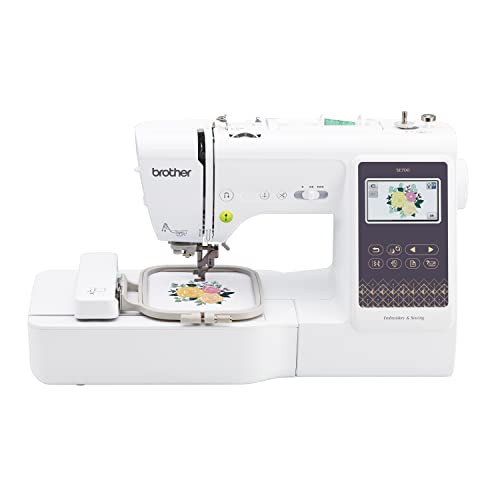
Brother SE700 Sewing and Embroidery Machine, Wireless LAN Connected, 135 Built-in Designs, 103 Built-in Stitches, Computerized, 4" x 4" Hoop Area, 3.7" Touchscreen Display, 8 Included Feet, White
SEWING and EMBROIDERY IN ONE: The SE700 is the ideal machine to start your sewing and embroidery journey…
As an affiliate, we earn on qualifying purchases.
As an affiliate, we earn on qualifying purchases.
Frequently Asked Questions
Are Computerized Sewing Machines Suitable for Beginners?
If you think a computerized sewing machine is your miracle cure for quilting chaos, think again. These machines, from top Sewing machine brands, can be quite the handful for beginners. But don’t worry—stick to beginner sewing tips like starting simple and reading the manual. With patience, you’ll master the buttons and stitches, making your sewing journey less “tech trouble” and more “creative triumph.”
How Much Maintenance Do They Require?
Computerized sewing machines require minimal maintenance, mainly involving manual adjustments and occasional software updates. You’ll need to keep the machine clean by removing lint and dust regularly, and check the bobbin area for thread jams. Software updates help improve features and fix bugs, so stay current with manufacturer instructions. Overall, routine upkeep is straightforward, ensuring your machine runs smoothly and lasts longer with just a bit of attention.
Can They Sew Through Multiple Layers of Thick Fabric?
Think of your machine as a brave explorer venturing into thick material territory—yes, it can sew through multiple layers of layered fabric, but with some limits. High-quality computerized sewing machines are designed to handle dense, thick material, especially if they have strong motors and adjustable speed controls. However, always check the machine’s specifications and use the appropriate needle and thread to guarantee smooth stitching through challenging layered fabric.
What Is the Typical Lifespan of a Computerized Sewing Machine?
A computerized sewing machine typically lasts around 10 years, depending on usage and maintenance. Its lifespan can be extended with proper care, like regular cleaning and timely software updates. Advanced features, such as automatic needle threading or embroidery functions, may require occasional updates to keep them working smoothly. Investing in quality and following manufacturer guidelines helps guarantee your machine remains reliable and functional for many years.
Are Replacement Parts Readily Available?
Replacement parts for computerized sewing machines can be challenging to find, especially for vintage models with manual controls. While some manufacturers keep stock, others may have discontinued parts, making repairs tricky. You might need to search online or visit specialty shops. If you prefer easier access to parts, consider newer models with more readily available replacement components, but be prepared for potential delays or higher costs for vintage machine parts.

HimaPro Automatic Bobbin Winder for Sewing Machine Electrical Bobbin Winder Electric Bobbin Winder – Adjustable Bobbin Slot – Fast and Efficient Winding Experience
Highly Compatible: Adjustable bobbin slot to fit most kinds of bobbins, like bobbins of A style, L style,…
As an affiliate, we earn on qualifying purchases.
As an affiliate, we earn on qualifying purchases.
Conclusion
So, before you rush to buy that shiny computerized sewing machine, remember what the wise old owl might say—sometimes, simplicity is the best stitch. Like Alice chasing the White Rabbit, don’t get lost in the gadgetry maze. Focus on what truly matters: your sewing goals and comfort. With a little patience, you’ll find the perfect machine that’s just right for you, turning your sewing dreams into a beautiful, stitched reality.

Compact Sewing Machine for Beginners – 12 Stitch Settings, Adjustable Speed Pedal, LED Light, and 32 Thread Colors for Home Projects and Alterations
【Versatile Stitch Options for Every Project】 This portable sewing machine offers 12 built-in stitch patterns, from basic seams…
As an affiliate, we earn on qualifying purchases.
As an affiliate, we earn on qualifying purchases.

Brother CS5055 Computerized Sewing Machine, 60 Built-in Stitches, LCD Display, 7 Included Feet, White
60 UNIQUE BUILT-IN STITCHES: The Brother CS5055 sewing machine includes 60 built-in stitches including utility, decorative and heirloom…
As an affiliate, we earn on qualifying purchases.
As an affiliate, we earn on qualifying purchases.