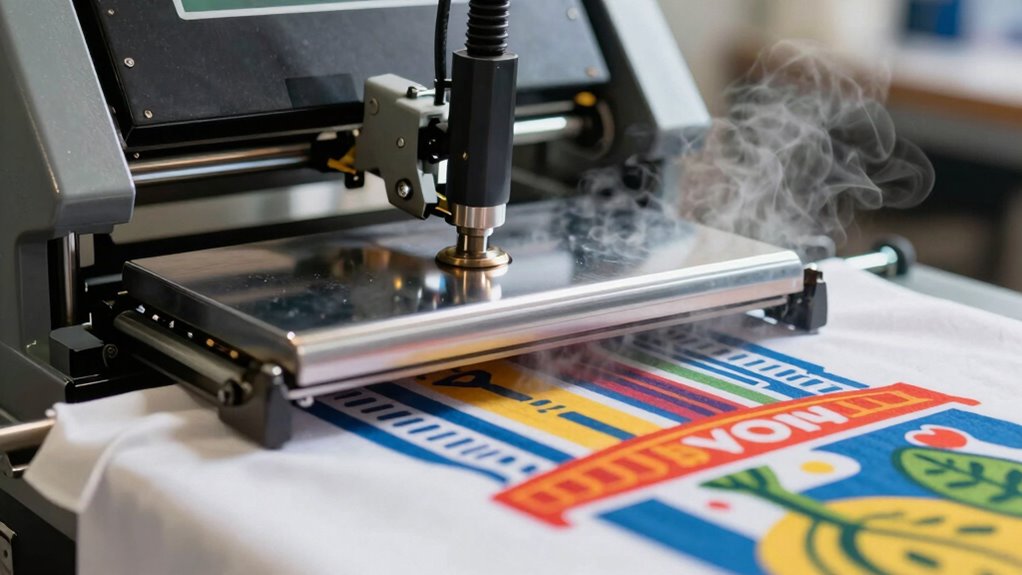
Heat press machines transfer designs onto fabric by applying controlled heat and pressure, which activates adhesives or inks in transfer materials. You place your design on the fabric, close the press, and set the right temperature, pressure, and time. This guarantees a smooth, vibrant, and durable transfer. Proper calibration and technique are key to professional results. If you keep exploring, you’ll discover even more tips to perfect your fabric projects.
Key Takeaways
- Heat press machines use controlled heat and pressure to transfer designs onto fabrics accurately.
- Digital controls allow precise adjustments of temperature, pressure, and time for different fabric types.
- Proper preheating and calibration ensure even heat distribution for consistent results.
- Applying the right pressure and timing activates adhesives or inks in transfer materials.
- Cooling the fabric after pressing enhances the durability and quality of the transferred design.
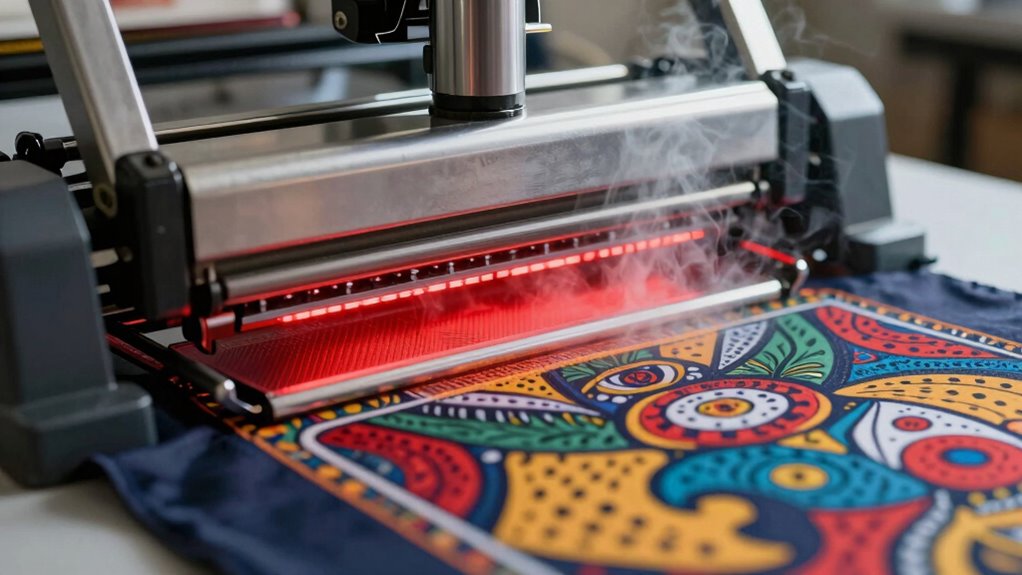
Heat press machines have become indispensable tools for anyone looking to create professional-quality fabric projects with ease. These machines use controlled heat and pressure to transfer designs onto fabrics, making them a popular choice for custom apparel, home décor, and personalized gifts. When you operate a heat press, you’ll notice that many models come equipped with digital controls. These controls simplify the process by allowing you to set precise temperature and time settings, which are essential for achieving perfect transfers. Unlike manual presses, digital controls give you the ability to program specific parameters, guaranteeing consistency across multiple projects. This feature is especially helpful when working with different fabrics, each requiring different heat settings for the best results.
Digital controls ensure precise, consistent transfers across various fabrics for professional-quality results.
Temperature calibration is another critical aspect of using a heat press machine effectively. Proper calibration means the machine maintains the set temperature accurately, preventing issues like incomplete transfers or scorching. Most modern heat presses either have built-in calibration features or display temperature readings that you can verify with a separate thermometer. Regularly checking and adjusting the calibration helps you maintain consistency and avoid wasting materials. When you start a project, it’s important to preheat the machine to guarantee that the temperature is stable before pressing your fabric. This step ensures that your design adheres evenly and reduces the risk of uneven or faded images. Consistent heat application is vital for achieving professional-looking results every time. Additionally, understanding the transfer process can help you troubleshoot common issues and improve your overall results.
Using a heat press involves more than just setting the right temperature; you also need to think about pressure and timing. Digital controls often allow you to adjust pressure levels, which is essential for different fabric types and transfer materials. Applying the right amount of pressure ensures good contact between the transfer and fabric, preventing peeling or bubbling. Proper pressure adjustment can significantly impact the durability of your design and the overall quality of the project. It’s also helpful to familiarize yourself with different fabric types to select the optimal settings for each material. Once you’ve set the correct temperature, pressure, and time, you place your design on the fabric and close the press. The machine then applies consistent heat and pressure for the specified duration, activating the adhesive or ink in the transfer material.
After the pressing cycle ends, it’s important to let the fabric cool slightly before removing the transfer. This helps the design set properly and increases durability. As you become more familiar with your heat press’s digital controls and calibration features, you’ll find it easier to produce professional-quality results. Gaining knowledge about heat transfer techniques can further refine your process and ensure better project outcomes. The key is understanding how to fine-tune these settings based on your specific fabric and transfer material. With practice, you’ll develop a sense of how to get the best results every time, making your fabric projects look polished and professional with minimal effort.
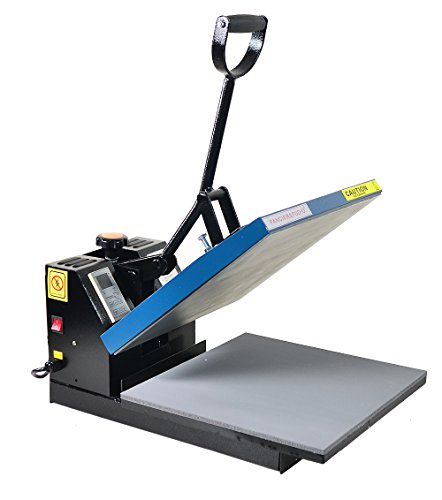
Fancierstudio Digital Heat Press 15 x 15 Sublimation Rhinestone Heat T-Shirt Machine15x15 B/BLK
Voltage: 110 volt Power: 1400 watts, Heat Press Style Clampshell
As an affiliate, we earn on qualifying purchases.
As an affiliate, we earn on qualifying purchases.
Frequently Asked Questions
Can Heat Press Machines Be Used on Delicate Fabrics?
Yes, you can use heat press machines on delicate fabrics, but you must be careful. Delicate fabrics may have lower fabric durability, so adjusting the temperature and pressure is essential to prevent damage. Use gentle heat transfer techniques, such as lower heat settings and shorter pressing times. Always test on a small, inconspicuous area first to make certain your fabric withstands the process without compromising its quality or texture.
What Is the Ideal Temperature Setting for Different Fabrics?
Imagine the perfect press—just the right heat, making colors pop and fabrics smooth. To achieve this, you need precise temperature calibration tailored to each fabric’s compatibility. For delicate materials like silk, set around 300°F, while sturdier fabrics like cotton thrive at 350°F. Always check your fabric’s care label and adjust the heat accordingly, ensuring your project turns out flawless without damage.
How Long Should the Heat Press Be Applied?
You should apply the heat press for the recommended time based on your fabric type, usually between 15 to 60 seconds. To guarantee the best results, use proper heat press maintenance by regularly checking the temperature and pressure settings. If you encounter issues, troubleshoot techniques like adjusting pressure or ensuring even heat distribution. Proper timing helps prevent damage to fabrics and guarantees a long-lasting, professional finish on your projects.
Are There Safety Precautions When Using a Heat Press?
When using a heat press, you should follow safety precautions like wearing safety gear such as heat-resistant gloves and eye protection. Always keep the area clear, avoid loose clothing, and guarantee proper machine maintenance to prevent malfunctions. Never leave the machine unattended while it’s hot, and regularly inspect cords and components for damage. These precautions help protect you from burns and ensure safe, effective operation.
Can Heat Press Machines Be Used for Sublimation?
Yes, you can use heat press machines for sublimation, but it depends on ink compatibility. Sublimation transfers dye-based inks into polyester fabrics or specially coated surfaces, unlike direct-to-garment printing. Make sure your heat press reaches the right temperature and pressure for sublimation. While sublimation vs. direct printing differ in process, your machine’s versatility allows you to switch between methods if it’s compatible with sublimation inks and surfaces.
Fancierstudio Digital Heat Press 15 x 15 Sublimation Rhinestone Heat T-Shirt Machine15x15 B/BLK
Voltage: 110 volt Power: 1400 watts, Heat Press Style Clampshell
As an affiliate, we earn on qualifying purchases.
As an affiliate, we earn on qualifying purchases.
Conclusion
Now that you know how heat press machines work on fabric projects, you’re ready to jump in and create stunning designs. Just remember, patience is a virtue—get the temperature and pressure just right, and your project will turn out perfect. Don’t be afraid to experiment and learn as you go. With a little practice, you’ll be able to turn any fabric idea into a masterpiece. Keep at it, and the sky’s the limit!

Calogy Mini Heat Press, Heat Transfer Machine, Constant Temp Control, Insulated Safety Base, Fits for Crafts, T-Shirt, Hat, Cap, Pillows(White Pink)
Only 1 Button Design: Press 1 time to increase temp; press 2 times to decrease temp; Press 3…
As an affiliate, we earn on qualifying purchases.
As an affiliate, we earn on qualifying purchases.

12×12 inch Personalized Customer Your Photo/Text/imag Iron on Transfers for T-Shirts Chest Logo Iron on Decals Heat Transfer Sticker for Clothes/Bag DIY Decorations DTF Transfers Ready to Press
🌸High-Quality Direct-to-Film Transfer Crafted with premium inks and advanced DTF technology, our transfers ensure vibrant, durable, and crack-resistant…
As an affiliate, we earn on qualifying purchases.
As an affiliate, we earn on qualifying purchases.