Artisanal and heritage fabrics blend centuries-old craftsmanship with modern innovation, creating unique textiles that honor tradition while appealing to contemporary tastes. You’ll find artisans using natural dyes, hand-spinning, weaving, and embroidery techniques passed down through generations. Many incorporate sustainable practices and new design influences, making these fabrics both authentic and fresh. If you want to discover how tradition and innovation intertwine in these textiles, keep exploring the vibrant world of heritage craftsmanship.
Key Takeaways
- Artisanal fabrics preserve centuries-old craftsmanship through techniques like hand-spinning, weaving, and embroidery, maintaining cultural authenticity.
- Sustainable dyeing methods using natural plant-based and mineral pigments ensure vibrant colors while protecting ecosystems.
- Modern artisans blend traditional motifs with contemporary designs, creating innovative textiles that appeal globally.
- Emphasizing ethical practices supports local communities, promotes ecological responsibility, and safeguards endangered craft traditions.
- Integration of new technologies with age-old techniques fosters the evolution of heritage fabrics, ensuring their relevance for future generations.
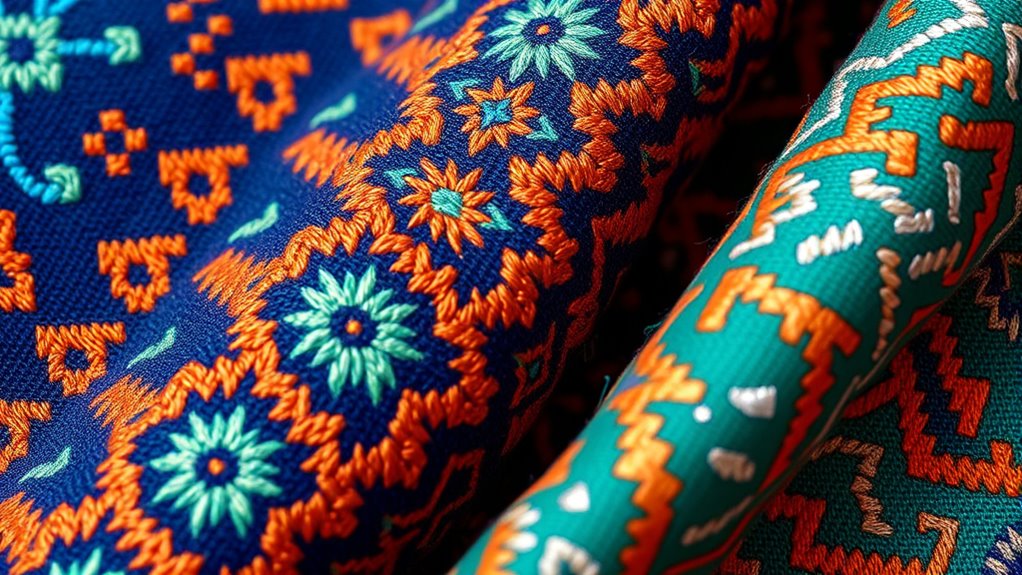
Artisanal and heritage fabrics embody centuries of craftsmanship, showcasing the rich cultural traditions behind each woven thread. When you explore these textiles, you uncover stories of generations who perfected their craft through meticulous craftsmanship techniques. These methods often involve natural, sustainable dyeing processes that honor the environment while enhancing the beauty and depth of the fabrics. Instead of synthetic dyes, artisans turn to plant-based extracts, mineral-based pigments, and other eco-friendly sources to produce vibrant, long-lasting colors. This sustainable dyeing not only preserves the land and ecosystems but also guarantees that each piece remains a true reflection of its cultural roots.
By engaging with these fabrics, you embrace a tradition that values quality over quantity. The craftsmanship techniques used in creating artisanal textiles are typically labor-intensive, requiring skill, patience, and an eye for detail. For example, hand-spinning fibers into yarn, manually weaving intricate patterns, or applying traditional embroidery techniques all contribute to the uniqueness of each fabric. These methods often involve a deep understanding of locally available materials and an intuitive knowledge passed down through generations. When you hold a piece of heritage fabric, you’re holding a tangible link to the history and identity of a community, crafted with a level of care that mass-produced textiles can’t match. Craftsmanship techniques are vital in maintaining the authenticity and integrity of these textiles.
Innovation plays a vital role in keeping these traditions alive. Contemporary artisans are blending age-old craftsmanship techniques with modern design influences, creating textiles that are both authentic and fresh. This fusion allows heritage fabrics to appeal to a broader audience, while still respecting the origins of their craft. You might see traditional motifs reinterpreted with a contemporary twist, or new sustainable dyeing methods integrated into centuries-old weaving practices. This balance between tradition and innovation guarantees that these fabrics stay relevant and desirable in today’s fashion and interior design worlds.
As someone interested in sustainable fashion and cultural preservation, choosing artisanal and heritage fabrics supports ethical practices that prioritize the environment and local communities. Every piece you select carries a story of resilience, skill, and reverence for nature. When you appreciate the craftsmanship techniques and sustainable dyeing methods behind these textiles, you’re not just buying a fabric—you’re investing in a tradition that values authenticity and ecological responsibility. This conscious approach helps protect these ancient arts from fading into obscurity and encourages their evolution in sustainable ways, guaranteeing they continue to inspire future generations.
Frequently Asked Questions
How Do Artisanal Fabrics Impact Local Economies?
Artisanal fabrics boost local economies by supporting rural development and promoting cultural preservation. When you buy these fabrics, you help sustain traditional crafts and provide livelihoods for artisans in rural areas. This encourages community growth, preserves cultural heritage, and boosts local income. Your support helps these communities thrive, ensuring that ancient techniques are passed down while fostering economic stability through the demand for authentic, handcrafted textiles.
What Are the Environmental Benefits of Traditional Fabric-Making?
Think of traditional fabric-making as nurturing a garden that keeps growing healthier. You benefit from eco-friendly materials and sustainable dyeing, which reduce pollution and conserve resources. By choosing artisanal fabrics, you support eco-conscious practices that protect the environment, from water savings to minimal chemical use. This approach not only preserves centuries-old techniques but also guarantees your clothing choices help sustain our planet for future generations.
How Can Technology Enhance Heritage Textile Preservation?
You can use technology like digital archiving to document and preserve heritage textiles, ensuring detailed records are accessible worldwide. Virtual reality allows you to create immersive experiences, showcasing traditional fabric-making techniques and cultural stories. These tools help protect endangered crafts, educate others, and keep the tradition alive for future generations. By embracing digital archiving and virtual reality, you enhance heritage textile preservation while respecting and celebrating cultural craftsmanship.
Are Artisanal Fabrics Suitable for Modern Fashion Trends?
Sure, artisanal fabrics are *perfectly* suited for modern fashion trends—if you enjoy sacrificing cultural authenticity and fabric versatility. Their rich textures and traditional craftsmanship add a unique touch to contemporary designs, making them stand out. You can blend heritage with innovation, creating stylish pieces that honor tradition while appealing to current tastes. Embracing artisanal fabrics lets you celebrate cultural authenticity while exploring the limitless possibilities of fabric versatility in fashion.
What Challenges Do Artisans Face in Maintaining Traditional Methods?
You face challenges in maintaining traditional methods, especially balancing sustainable sourcing with preserving skills. Limited access to eco-friendly materials can hinder authenticity, while generational skill gaps threaten craftsmanship continuity. You must also adapt techniques to modern demands without sacrificing heritage. These obstacles require dedication to skill preservation and sustainable practices, ensuring your artisanal methods survive and thrive in a changing industry.
Conclusion
By embracing artisanal and heritage fabrics, you keep centuries-old traditions alive while embracing innovation. Did you know that the global market for handmade textiles is expected to grow by 7% annually over the next five years? This shows there’s a growing appreciation for craftsmanship and sustainability. So, as you explore these fabrics, remember you’re not just wearing or using something beautiful—you’re supporting a rich cultural legacy and shaping a more conscious future.