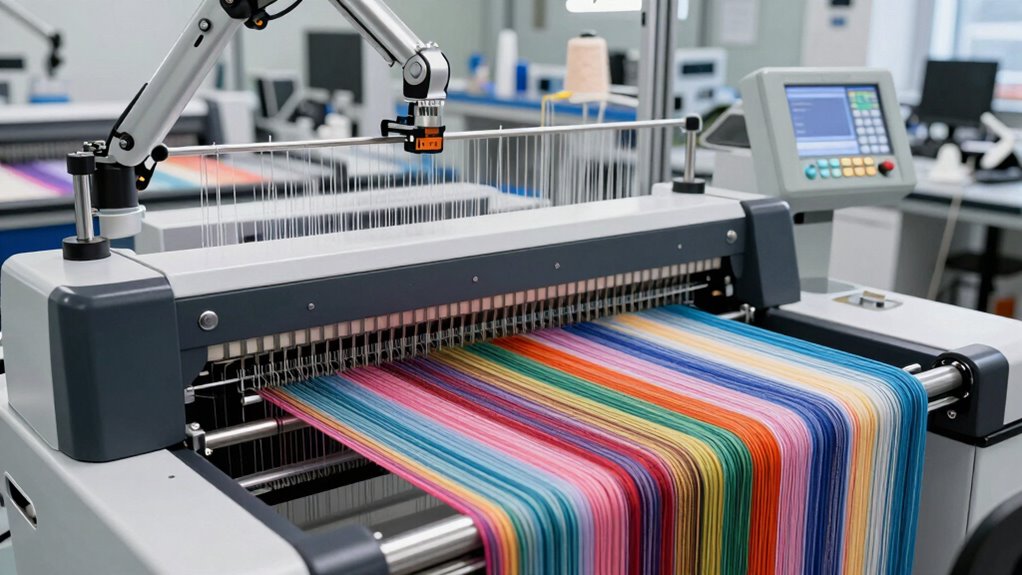

3D knitting revolutionizes garment production by allowing you to create seamless, intricate designs directly on the machine, reducing the need for cutting and sewing. It enables faster, customized manufacturing tailored to individual measurements, cutting waste and promoting eco-friendly practices. This technology also offers new textile features and enhanced fit, making garments more comfortable and functional. If you want to see how these innovations shape the future of fashion, keep exploring further.

Get your wardrobe favorites delivered free with Prime
- Fast, free delivery on millions of items
- Prime Video, Amazon Music and more included
- Member-only deals all year
Key Takeaways
- Enables the creation of seamless, complex garments directly on knitting machines, reducing manufacturing steps and waste.
- Facilitates on-demand, personalized production, minimizing overstock and enabling tailored fits.
- Allows incorporation of sustainable materials, significantly decreasing fabric waste and supporting eco-friendly practices.
- Speeds up production times with entire garments knit in one piece, improving responsiveness to market trends.
- Supports innovative textile features and functional designs through precise digital control and customization.
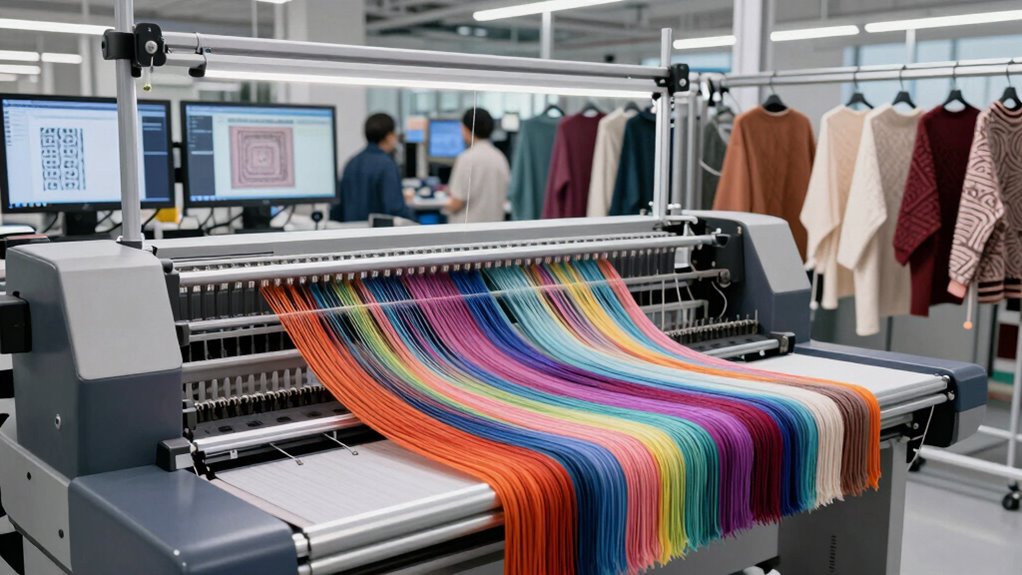
3D knitting is revolutionizing garment production by enabling manufacturers to create complex, seamless designs directly on the knitting machine. This technology allows you to produce garments with intricate patterns, precise shaping, and minimal waste, transforming traditional manufacturing methods. One of the key advantages is the ability to work with sustainable materials. Because 3D knitting reduces fabric waste markedly—since there’s no need for cutting and sewing—you can choose eco-friendly fibers, such as recycled polyester or organic cotton, without worrying about excess scraps ending up in landfills. This shift toward sustainable materials aligns with growing consumer demand for environmentally responsible fashion, making your production process both innovative and eco-conscious.
With 3D knitting, you also gain unparalleled customization options. You can design garments tailored specifically to individual measurements or preferences, creating unique fits that traditional methods struggle to achieve efficiently. This opens doors for on-demand production, reducing overstock and excess inventory. You can easily modify patterns or add personalized details like logos or colorways directly into the knitting process, streamlining the entire workflow. The ability to customize at this level means you’re not limited to mass-produced, one-size-fits-all pieces; instead, you can serve niche markets or provide bespoke options that elevate your brand’s identity. Furthermore, the digital integration of 3D knitting technology enhances production control and allows for seamless updates to designs in real-time, optimizing your entire supply chain.
Additionally, 3D knitting accelerates production timelines. Since entire garments are knit in one piece, the need for multiple manufacturing steps diminishes. This increases your capacity to respond quickly to market trends or individual customer demands. The seamless nature of the finished product also enhances comfort and fit, providing a better experience for consumers. Plus, by integrating sustainable materials into the design, you appeal to environmentally conscious buyers who value transparency and ethical production practices. The precision offered by 3D knitting ensures consistent quality across batches, minimizing errors and waste. Moreover, the technology’s ability to produce multi-functional textiles opens new possibilities for innovative garment features and performance enhancements.
3D knitting machine for garments
As an affiliate, we earn on qualifying purchases.
As an affiliate, we earn on qualifying purchases.
Frequently Asked Questions
How Does 3D Knitting Impact Garment Recycling and Sustainability?
You’ll find that 3D knitting boosts recycling efficiency by creating seamless garments with minimal waste. It also encourages the use of sustainable materials, as precise knitting reduces excess fabric and scraps. This technology allows you to produce eco-friendly pieces directly designed for recycling, cutting down landfill waste. Overall, 3D knitting helps you make more sustainable choices in fashion, promoting responsible production and reducing environmental impact.
Can 3D Knitting Be Customized for Individual Body Measurements?
Yes, 3D knitting can be customized for your individual body measurements. You have access to a variety of personalization options, allowing garments to fit perfectly. The technology offers high measurement precision, ensuring each piece contours accurately to your unique shape. This customization reduces waste and enhances comfort, making 3D knitting a smart choice for tailored apparel. You’ll enjoy a better fit and a truly personalized wardrobe experience.
What Are the Initial Costs of Adopting 3D Knitting Technology?
You’ll find initial costs for adopting 3D knitting range from $100,000 to $500,000. This includes expenses for technology integration and equipment upgrades. A thorough cost analysis reveals that while the upfront investment is significant, it often leads to long-term savings through reduced waste and faster production cycles. Embracing this technology can revolutionize your manufacturing process, making it more efficient and adaptable to market demands.
How Does 3D Knitting Affect Traditional Manufacturing Labor Roles?
You’ll find that 3D knitting shifts traditional manufacturing labor roles by increasing labor automation, reducing the need for manual stitching, and streamlining production. As a result, you’ll experience a skill redistribution, where workers focus more on machine operation and quality control rather than manual sewing. This shift can lead to a more efficient workforce, but it also requires retraining staff to adapt to new technologies and roles.
Are There Limitations to the Types of Garments Produced With 3D Knitting?
While 3D knitting offers remarkable design flexibility, it does face limitations. You might find that material constraints restrict the types of garments produced, especially complex designs or those requiring diverse textures. Certain intricate or highly detailed pieces may still challenge this technology. So, although 3D knitting revolutionizes production with rapid, seamless creation, you’re somewhat limited by material choices and the complexity of designs that can be effectively manufactured.
Conclusion
As you watch the fabric come to life, seamlessly molded into complex shapes, you realize 3D knitting isn’t just transforming production—it’s rewriting the future of fashion. Imagine a world where garments fit perfectly right off the machine, with no waste or delays. The possibilities are endless, and the next breakthrough could be just a stitch away. Are you ready to step into this new era, where innovation and design collide in a single, breathtaking fabric?
Halloween Picks
halloween
As an affiliate, we earn on qualifying purchases.