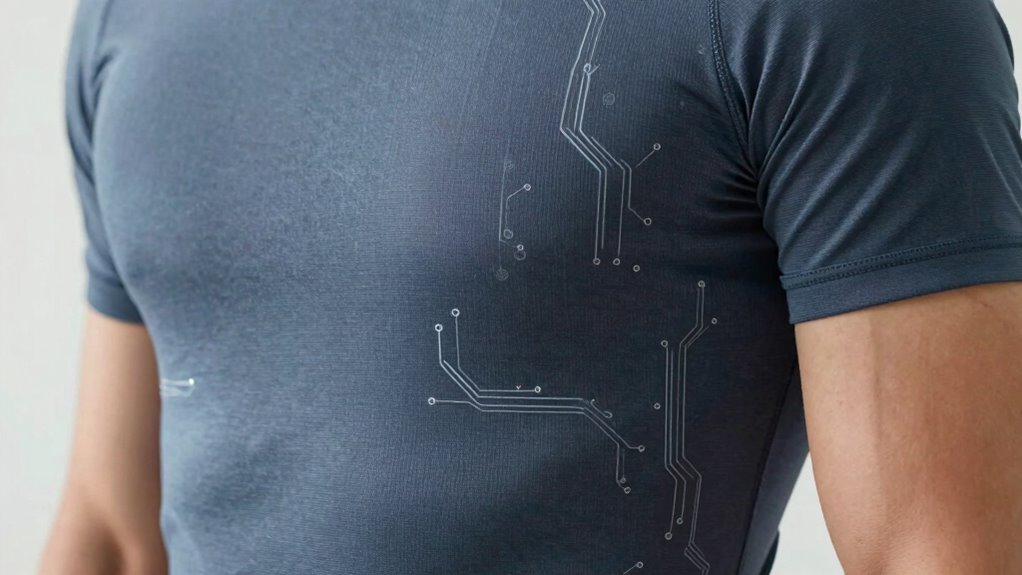

Textile sensors could revolutionize your health monitoring by seamlessly embedding into your clothing, offering continuous, real-time data on essential signs like heart rate, respiration, and temperature. They move with you, making health tracking comfortable and unobtrusive during daily activities. These sensors are durable, washable, and can connect wirelessly to healthcare providers. As technology advances, you’ll see more personalized insights helping you stay proactive about your health—stay with us to discover more about this exciting shift.

Get your wardrobe favorites delivered free — and shop member deals
- Fast, free delivery on millions of items
- Access to Prime Big Deal Days deals on October 6–7
- Prime Video, Amazon Music and more included
Key Takeaways
- Enable continuous, unobtrusive health monitoring integrated into everyday clothing for real-time vital sign tracking.
- Improve comfort and durability compared to traditional medical devices, supporting long-term use and maintenance.
- Facilitate early detection and management of chronic conditions through persistent data collection and analysis.
- Allow remote healthcare oversight, reducing hospital visits and promoting proactive, personalized medical interventions.
- Drive advancements in smart textiles, making health monitoring more accessible, comfortable, and seamlessly integrated into daily life.

Textile sensors are revolutionizing health monitoring by seamlessly integrating into daily life. These innovative devices are at the forefront of smart fabric innovations, allowing clothing to become more than just a fashion statement—they’re now crucial tools for tracking your health. By embedding sensors directly into fabrics, you gain continuous, real-time data on vital signs such as heart rate, respiration, and temperature without having to wear bulky gadgets. This integration means you can wear your health monitor just like any other piece of clothing, making health tracking effortless and less intrusive.
Textile sensors seamlessly integrate into daily wear, providing continuous, real-time health data without bulky devices.
The key to this transformation lies in wearable technology integration. Textile sensors are designed to work harmoniously with your everyday wardrobe, creating a seamless connection between your body and digital health platforms. Unlike traditional medical devices, which often require specific setups or uncomfortable attachments, these sensors are embedded into fabrics that move with you. This flexibility ensures that data collection doesn’t interfere with your daily routines, whether you’re working out, sleeping, or simply going about your day. As a result, these sensors enable continuous monitoring, providing a more complete picture of your health over time.
Moreover, the use of smart fabric innovations means these textiles are durable, washable, and adaptable to different environments. You don’t need to worry about damaging the sensors when cleaning your clothes, and they can withstand various physical activities. This resilience makes textile sensors practical for long-term health monitoring, opening up possibilities for early detection of health issues or chronic condition management. For example, athletes can benefit from real-time feedback on their exertion levels, while those with health conditions can have their vital signs monitored remotely by healthcare providers. Additionally, ongoing advancements in smart fabric technologies are making these textiles more comfortable and easier to care for, encouraging widespread adoption. As research advances, the integration of sensor technology into everyday clothing will become even more sophisticated, further improving accuracy and functionality.
Furthermore, the development of innovative textiles incorporating sensors is fostering new opportunities for personalized health insights, as they can be tailored to individual needs and conditions. The integration of textile sensors also paves the way for personalized health insights. Because the sensors collect continuous data, you and your healthcare team can identify patterns and potential health concerns before symptoms become severe. This proactive approach shifts healthcare from reactive treatment to prevention, reducing hospital visits and improving overall well-being. Furthermore, the development of wearable technology is accelerating, allowing for even more sophisticated and unobtrusive health monitoring options. Plus, the data collected is often transmitted wirelessly, making it easy to share with doctors or health apps, which further enhances personalized care.
In essence, textile sensors are set to revolutionize health monitoring by making it more comfortable, accessible, and precise. With ongoing innovations in smart fabrics and wearable technology integration, your everyday clothing could soon become your most reliable health companion—monitoring, alerting, and helping you stay healthier without disrupting your lifestyle.
smart textile health monitoring shirts
As an affiliate, we earn on qualifying purchases.
As an affiliate, we earn on qualifying purchases.
Frequently Asked Questions
How Durable Are Textile Sensors During Daily Wear?
Textile sensors are quite durable during daily wear, thanks to their material flexibility and wear resistance. You’ll find that high-quality sensors bend and stretch with your movements without breaking or losing function. Their flexible materials help them withstand regular washing and friction, making them reliable over time. While some lower-grade options might degrade faster, selecting sensors with strong wear resistance ensures they stay functional and comfortable through your everyday activities.
Can Textile Sensors Be Customized for Specific Health Conditions?
They say “the proof of the pudding is in the eating,” and textile sensors can indeed be customized for specific health conditions. You can tailor material flexibility to fit different body parts and needs, ensuring comfort and functionality. Sensor calibration plays a vital role in accuracy. By adjusting calibration settings, these sensors can monitor particular health issues, making personalized health tracking more precise and effective for your unique needs.
What Is the Cost Comparison With Traditional Health Monitoring Devices?
Textile sensors are generally more cost-efficient than traditional health monitoring devices because they are integrated into clothing, reducing the need for separate gadgets. Their affordability comparison shows that, over time, textile sensors can lower expenses by enabling continuous, real-time monitoring without frequent replacements or upgrades. This makes them a more accessible option for many users, especially in large-scale health management or remote care, where cost savings are vital.
Are Textile Sensors Safe for Long-Term Skin Contact?
Sure, textile sensors are safe for long-term skin contact—just like that beloved, slightly itchy sweater you wear every winter. They’re designed with biocompatible materials, ensuring minimal skin irritation. Regular sensor calibration prevents false readings or discomfort, making them even more user-friendly. So, you can confidently wear your “smart” shirt all day, knowing it’s gentle on your skin and ready to give accurate health insights without turning you into a rash-ridden fashion statement.
How Do Textile Sensors Handle Data Privacy and Security?
Textile sensors handle data privacy and security through robust data encryption methods, ensuring your health data stays protected during transmission and storage. They also comply with privacy regulations like GDPR or HIPAA, which set standards for data handling. By implementing these measures, manufacturers safeguard your sensitive information, giving you peace of mind that your health data remains confidential and secure while benefiting from real-time monitoring.
Conclusion
Imagine textile sensors as the stitches in the fabric of your health, seamlessly woven into everyday life. They hold the power to transform health monitoring from bulky devices into a second skin, providing real-time insights and early warnings. Like a loyal guard dog, these sensors stay alert, ensuring you stay informed and healthy. Embracing this innovation means stepping into a future where your clothing is not just attire but an essential part of your wellness journey.
Fall Picks
fall essentials
As an affiliate, we earn on qualifying purchases.