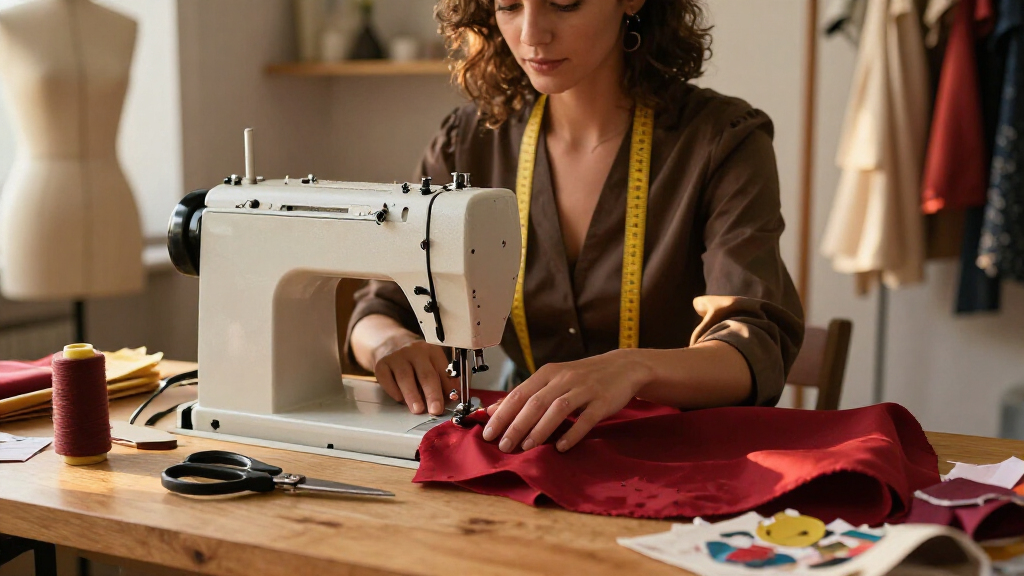

For most home sewists, I’d start with the Brother CS7000X: its computerized controls, broad stitch selection, and quilting-friendly accessories make it a balanced choice for varied projects. The SINGER Quantum Stylist 9960 offers more stitch variety for detail-focused work, while the Brother XM2701 keeps things simpler for beginners. The main tradeoffs are computerized convenience versus mechanical simplicity, and extra features versus a machine’s size and learning curve. Heavy-duty models may suit frequent work with thicker fabrics, but they are not automatically better for every project. Read on for the full breakdown and a guide to matching a machine to your sewing habits.

Get your wardrobe favorites delivered free with Prime
- Fast, free delivery on millions of items
- Prime Video, Amazon Music and more included
- Member-only deals all year
Key Takeaways
- The Brother CS7000X is the strongest all-rounder in this group: it combines computerized operation and quilting-oriented features without being as specialized as the embroidery-capable Brother SE700.
- More stitches do not automatically mean a better fit. The SINGER Quantum Stylist 9960 and Brother XR9550 offer broad computerized stitch selections, while many everyday repairs and garments need only a smaller set used well.
- The SINGER Heavy Duty models prioritize a mechanical, speed-focused approach, but their similar names can obscure meaningful bundle and feature differences; compare the exact model and included accessories before choosing.
- Beginner-friendly options differ in how much guidance they provide. The Brother CS5055 adds computerized controls and an LCD, while the more straightforward Brother XM2701 keeps the feature set approachable.
- Specialized needs change the ranking. The Brother SE700 adds embroidery, the Brother XR3774 and XR9550 target sewing and quilting, and the Brother ST150HDH is positioned for sturdier fabric handling.
| Brother CS7000X Computerized Sewing and Quilting Machine |  | Best Overall | Brand and model: Brother CS7000X | Built-in stitches: 70 | Buttonholes: 7 one-step, auto-size styles | VIEW LATEST PRICE | See Our Full Breakdown |
| SINGER Quantum Stylist 9960 Computerized Sewing and Quilting Machine |  | Best for Stitch Variety | Brand and model: SINGER Quantum Stylist 9960 | Built-in stitches: 600 | Stitch applications: 1,172 | VIEW LATEST PRICE | See Our Full Breakdown |
| SINGER Heavy Duty 500 Classic Sewing Machine and Carrying Case Bundle |  | Best for Sturdy Construction | Brand and model: SINGER HD500 Classic | Built-in stitches: 23 | Stitch applications: 110 | VIEW LATEST PRICE | See Our Full Breakdown |
| SINGER 4411 Heavy-Duty Sewing Machine, Pink |  | Best Simple Heavy-Duty Pick | Brand and model: SINGER 4411 | Color: Pink | Built-in stitches: 11 | VIEW LATEST PRICE | See Our Full Breakdown |
| Singer 4423 Heavy Duty Sewing Machine, Meltwater Blue |  | Best Heavy-Duty Convenience | Brand and model: Singer 4423 | Model number: 230489112 | Stitch applications: 97 | VIEW LATEST PRICE | See Our Full Breakdown |
| SINGER Heavy Duty 4511 Sewing Machine with Accessories |  | Best for Thick Fabrics | Built-in stitches: 11 | Stitch applications: 69 | Motor: DC motor | VIEW LATEST PRICE | See Our Full Breakdown |
| Brother XM2701 Portable Sewing Machine with 27 Stitches | 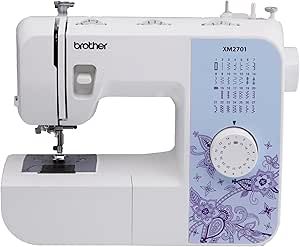 | Best for Easy Everyday Sewing | Built-in stitches: 27 | Included sewing feet: 6 | Buttonhole: Automatic one-step | VIEW LATEST PRICE | See Our Full Breakdown |
| Brother CS5055 Computerized Sewing Machine with LCD Display |  | Best Computerized Pick for Stitch Variety | Built-in stitches: 60 | Buttonhole styles: 7 one-step styles | Display: LCD | VIEW LATEST PRICE | See Our Full Breakdown |
| SINGER Smart Heavy Duty 9120 Computerized Sewing Machine |  | Best App-Connected Heavy-Duty Pick | Stitch options: Built-in straight stitch plus 200+ stitches through the CREATIVATE app | Motor and frame: DC motor; full metal interior frame | Maximum sewing speed: Up to 900 stitches per minute | VIEW LATEST PRICE | See Our Full Breakdown |
| Brother XR9550 Computerized Sewing and Quilting Machine |  | Best for Quilting Projects | Built-in stitches: 165, including utility, decorative, heirloom, and alphanumeric options | Buttonhole styles: 8 auto-size styles | Display and threading: LCD; automatic needle threader | VIEW LATEST PRICE | See Our Full Breakdown |
| Brother XR3774 Sewing and Quilting Machine with 37 Stitches |  | Best Value for Sewing and Quilting | Built-in stitches: 37 | Buttonhole: One-step | Needle threader: Automatic | VIEW LATEST PRICE | See Our Full Breakdown |
| SINGER Heavy Duty 4452 Sewing Machine Bundle with Extension Table and Presser Feet |  | Best for Thick Fabrics | Model: 4452 | Built-in stitches: 32 | Stitch applications: 110 | VIEW LATEST PRICE | See Our Full Breakdown |
| Brother ST150HDH Strong & Tough Sewing Machine with 50 Stitches |  | Best for Heavy-Duty Versatility | Built-in stitches: 50 | Buttonholes: 5 one-step, auto-sized styles | Maximum stitch width: 7 mm | VIEW LATEST PRICE | See Our Full Breakdown |
| SINGER Heavy Duty 4552 Sewing Machine with Bonus Presser Feet |  | Best for Controlled Heavy-Duty Sewing | Built-in stitches: 32 | Stitch applications: 110 | Maximum sewing speed: 1,000 stitches per minute | VIEW LATEST PRICE | See Our Full Breakdown |
| Brother SE700 Sewing and Embroidery Machine |  | Best for Sewing and Embroidery | Machine type: Computerized sewing and embroidery combo | Sewing stitches: 103 | Built-in embroidery designs: 135 | VIEW LATEST PRICE | See Our Full Breakdown |
| sewing machine | Built-in stitches | Bobbin | Buttonhole |
|---|---|---|---|
| Brother CS7000X Computerized S | 70 | — | — |
| SINGER Quantum Stylist 9960 Co | 600 | — | — |
| SINGER Heavy Duty 500 Classic | 23 | Top drop-in, jam-resistant | 1-step |
| SINGER 4411 Heavy-Duty Sewing | 11 | — | 4-step |
| Singer 4423 Heavy Duty Sewing | — | Top drop-in with transparent cover | One-step |
| SINGER Heavy Duty 4511 Sewing | 11 | — | 4-step |
| Brother XM2701 Portable Sewing | 27 | Jam-resistant drop-in top bobbin | Automatic one-step |
| Brother CS5055 Computerized Se | 60 | Drop-in | — |
| SINGER Smart Heavy Duty 9120 C | — | — | One-step; multiple styles via app |
| Brother XR9550 Computerized Se | 165, including utility, decorative, heirloom, and alphanumeric options | Jam-resistant drop-in top bobbin | — |
| Brother XR3774 Sewing and Quil | 37 | Top-loading drop-in | One-step |
| SINGER Heavy Duty 4452 Sewing | 32 | Top drop-in with clear cover | — |
| Brother ST150HDH Strong & Toug | 50 | Jam-resistant drop-in top bobbin | — |
| SINGER Heavy Duty 4552 Sewing | 32 | Top drop-in, Class 15 | One-step |
| Brother SE700 Sewing and Embro | — | — | — |
More Details on Our Top Picks
Brother CS7000X Computerized Sewing and Quilting Machine
I’d put the Brother CS7000X first for buyers who want one machine that can cover everyday sewing and quilting without leaning too far toward either. Its 70 built-in stitches, seven automatic buttonhole styles, and LCD controls offer more range than the mechanical SINGER 4411, while the included wide table and larger needle-to-arm space make bigger quilt pieces easier to manage. The automatic needle threader, drop-in bobbin, and 10 presser feet also reduce setup friction as projects change.
The tradeoff is that its feature set is less expansive than the SINGER Quantum Stylist 9960, which offers far more stitches and fonts. I’d choose the CS7000X for a balanced sewing-and-quilting setup, not for maximum decorative options. Its 120 V US-only use is another limit for buyers outside the intended market.
Pros:- 70 built-in stitches and seven automatic buttonhole styles suit varied garment, craft, and quilting work.
- Wide table and larger needle-to-arm workspace give bulky projects more support.
- Automatic needle threader and drop-in bobbin simplify setup.
- Includes 10 presser feet, a quilt guide, and a protective hard case.
Cons:- Designed for 120 V use and sale in the US; use elsewhere may affect warranty coverage.
- Its stitch selection is much smaller than the SINGER Quantum Stylist 9960’s.
Best for: Home sewists who want computerized controls, useful stitch variety, and workspace for quilting or larger projects in one machine.
Not ideal for: Buyers outside the US who need a machine compatible with other voltage standards, or stitch collectors who want the 9960’s much larger library.
- Brand and model:Brother CS7000X
- Built-in stitches:70
- Buttonholes:7 one-step, auto-size styles
- Display:LCD
- Needle threader:Automatic
- Frame:Metal
- Included accessories:Wide table, 10 presser feet, quilt guide, protective hard case
- Voltage:120 V; intended for sale in the US
- Warranty:25-year limited
Our verdict“Choose the CS7000X if you want a versatile computerized machine with quilting-friendly space, but skip it if you need broad voltage compatibility or an exceptionally large stitch library.”
SINGER Quantum Stylist 9960 Computerized Sewing and Quilting Machine
The SINGER Quantum Stylist 9960 is the clear choice here for sewists who want the broadest built-in creative library. Its 600 stitches, 1,172 stitch applications, and five fonts go well beyond the Brother CS7000X’s 70 stitches, making lettering and decorative experimentation part of the machine rather than an add-on. For longer seams or detailed work, adjustable speed and a start/stop button let you sew without relying on the foot pedal; a thread trimmer and automatic needle threader also help keep projects moving.
That breadth comes with more to sort through, and its 14.6-pound weight makes it less appealing for frequent carrying than a compact setup. The included extension table and 13 presser feet support quilting and varied techniques, but buyers who mainly need straightforward construction stitches may find the CS7000X easier to justify. Its 120 V, 60 Hz power specification also limits regional compatibility.
Pros:- Large selection of 600 built-in stitches, 1,172 applications, and five fonts.
- Start/stop control and adjustable speed allow sewing without a foot pedal.
- Automatic needle threader and visible top drop-in bobbin aid setup and monitoring.
- Includes 13 presser feet, a large extension table, and a hard dust cover.
Cons:- The extensive stitch library may be excessive for users focused on basic sewing.
- At 14.6 pounds, it is less convenient to carry than lighter options.
- 120 V, 60 Hz power may not suit buyers in regions with different electrical standards.
Best for: Experienced home sewists, quilters, and crafters who will use decorative stitches, lettering, speed controls, and a wide accessory selection.
Not ideal for: Beginners seeking a simpler machine, sewists who only need basic stitches, or buyers who need a lightweight machine or non-120 V power.
- Brand and model:SINGER Quantum Stylist 9960
- Built-in stitches:600
- Stitch applications:1,172
- Fonts:5
- Buttonhole styles:13 automatic one-step styles
- Presser feet:13
- Dimensions:15 × 6.25 × 12 in
- Weight:14.6 lbs
- Power:84 W, 120 V, 60 Hz
Our verdict“Pick the 9960 when stitch range and creative control matter more than simplicity or portability.”
SINGER Heavy Duty 500 Classic Sewing Machine and Carrying Case Bundle
The SINGER HD500 Classic is a strong fit for buyers who value a stable mechanical-style setup and a proper carrying case more than a huge stitch menu. Its full metal frame and high-speed motor make it the sturdier-feeling alternative to the computerized Brother CS7000X, while 23 stitches and 110 applications cover common sewing tasks without the 9960’s sprawling selection. A built-in needle threader and top drop-in bobbin keep routine setup manageable.
The rigid case, with its non-slip tray and safety clasp, is a meaningful inclusion for storage or transport, though it adds bulk of its own. This model also gives fewer stitch choices than either computerized machine, and the product information does not list its dimensions or weight, making storage planning harder. I’d favor it for practical sewing and portability with protection, but not for quilting features or detailed stitch customization.
Pros:- Full metal frame and high-speed motor support stable sewing and fabric piercing.
- 23 built-in stitches provide 110 stitch applications.
- Built-in needle threader and top drop-in bobbin simplify setup.
- Rigid fitted case includes a non-slip tray and safety clasp.
Cons:- Offers fewer stitch options than the computerized CS7000X and Quantum Stylist 9960.
- The rigid case adds storage and carrying bulk.
- Dimensions and weight are not specified, complicating space and transport planning.
Best for: Sewists who prioritize a metal-frame machine, practical stitch selection, and a fitted protective case for storage or occasional transport.
Not ideal for: Quilters needing a wide table or larger workspace, and creative users who want extensive computerized stitches, fonts, or detailed controls.
- Brand and model:SINGER HD500 Classic
- Built-in stitches:23
- Stitch applications:110
- Buttonhole:1-step
- Frame:Full metal
- Bobbin:Top drop-in, jam-resistant
- Needle threader:Built-in
- Lighting:LED
- Included case:Rigid carrying case with non-slip tray and safety lock clasp
Our verdict“Choose the HD500 if frame construction and a fitted case matter more than quilting workspace or a wide computerized stitch library.”
SINGER 4411 Heavy-Duty Sewing Machine, Pink
The SINGER 4411 suits buyers who want a straightforward machine with speed and capacity for thicker fabrics, rather than computerized menus or a wide decorative library. It reaches 1,100 stitches per minute and has a metal frame and stainless-steel bedplate, making it a more direct heavy-fabric choice than the Brother CS7000X. Its 11 built-in stitches translate to 69 applications, enough for everyday repairs and some creative work without complicating the controls.
Compared with the SINGER 4423 in this roundup, the 4411 uses a four-step buttonhole instead of a one-step style, so buttonholes take more manual handling. The 4423 also lists an automatic needle threader and adjustable presser-foot pressure, conveniences not specified for this model. I’d choose the 4411 for basic, fast sewing on denim or canvas; its simpler feature set is a poor match for stitch variety or automated setup.
Pros:- Sewing speed reaches 1,100 stitches per minute.
- Metal frame and stainless-steel bedplate support stable sewing and fabric feeding.
- 11 built-in stitches provide 69 applications for everyday and creative tasks.
- Includes four presser feet and a range of basic sewing accessories.
Cons:- Four-step buttonhole requires more manual handling than the 4423’s one-step buttonhole.
- Automatic needle threading is not specified, unlike on the 4423.
- 110 V input may require a compatible power supply in regions with different voltage.
Best for: Sewists who mainly make repairs or straightforward projects with denim, canvas, and other thicker fabrics and prefer simple controls.
Not ideal for: Users who want one-step buttonholes, an automatic needle threader, extensive stitch variety, or compatibility beyond its stated 110 V input.
- Brand and model:SINGER 4411
- Color:Pink
- Built-in stitches:11
- Stitch applications:69
- Maximum speed:1,100 stitches per minute
- Buttonhole:4-step
- Input voltage:110 V
- Dimensions:15.5 × 6.25 × 12 in (D × W × H)
- Weight:14 lb
Our verdict“The 4411 is a sensible pick for fast, uncomplicated heavy-fabric sewing, but the 4423 is better equipped if easier setup and one-step buttonholes matter.”
Singer 4423 Heavy Duty Sewing Machine, Meltwater Blue
The Singer 4423 combines a heavy-duty frame and fast motor with several conveniences that make it more versatile than the simpler 4411. Its one-step buttonhole, automatic needle threader, and transparent top drop-in bobbin reduce routine setup, while adjustable presser-foot pressure and an extra-high lift help accommodate changes in fabric weight and stacked layers. At up to 1,100 stitches per minute, it also matches the 4411’s stated maximum speed.
It is the stronger choice between those two for buyers who want hands-on controls with fewer setup steps, but it does not offer the Brother CS7000X’s computerized stitch selection or quilting accessories. The listed 97 stitch applications provide useful variety, though only four presser feet are included and their types are not specified. Thread tension remains manual, so this is not a set-and-forget machine. I’d favor it for practical garment and heavy-fabric sewing over decorative work.
Pros:- Metal frame and stainless-steel bedplate support steady sewing and smooth feeding.
- One-step buttonhole and automatic needle threader simplify common tasks.
- Adjustable presser-foot pressure and extra-high lift support varied fabrics and layers.
- Transparent top drop-in bobbin makes thread supply easier to monitor.
Cons:- Thread tension must be adjusted manually.
- Only four presser feet are included, and their types are not specified.
- Offers less computerized stitch and quilting support than the Brother CS7000X.
Best for: Home sewists who work across everyday materials and thicker layers and want a fast mechanical machine with easier threading and one-step buttonholes.
Not ideal for: Buyers who want computerized stitch controls, a large included accessory kit, or automatic thread-tension adjustment.
- Brand and model:Singer 4423
- Model number:230489112
- Stitch applications:97
- Maximum sewing speed:1,100 stitches per minute
- Frame:Heavy-duty metal
- Bedplate:Stainless steel
- Buttonhole:One-step
- Bobbin:Top drop-in with transparent cover
- Included accessories:Four presser feet
Our verdict“Choose the 4423 for fast, sturdy sewing with helpful mechanical conveniences; pick the CS7000X instead if computerized control and quilting features are higher priorities.”
SINGER Heavy Duty 4511 Sewing Machine with Accessories
The SINGER Heavy Duty 4511 is the clearest fit here for buyers who regularly sew denim, canvas, or several fabric layers. Its DC motor and full metal interior frame are geared toward piercing power and steadier handling, while speed control and adjustable presser-foot pressure give more control across changing materials. Compared with the lighter Brother XM2701, this machine puts more emphasis on a sturdy build than on a broad stitch menu or beginner conveniences. Its 11 built-in stitches cover common garment, mending, and basic quilting tasks, but won’t match the decorative variety of the Brother CS5055. The main compromises are a four-step buttonhole and a feature set aimed at basic rather than advanced quilting.
Pros:- DC motor supports sewing through thicker fabrics such as denim and canvas.
- Full metal interior frame and stainless steel bedplate support stable fabric handling.
- Adjustable stitch settings, needle position, presser-foot pressure, and speed offer useful control.
- Includes several presser feet and practical sewing accessories.
Cons:- Buttonholes require a four-step process rather than one-step operation.
- Its 11 built-in stitches offer less variety than the Brother CS5055 or XR9550.
- Described for basic quilting, so it is less suited to advanced quilting workflows.
Best for: Garment makers and home sewers who often work with denim, canvas, or layered materials and want a sturdy mechanical-style machine.
Not ideal for: Beginners seeking the simplest buttonhole process, or quilters who need a dedicated advanced quilting setup and broader stitch selection.
- Built-in stitches:11
- Stitch applications:69
- Motor:DC motor
- Maximum sewing speed:Up to 1,000 stitches per minute
- Frame and bedplate:Full metal interior frame; stainless steel bedplate
- Bobbin system:Top drop-in
- Buttonhole:4-step
- Fabric-control features:Adjustable presser-foot pressure; adjustable needle position; drop feed
Our verdict“Choose the 4511 if thicker fabrics and a sturdy frame matter more to you than a large stitch library or one-step buttonholes.”
Brother XM2701 Portable Sewing Machine with 27 Stitches
The Brother XM2701 makes everyday repairs and beginner projects less fiddly with an automatic needle threader, jam-resistant drop-in bobbin, and automatic one-step buttonhole. Its 27 stitches provide more choice than the SINGER Heavy Duty 4511, while the six included feet support common sewing tasks without requiring a large accessory collection. The free arm is particularly handy for cuffs, sleeves, and pant legs. Compared with the more feature-rich Brother CS5055, the XM2701 keeps the controls and project scope simpler, but gives up the computerized LCD and larger stitch selection. Its lightweight design suits a portable household machine, not a workhorse for frequent heavy-fabric sewing. It is also specified for 120-volt US use, so buyers elsewhere should check compatibility and warranty terms.
Pros:- Automatic needle threading and a drop-in bobbin simplify setup.
- One-step buttonhole is easier to complete than the four-step style on the SINGER Heavy Duty 4511.
- Twenty-seven stitches cover utility, stretch, blind-hem, and decorative sewing.
- Free arm and six included feet support common garment tasks.
Cons:- Designed for 120-volt use in the US; other use or sale may affect warranty coverage.
- Its lightweight construction is a less suitable match for frequent sewing through thick layers than the SINGER Heavy Duty 4511.
- Product information lists conflicting warranty details.
Best for: New sewers and households handling clothing repairs, simple garments, and occasional craft projects who value straightforward setup.
Not ideal for: Sewers outside the US, frequent heavy-fabric users, or buyers who want computerized stitch selection and a larger work area.
- Built-in stitches:27
- Included sewing feet:6
- Buttonhole:Automatic one-step
- Bobbin:Jam-resistant drop-in top bobbin
- Needle threader:Automatic
- Power compatibility:120 volts; US use
- Warranty:25-year limited warranty listed; product information also contains conflicting warranty details
Our verdict“Pick the XM2701 for approachable household sewing and easy setup, but choose a sturdier model if thick fabrics are a regular part of your projects.”
Brother CS5055 Computerized Sewing Machine with LCD Display
The Brother CS5055 suits sewers who want a broad selection of stitches without moving up to an app-controlled machine. Its 60 built-in stitches and seven one-step buttonhole styles give it much more range than the mechanical SINGER Heavy Duty 4511, especially for decorative and heirloom work. The LCD display makes stitch selection more direct, and the automatic needle threader and drop-in bobbin shorten setup. A metal frame, fixed needle bar, and spacious work area add useful support for larger projects. Against the Brother XR9550, the CS5055 has fewer stitches and does not list a wide table or hard case, making it the more focused option rather than the more accessory-rich quilting package. Its 120-volt specification also limits its fit for buyers outside the US.
Pros:- Sixty built-in stitches offer substantially more variety than the SINGER Heavy Duty 4511.
- Seven one-step buttonhole styles make buttonhole sewing more convenient.
- Automatic needle threader and drop-in bobbin help simplify setup.
- Metal frame and spacious work area support stable sewing on larger projects.
Cons:- Designed for 120-volt use in the US; other use or sale may affect warranty coverage.
- Does not include the wide table or protective hard case listed with the Brother XR9550.
- Fixed needle bar offers less needle-position flexibility than machines with adjustable needle positions.
Best for: Home sewers who want computerized stitch selection, multiple buttonhole styles, and room for varied garment or decorative projects.
Not ideal for: Buyers outside the US, or quilters who want the wide table and included hard case supplied with the Brother XR9550.
- Built-in stitches:60
- Buttonhole styles:7 one-step styles
- Display:LCD
- Frame:Metal
- Bobbin:Drop-in
- Included accessories:7 sewing feet, 4 bobbins, and needle set
- Dimensions and weight:7 x 17 x 12 inches; 10.5 pounds
- Power and warranty:120 volts; 25-year limited warranty
Our verdict“Choose the CS5055 if you want a straightforward computerized machine with generous stitch variety, but look to the XR9550 for a more quilting-oriented accessory package.”
SINGER Smart Heavy Duty 9120 Computerized Sewing Machine
The SINGER Smart Heavy Duty 9120 combines a sturdy frame with app-based stitch selection, making it a distinctive choice for sewers who want both heavy-duty construction and digital guidance. The CREATIVATE app provides access to 200+ stitch options, including lettering and buttonhole styles, plus tutorials and project guidance. That is a much broader menu than the SINGER Heavy Duty 4511’s 11 built-in stitches, though the 4511 keeps stitch selection simpler and does not depend on a phone or tablet. The 9120 also adds speed control, a start/stop button, thread sensors, and up to 29 needle positions through the app. Its 900-stitch-per-minute maximum is below the 4511’s listed 1,000, and embroidery requires a separate attachment. Buyers should also be comfortable using a compatible mobile device for controls.
Pros:- CREATIVATE app access provides more than 200 stitch options, including lettering and buttonhole styles.
- Full metal interior frame and DC motor support sewing across a range of fabrics.
- Speed control, start/stop button, needle threader, and thread sensors add control and setup support.
- App tutorials and stitch guidance offer more instruction than the SINGER Heavy Duty 4511 provides.
Cons:- App-based stitch selection and controls require a compatible iOS or Android device.
- Embroidery requires the separately sold 900E attachment.
- Maximum listed speed is 900 stitches per minute, below the SINGER Heavy Duty 4511’s 1,000.
Best for: Experienced home sewers who want a heavy-duty frame, extensive digital stitch options, and app-based tutorials or controls.
Not ideal for: Buyers who prefer fully onboard stitch selection, do not use a compatible mobile device, or expect embroidery capability without buying an attachment.
- Stitch options:Built-in straight stitch plus 200+ stitches through the CREATIVATE app
- Motor and frame:DC motor; full metal interior frame
- Maximum sewing speed:Up to 900 stitches per minute
- Controls:CREATIVATE app; compatible with iOS and Android
- Bobbin system:Drop & Sew system; Class 15 transparent bobbin
- Buttonhole:One-step; multiple styles via app
- Needle position:Adjustable, up to 29 positions via app
- Thread and sewing features:Upper-thread break and bobbin-thread sensors; speed control; start/stop button; free arm
- Embroidery attachment:900E attachment sold separately
Our verdict“Choose the 9120 if you want heavy-duty construction paired with app-guided stitch variety, and skip it if you want a self-contained machine or included embroidery.”
Brother XR9550 Computerized Sewing and Quilting Machine
The Brother XR9550 is the most quilting-oriented choice in this group, pairing a wide table with drop feed and a free arm for projects that span both flat work and garment details. Its 165 built-in stitches, including alphanumeric options, give it more variety than the CS5055, while eight auto-size buttonhole styles and an LCD make regular garment sewing accessible too. The included eight presser feet and protective hard case add practical value for buyers who want a ready-to-go setup. Compared with the app-connected SINGER Smart Heavy Duty 9120, the XR9550 keeps its stitch selection on the machine and includes quilting accessories, but it is not presented as a heavy-duty model for thick fabrics. Its 120-volt US-only use specification is another limitation for buyers abroad.
Pros:- Wide table and drop feed support quilting and larger fabric projects.
- 165 built-in stitches include alphanumeric options and eight auto-size buttonhole styles.
- Automatic needle threader and drop-in bobbin help reduce setup effort.
- Eight presser feet and a protective hard case are included.
Cons:- Designed for 120-volt US use; other use or sale may affect warranty coverage.
- Not identified as a heavy-duty machine for regular work with thick fabrics, unlike the SINGER Heavy Duty 4511.
- The included case has a Styrofoam coating that should not be removed.
Best for: Quilters and home sewers who want a wide work surface, drop feed, many built-in stitches, and a protective case in the package.
Not ideal for: Frequent denim or canvas sewists seeking a heavy-duty machine, or buyers outside the US who need a different power specification.
- Built-in stitches:165, including utility, decorative, heirloom, and alphanumeric options
- Buttonhole styles:8 auto-size styles
- Display and threading:LCD; automatic needle threader
- Bobbin:Jam-resistant drop-in top bobbin
- Quilting features:Wide table; drop feed; free arm
- Included presser feet:8
- Included accessories:Protective hard case, accessory pouch, needles, bobbins, cleaning brush, and other accessories
- Power and warranty:120 V; 25-year limited warranty
- Support:Free technical support for the life of the machine
Our verdict“Choose the XR9550 for quilting space and a broad onboard stitch library, but opt for a heavy-duty model if thick materials are your main concern.”
Brother XR3774 Sewing and Quilting Machine with 37 Stitches
The Brother XR3774 is a practical choice for sewists who want quilting-friendly workspace and useful setup aids without moving to a more elaborate computerized machine. Its 37 stitches, one-step buttonhole, and eight included feet cover everyday repairs, garment details, and basic quilting. The wide table gives larger pieces more support, while the automatic needle threader and drop-in bobbin make routine setup less fiddly. Compared with the Brother ST150HDH, it offers fewer stitch options and less emphasis on bulky fabrics, but its accessory bundle and straightforward controls suit general home projects. The tradeoff is that the included table helps with fabric support but does not create an expansive quilting workspace, and the machine is specified for 120-volt US use. I would choose it for versatility on a modest budget, not for frequent heavy-material sewing.
Pros:- 37 built-in stitches include decorative, blind-hem, and quilting options.
- Wide table and eight sewing feet support a range of home and quilting tasks.
- Automatic needle threading and a top-loading bobbin simplify setup.
- Free arm makes sleeves and other tubular pieces easier to sew.
Cons:- The 120-volt specification limits it to intended US use.
- Its quilting workspace is less suited to especially large projects.
- It is not as specifically equipped for bulky, difficult fabrics as the Brother ST150HDH.
Best for: Home sewists who want a wide table and useful quilting accessories for occasional quilts, clothing, and household repairs.
Not ideal for: Quilters working on large projects or sewists regularly handling thick layered fabrics; its workspace and heavy-fabric emphasis are more limited than the Brother ST150HDH.
- Built-in stitches:37
- Buttonhole:One-step
- Needle threader:Automatic
- Bobbin:Top-loading drop-in
- Included sewing feet:8
- Power:Corded electric; 120 volts
- Dimensions:5.8 × 15.3 × 12 inches
- Weight:15 pounds
Our verdict“Choose the XR3774 for an accessible mix of everyday sewing and smaller quilting projects, but pick the ST150HDH if thick fabrics are a regular part of your work.”
SINGER Heavy Duty 4452 Sewing Machine Bundle with Extension Table and Presser Feet
For repeated work on denim, canvas, or several fabric layers, the SINGER Heavy Duty 4452 puts sewing strength ahead of a broad computerized feature set. Its full metal frame and motor designed for heavier work are paired with 32 stitches and 110 applications, so utility sewing does not rule out stretch or decorative options. The bundle’s extension table helps steady larger pieces, and six presser feet add flexibility for tasks such as zipper and buttonhole sewing. Compared with the SINGER Heavy Duty 4552, this bundle specifies a higher maximum speed and includes an extension table, making it appealing for faster, larger jobs. That speed and strength come with more manual adjustment: stitch length and width may need setting by hand, and the table must be attached when extra surface support is needed. I would skip it if a compact, highly automated machine is the priority.
Pros:- Full metal frame and heavy-fabric-focused motor suit multiple layers and thicker materials.
- Extension table provides extra support for larger sewing projects.
- 32 stitches offer 110 applications for utility and decorative work.
- Six included presser feet support varied sewing techniques.
Cons:- Stitch length and width may require manual adjustment.
- The extension table must be attached when a larger sewing surface is needed.
- Its speed and mechanical setup offer less guided control than a computerized option such as the Brother SE700.
Best for: Sewists who regularly repair or construct items from denim, canvas, or multiple fabric layers and want an extension table for larger pieces.
Not ideal for: Beginners seeking guided computerized settings or people who need a compact machine that is ready for large projects without attaching a separate table.
- Model:4452
- Built-in stitches:32
- Stitch applications:110
- Maximum sewing speed:Up to 1,100 stitches per minute
- Frame:Full metal
- Bobbin:Top drop-in with clear cover
- Included accessories:Extension table and six presser feet
- Lighting:StayBright LED
Our verdict“Pick the 4452 bundle when thick fabrics and a supported work surface matter more than computerized guidance and automatic stitch adjustment.”
Brother ST150HDH Strong & Tough Sewing Machine with 50 Stitches
The Brother ST150HDH stands apart for pairing fabric-handling tools with a wider stitch selection than the mechanical heavy-duty SINGER models. It is designed for materials ranging from lightweight silk to heavyweight denim, and the included walking foot helps feed layers more evenly. Five one-step, auto-sized buttonholes, adjustable speed, and an LCD display make it easier to move between garment details and demanding seams without giving up control. Compared with the SINGER Heavy Duty 4452, the ST150HDH offers more built-in stitches and a display that shows stitch settings and recommended feet; the SINGER counters with a higher stated maximum speed. The Brother’s main limitation is physical room: its 6.4-by-4.1-inch needle-to-arm workspace may feel tight for large quilts. I would choose it for mixed-fabric projects, not oversized quilting or buyers who do not need its extra guidance.
Pros:- Designed to sew fabrics from lightweight silk through heavyweight denim.
- Walking foot and nine included feet expand fabric-feeding and technique options.
- LCD display shows stitch selection, size, and recommended presser foot.
- Adjustable speed and five auto-sized one-step buttonholes aid control and garment work.
Cons:- The 6.4 × 4.1-inch workspace can constrain large quilting projects.
- Specified for 120-volt US use.
- Its feature-rich setup may be more than needed for basic repairs compared with the Brother XR3774.
Best for: Sewists alternating between delicate fabrics, denim, and layered projects who want a walking foot, adjustable speed, and on-screen stitch guidance.
Not ideal for: Quilters handling large bed-size projects or buyers who need a broad workspace; its needle-to-arm area is limited for bulky fabric spread.
- Built-in stitches:50
- Buttonholes:5 one-step, auto-sized styles
- Maximum stitch width:7 mm
- Workspace:6.4 × 4.1 inches needle-to-arm
- Included sewing feet:9
- Needle threading:Advanced lever-assisted threader
- Bobbin:Jam-resistant drop-in top bobbin
- Power compatibility:120 V; US use only
- Warranty:25-year limited
Our verdict“Choose the ST150HDH if your projects span delicate and heavy fabrics and you value guided control, but look to a larger quilting setup for oversized work.”
SINGER Heavy Duty 4552 Sewing Machine with Bonus Presser Feet
The SINGER Heavy Duty 4552 suits sewists who want a sturdy mechanical machine for repairs, garments, and home décor, with more control over stitching than a bare-bones heavy-duty model. Its full metal interior frame, DC motor, adjustable presser-foot pressure, and drop feed give it a useful range across fabric types and techniques. Speed control and adjustable stitch width, length, and needle position help when a seam needs more care than a straight run. Against the SINGER Heavy Duty 4452, it offers a lower stated maximum speed and adds features such as drop feed, adjustable needle position, and Eco Mode; the 4452 bundle specifies an extension table, which is not listed here. The 4552’s 1,000-stitches-per-minute ceiling still calls for careful handling on detailed sections, and Eco Mode turns off the light after inactivity. It makes more sense for controlled versatility than maximum speed.
Pros:- Full metal interior frame and DC motor support a range of fabrics and layered sewing.
- Speed control and adjustable stitch length, width, and needle position help manage detailed work.
- Drop feed and free arm expand options for different sewing techniques and garment areas.
- Integrated needle threader and included bonus presser feet add practical setup options.
Cons:- Maximum speed is 1,000 stitches per minute, below the stated 4452 maximum.
- Eco Mode turns off the light after 15 minutes of inactivity.
- The product data does not list an extension table, unlike the SINGER Heavy Duty 4452 bundle.
Best for: Home sewists who want a metal-frame machine for mixed garment, repair, and décor projects with manual speed and stitch adjustments.
Not ideal for: People prioritizing the fastest heavy-duty sewing or an included extension table; the 4452 bundle specifies a higher maximum speed and table.
- Built-in stitches:32
- Stitch applications:110
- Maximum sewing speed:1,000 stitches per minute
- Motor and frame:DC motor; full metal interior frame
- Buttonhole:One-step
- Bobbin:Top drop-in, Class 15
- Adjustment features:Speed control, adjustable stitch length and width, needle position, and presser-foot pressure
- Warranty:1 year
Our verdict“Choose the 4552 for adjustable, controlled heavy-duty sewing, but favor the 4452 bundle if higher speed and an extension table matter more.”
Brother SE700 Sewing and Embroidery Machine
The Brother SE700 is the clear choice here for buyers who want embroidery as well as regular sewing: its 103 sewing stitches sit alongside 135 built-in designs and 10 lettering fonts. The color touchscreen, wireless design transfer, and mobile customization make it easier to select and personalize decorative projects than on the mechanical XR3774 or the heavy-duty SINGER 4552. That added capability changes the buying decision: this is not simply a sturdier or faster everyday machine, but a combo for people who will use embroidery features. Its 4-by-4-inch embroidery field limits the size of designs that can be stitched in one setup, and its 710-stitches-per-minute maximum is lower than the stated speeds of the SINGER heavy-duty models. I would pick it for personalized garments and small embroidered accents, but not for large embroidery or frequent heavy-layer sewing.
Pros:- Combines computerized sewing and embroidery in one machine.
- 103 sewing stitches, 135 built-in embroidery designs, and 10 lettering fonts offer broad creative options.
- Wireless LAN and mobile customization support convenient design transfers and edits.
- Color touchscreen and automatic needle threader simplify selection and setup.
Cons:- The 4 × 4-inch embroidery field limits design size in a single setup.
- Maximum sewing speed of 710 stitches per minute is slower than the SINGER Heavy Duty 4452 and 4552.
- Specified for 120-volt use and intended for the US market.
Best for: Sewists who want one computerized machine for everyday stitching and small embroidery projects, including wireless design transfer and lettering.
Not ideal for: Buyers focused on large embroidery designs, high-speed heavy-duty sewing, or a simple machine for basic repairs; the 4 × 4-inch field and lower maximum speed limit its fit.
- Machine type:Computerized sewing and embroidery combo
- Sewing stitches:103
- Built-in embroidery designs:135
- Embroidery lettering fonts:10
- Embroidery field:4 × 4 inches
- Display:3.7-inch color touchscreen
- Maximum sewing speed:710 stitches per minute
- Wireless connectivity:Wireless LAN
- Sewing feet:8 included
Our verdict“Choose the SE700 if embroidery and wireless design tools are central to your projects, but select a heavy-duty SINGER for faster sewing through thick layers.”
How We Picked
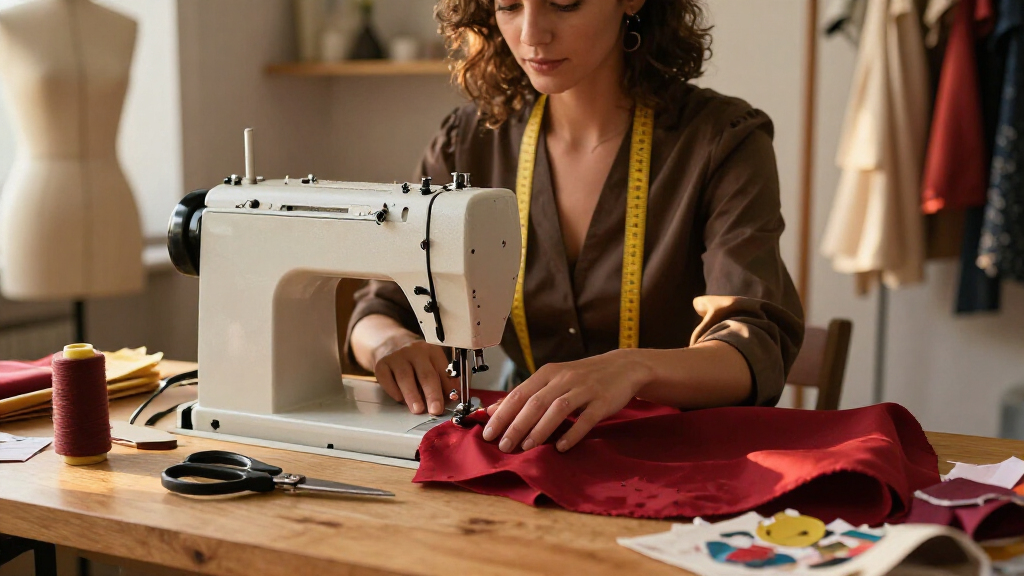
I compared these 15 machines by how well their designs match common home-sewing needs: garment construction, repairs, quilting, thicker materials, and decorative or embroidery work. I weighed control style, stitch and presser-foot flexibility, included accessories, portability, ease of setup, and the likelihood that a buyer would use the added features. I also treated maintenance and learning effort as part of usability: a feature-rich machine has less value if its controls or setup are more than the buyer needs.
The ranking favors versatility for the widest range of typical projects, then gives distinct roles to simpler beginner machines, heavy-duty-oriented models, quilting options, and embroidery. Similar machines are separated by their controls and stated accessories rather than by name alone. A heavy-duty label does not place a machine above a more versatile option by default, and stitch counts are not treated as a substitute for useful project fit. Buyers should confirm included accessories and compatibility against the exact model listing, since bundles can vary.
Factors to Consider When Choosing Best Sewing Machines
Before choosing from this lineup, I’d match the machine to the work you actually expect to do. A feature list can look compelling while adding setup, storage, or learning demands that do not help with your projects. These broader checks can narrow the field before you compare specific models.
Match the machine to your usual projects
Start with the projects you expect to make most often, not the most ambitious one you might try someday. Everyday repairs and basic garments usually call for reliable straight and zigzag stitching, useful threading aids, and straightforward controls. Quilting can benefit from a wider work area, an extension table, and features that help manage fabric layers. Decorative sewing or embroidery calls for capabilities beyond a basic stitch set, but those additions also bring more setup and learning. A common mistake is buying for a rare specialty project and then living with unnecessary complexity every week. If your project mix is genuinely varied, a flexible computerized model may make more sense than a machine built around one task.
Choose computerized or mechanical controls deliberately
Computerized controls can make stitch selection and settings changes more direct, and an LCD can help you see what you have selected. That convenience may suit users who expect to switch between stitches or settings often. Mechanical machines can feel more direct to operate and may appeal to buyers who want fewer controls to learn. Neither type removes the need to thread correctly, choose an appropriate needle, or adjust for the fabric. Avoid choosing by the number of buttons or screens alone; consider whether the controls fit how you like to work. If you are new to sewing, a smaller feature set can be easier to learn, while an intuitive computerized interface may also provide useful guidance.
Treat heavy-duty claims as a clue, not a guarantee
Heavy-duty branding signals an intended emphasis, but it does not mean every machine will sew every thick or layered material without adjustment. Fabric thickness, needle choice, thread, presser-foot pressure, and the construction of the seam all affect results. Denim hems and multiple quilt layers place different demands on a machine, so identify the specific materials and seam types you plan to handle. Check the manual for compatible needles and recommended settings before attempting dense materials. A frequent mistake is assuming a faster machine alone solves feeding or skipped-stitch problems. For occasional sturdy-fabric work, careful setup may matter more than buying the most specialized model.
Look beyond stitch count to useful functions
A large stitch library can support decorative details, stretch seams, or lettering-style effects, but many sewists rely on a small group of stitches for most projects. Think about the functions you will use repeatedly: buttonholes, adjustable stitch length and width, needle positioning, or a free arm for cuffs and hems. Quilters may value accessories and workspace more than decorative stitch variety. Embroidery requires a different set of capabilities and should not be confused with ordinary decorative stitches. Compare each machine’s included presser feet and attachments with your plans, then check whether additional accessories are compatible. This keeps a long feature list from distracting you from the functions that make daily sewing easier.
Account for workspace, storage, and setup
A machine that fits your projects also needs to fit where you sew. Quilting setups and extension tables take more room than occasional mending, and a larger machine can be inconvenient if it must be packed away after every session. Portability matters if you attend classes or move between work areas, but a compact footprint may mean less support for wide projects. Consider where the machine will sit, where accessories will be stored, and whether you can leave it threaded between sessions. Check what comes in the exact box rather than assuming a carrying case, table, or particular foot is included. These practical details can have more day-to-day impact than an extra stitch selection.
Plan for learning and routine care
Every machine needs routine cleaning, suitable needles, and correct threading; added features do not replace those basics. Before buying, see whether the manual explains threading, tension adjustments, and troubleshooting in a way you can follow. New sewists may benefit from controls that make stitch selection clear and from a model with a manageable learning curve. More advanced options can pay off when you already know which functions you want, but unfamiliar features can slow early projects. Keep lint removal and needle replacement in your routine, and follow the maker’s guidance on lubrication rather than applying oil indiscriminately. A machine that you can set up and maintain confidently is often a better fit than one with capabilities you rarely use.
Frequently Asked Questions
Should I choose the Brother CS7000X or the SINGER Quantum Stylist 9960?
I’d choose the Brother CS7000X if you want a versatile computerized machine with quilting-friendly features for a mix of home projects. The SINGER Quantum Stylist 9960 is a stronger match if you expect to use its broader stitch selection for decorative or varied sewing. Compare the controls and included accessories against the projects you actually make, rather than treating stitch count as the deciding factor. Also check the exact product listing for bundle contents. If quilting is occasional and you want a balanced machine, the CS7000X is the more straightforward starting point; if stitch variety is a priority, the 9960 deserves a closer look.
Is a heavy-duty SINGER a better choice for denim and thick materials?
A heavy-duty model may be a sensible fit for frequent work with sturdy fabrics, but the label alone does not guarantee trouble-free sewing through every thick seam. Needle type and size, thread, fabric layers, and machine setup all affect results. Check the manual for material guidance and use an appropriate needle before attempting dense hems or layered projects. For mostly lightweight garments and repairs, a versatile general-purpose machine may be more useful than a machine selected only for its heavy-duty name. Compare the specific SINGER models and bundles too, since accessories and features can differ.
For a first sewing machine, should I get the Brother XM2701 or CS5055?
The Brother XM2701 makes sense if you want a simpler starting point and do not need a more feature-rich interface. The Brother CS5055 adds computerized controls and an LCD, which can make stitch selection clearer for some learners but also introduces more options. Consider whether you would rather learn a compact set of controls first or have access to additional settings as your projects grow. Neither choice eliminates the need to practice threading, tension, and fabric handling. If you expect to sew a range of projects and are comfortable learning controls, the CS5055 may offer more room to grow; for a straightforward entry, look at the XM2701.
Do I need an embroidery machine, or will decorative stitches be enough?
Decorative stitches on a regular sewing machine can add detail to seams and fabric, but they are not the same as machine embroidery. If you want to create embroidery designs, the Brother SE700 is the specialized option in this roundup. That extra capability brings a different workflow and may require time to learn setup and design handling. If you mainly want occasional decorative accents or utility stitching, a sewing-focused machine may be simpler and better suited to your needs. Decide based on the finished projects you want to make, not on the assumption that every sewist will use embroidery features.
Which features matter most if I plan to quilt?
For quilting, look beyond the stitch total and check the work area, fabric support, and accessories included with the exact machine. An extension table can help support a larger quilt, while a machine designed for sewing and quilting may better match that workflow than a compact model aimed at general home sewing. Think about whether you will piece small blocks, quilt larger layers, or do both, since those jobs place different demands on workspace and handling. A quilting machine does not remove the need to manage bulky fabric carefully. Among these options, compare the Brother CS7000X, XR9550, and XR3774 by their listed accessories and controls before deciding.
Conclusion
For the broadest mix of home sewing and quilting, I’d choose the Brother CS7000X as best overall. The Brother XM2701 is my best value-style pick for beginners who want a simpler feature set, while the SINGER Quantum Stylist 9960 is the best premium-style choice here for buyers who will use its extensive stitch selection. For quilting, compare the Brother XR9550 and XR3774 with the CS7000X based on the workspace and accessories you need; for embroidery, the Brother SE700 is the clear specialist. If sturdy fabrics are your main focus, compare the SINGER Heavy Duty models and Brother ST150HDH against the materials you sew most. My recommendation is to choose by regular project type and usable features, not by stitch count or heavy-duty branding alone.