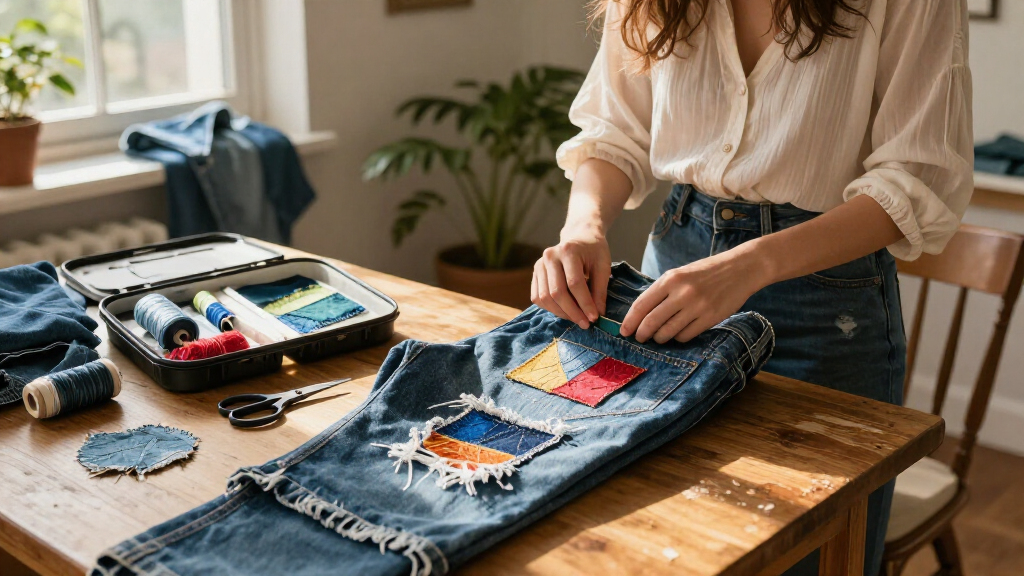
The best DIY denim kits depend on whether you want to mend a tear, learn decorative stitching, or turn denim into something new. My best overall pick is the 28-Piece Sashiko Embroidery Kit with Reusable Stencils for its mix of guided patterns and repeat-use tools. For quick repairs, the KING MOUNTAIN Iron-On Repair Patches are the more direct choice, while the CATNOINU Sashiko Starter Kit suits crafters focused on visible mending. The main tradeoff is between speed and creative control: iron-on patches simplify repairs, while stitching kits take more time but offer a personal finish. Read on for the full breakdown by project type, learning curve, and kit contents.

Get your wardrobe favorites delivered free with Prime
- Fast, free delivery on millions of items
- Prime Video, Amazon Music and more included
- Member-only deals all year
Key Takeaways
- The 28-piece sashiko kit ranks first because reusable stencils give beginners structure while leaving room to customize visible mending.
- KING MOUNTAIN is the practical repair pick: iron-on patches favor speed and coverage over the hand-stitched finish of sashiko kits.
- CATNOINU is more focused than the top pick, making it a better match for shoppers who specifically want to practice Japanese-style visible mending.
- The 19-piece sewing and sashiko kit bridges two approaches, but buyers should decide whether they need basic sewing supplies, embroidery materials, or both.
- The Dritz and Yookeer kits serve different ends of the DIY spectrum: one supports basic denim sewing, while the other is a finished-project kit for making a pocket organizer.
| 28-Piece Sashiko Embroidery Kit with Reusable Stencils |  | Best for Reusable Sashiko Patterns | Brand: WeUNkey | Kit type: Sewing | Reusable templates: 8 plastic templates, each 4.7 × 4.7 inches (12 × 12 cm) | VIEW LATEST PRICE | See Our Full Breakdown |
| KING MOUNTAIN Denim Iron-On Repair Patches, 20-Pack, 3 × 4.25 Inches, Five Colors |  | Best for Fast Denim Repairs | Brand: KING MOUNTAIN | Quantity: 20 patches | Material: Cotton denim | VIEW LATEST PRICE | See Our Full Breakdown |
| CATNOINU Japanese Sashiko Embroidery Starter Kit for Visible Mending |  | Best All-in-One Sashiko Kit | Brand: CATNOINU | Model: CAST-001 | Kit type: Sashiko embroidery / cross-stitch | VIEW LATEST PRICE | See Our Full Breakdown |
| Denim Sewing and Sashiko Embroidery Craft Kit, 19 Pieces |  | Best for Mixed Denim Crafts | Fabric sheets: 5 sheets in assorted light and dark washes | Fabric sheet size: Approximately 7.87 × 11.81 inches (20 × 30 cm) each | Embroidery floss: 10 gradient blue skeins | VIEW LATEST PRICE | See Our Full Breakdown |
| Dritz Denim Sewing Kit, Navy |  | Best Compact Repair Kit | Brand: Dritz | Case: Navy denim zippered case with colorful interior print and lime zipper | Weight: 2.88 ounces | VIEW LATEST PRICE | See Our Full Breakdown |
| Yookeer Denim Pocket Organizer DIY Kit with Teak Frame |  | Best for Upcycled Denim Decor | Frame color: Teak | Display area: 7.8 × 9.76 in (19.8 × 24.8 cm) | Orientation: Portrait | VIEW LATEST PRICE | See Our Full Breakdown |
| DIY denim kit | Brand |
|---|---|
| 28-Piece Sashiko Embroidery Ki | WeUNkey |
| KING MOUNTAIN Denim Iron-On Re | KING MOUNTAIN |
| CATNOINU Japanese Sashiko Embr | CATNOINU |
| Denim Sewing and Sashiko Embro | — |
| Dritz Denim Sewing Kit | Dritz |
| Yookeer Denim Pocket Organizer | — |
More Details on Our Top Picks
28-Piece Sashiko Embroidery Kit with Reusable Stencils
Eight reusable templates make this kit a practical choice for makers who want to repeat geometric, floral, or traditional motifs across denim repairs. It includes five thread colors, five sashiko needles, a thimble, finger cots, and marking tools, so the setup is more sewing-focused than the KING MOUNTAIN Denim Iron-On Repair Patches. That makes it better for decorative hand mending than for a quick cover-up: you trace a pattern and stitch it yourself rather than relying on adhesive. The key limitation is that fabric is not included, so you’ll need jeans or another textile ready before starting. Compared with the CATNOINU kit, this option offers reusable stencils but does not provide denim pieces or pre-printed transfer sheets for immediate practice.
Pros:- Eight reusable templates cover geometric, floral, and traditional designs
- Includes five thread colors and five sashiko needles
- Finger cots, thimble, needle threader, and marking tools support hand stitching
- Can be used for visible mending, quilting, bags, and home linens
Cons:- No fabric is included
- Hand stitching takes more time than applying the KING MOUNTAIN iron-on patches
- The supplied five thread colors may limit larger projects that need a broader palette
Best for: Makers who already have denim to repair and want reusable patterns for repeated sashiko stitching.
Not ideal for: First-time stitchers who need practice fabric in the box, or anyone seeking a fast iron-on repair.
- Brand:WeUNkey
- Kit type:Sewing
- Reusable templates:8 plastic templates, each 4.7 × 4.7 inches (12 × 12 cm)
- Thread colors:5
- Needles:5 sashiko needles
- Marking tool:1 high-temperature disappearing pen
- Other accessories:5 waterproof non-slip finger cots, 1 embroidery thimble, 1 needle case, 1 needle threader, and 10-meter paper tape
Our verdict“Choose this kit if you have fabric on hand and want reusable sashiko patterns for careful, decorative mending.”
KING MOUNTAIN Denim Iron-On Repair Patches, 20-Pack, 3 × 4.25 Inches, Five Colors
For a buyer whose priority is covering worn knees or holes without learning embroidery, this 20-patch iron-on set is the most direct repair option here. The cotton denim patches come in five colors and measure 3 × 4.25 inches, giving you more coverage per piece than the small fabric sheets in the Denim Sewing and Sashiko Embroidery Craft Kit. A hot-melt adhesive layer lets you attach them with an iron, and the included sewing kits allow extra stitching for reinforcement. That convenience comes with a narrower creative range: unlike the CATNOINU Japanese Sashiko Embroidery Starter Kit, this set does not supply patterned stitching materials or tracing tools. You’ll also need an iron set to 330°F, and the supplied product details do not include backing or application instructions, so careful placement and heat handling are on you.
Pros:- Twenty cotton denim patches provide multiple repair or decoration pieces
- Five colors offer options for matching or contrasting denim
- Each patch measures 3 × 4.25 inches for covering larger worn areas
- Can be ironed on or reinforced with sewing
Cons:- Application requires an iron at 330°F for one minute
- No backing or application instructions are included
- Offers less pattern-led creative work than the sashiko kits in this roundup
Best for: People repairing jeans or denim jackets who want ready-to-apply patches and the option to sew them down.
Not ideal for: Crafters seeking guided sashiko patterns, included practice fabric, or a repair method that does not require an iron.
- Brand:KING MOUNTAIN
- Quantity:20 patches
- Material:Cotton denim
- Patch size:3 × 4.25 inches
- Colors:5
- Adhesive:0.2 mm hot-melt adhesive film
- Application:Iron on at 330°F for one minute
- Included accessory:Sewing kits
- Model number:KM-11-17
Our verdict“Pick these patches for straightforward denim coverage, but choose a sashiko kit if you want stitching to be the main part of the project.”
CATNOINU Japanese Sashiko Embroidery Starter Kit for Visible Mending
The CATNOINU kit earns its place as the most ready-to-start sashiko option because it combines six denim sheets, cotton thread, needles, reusable stencils, transfer sheets, and marking pens. That supplied fabric gives beginners room to practice before stitching on a favorite garment—a helpful difference from the WeUNkey Sashiko Embroidery Kit, which does not include fabric. Its dual tracing setup pairs reusable templates with water-soluble pre-printed sheets, making repeated geometric alignment less dependent on freehand marking. The extra process has a learning curve: water-soluble sheets need soaking, and heat is used to erase pen marks. The included denim sheets also suit patches and small textile pieces better than large garments. Compared with the KING MOUNTAIN patches, this is a slower, more hands-on route, but it gives the stitcher far more control over the finished design.
Pros:- Includes six denim sheets, thread, needles, templates, and transfer materials
- Reusable stencils and pre-printed water-soluble sheets support pattern placement
- Five indigo and white thread tones suit classic sashiko-style designs
- Heat-erasable pens give another way to mark fabric
Cons:- Water-soluble sheets need soaking and pen marks need heat treatment
- The included denim sheets are modest in size for larger garment projects
- The stated thread quantity may be limiting for extensive stitching
Best for: Beginners or experienced menders who want denim, patterns, thread, and marking tools together for sashiko practice and small visible-mending projects.
Not ideal for: People who want a fast repair, dislike soaking transfer sheets, or need enough fabric and thread for large-scale work.
- Brand:CATNOINU
- Model:CAST-001
- Kit type:Sashiko embroidery / cross-stitch
- Thread:100% long-staple cotton in 5 indigo and white tones
- Fabric included:6 denim sheets, 20 × 25 cm each
- Templates and transfer sheets:8 reusable plastic templates and 6 water-soluble pre-printed sheets
- Marking tools:4 heat-erasable fabric pens
- Needles:6 embroidery needles
- Warranty:1-year manufacturer warranty
Our verdict“Choose CATNOINU if you want a complete sashiko practice setup with denim included and are comfortable following its transfer and cleanup steps.”
Denim Sewing and Sashiko Embroidery Craft Kit, 19 Pieces
This kit is less narrowly focused on garment repair than the sashiko sets: its assorted denim sheets, gradient blue floss, and stuffing support patchwork, hand-sewn objects, embroidery, and small stuffed projects. That range makes it a better fit for a craft table than the KING MOUNTAIN iron-on patches, which are built around fixing or decorating existing clothing. Five fabric sheets measuring about 7.87 × 11.81 inches offer material to cut and layer, while scissors, needles, a seam ripper, and a thread organizer help with handwork. The tradeoff is scale and focus. The sheets are too small for many larger projects, and the kit is designed for hand sewing rather than machine construction. Its googly eyes and cotton filling add playful project options, but they may be unnecessary for someone who only wants classic denim mending.
Pros:- Five assorted denim sheets support cutting, layering, and patchwork
- Ten gradient blue floss skeins coordinate with the denim
- Includes hand-sewing tools such as scissors, needles, a threader, and a seam ripper
- Cotton filling and self-adhesive googly eyes enable small stuffed crafts
Cons:- Fabric sheets are relatively small for larger projects
- Designed for hand sewing and embroidery rather than machine sewing
- Stuffing and googly eyes may not suit buyers focused only on denim repair
Best for: Adult beginners and hobbyists who want denim pieces and supplies for several kinds of hand-sewn crafts, including patchwork and small stuffed projects.
Not ideal for: Sewists planning large denim projects or buyers who want a focused visible-mending kit with sashiko patterns and transfer guides.
- Fabric sheets:5 sheets in assorted light and dark washes
- Fabric sheet size:Approximately 7.87 × 11.81 inches (20 × 30 cm) each
- Embroidery floss:10 gradient blue skeins
- Sewing tools:Scissors, needles, threader, seam ripper, thread organizer, and sashiko fabric
- Filling:2 packs of PP cotton
- Googly eyes:100 self-adhesive pieces
- Intended users:Adult beginners, hobbyists, and experienced makers
Our verdict“Pick this kit for varied small-scale denim crafts; choose CATNOINU instead if sashiko patterns and guided visible mending are your priority.”
Dritz Denim Sewing Kit, Navy
The Dritz kit is the most portable choice in this lineup, built around a 2.88-ounce zippered denim case stocked with basic hand-repair supplies. Its needles, thread, buttons, safety pins, straight pins, tape measure, and seam ripper make it useful for a loose hem or a missing button on the go. It is a different kind of denim kit from the CATNOINU sashiko starter set: Dritz is for maintaining clothing, not decorating it with planned patterns or practicing embroidery. The compact format also limits the work it can handle. Its small-blade scissors are less suited to cutting patch material, and it includes no denim fabric, patches, or sashiko thread guides. Compared with the larger Denim Sewing and Sashiko Embroidery Craft Kit, it trades project materials for a case that fits travel, dorm, or car storage.
Pros:- Lightweight zippered case is easy to store or carry
- Includes 25 hand needles and 8 spools of thread
- Buttons, safety pins, and straight pins cover common quick-fix needs
- Elastic bands help keep supplies organized in the case
Cons:- Small-blade scissors are not suited to cutting larger patch pieces
- No denim fabric, repair patches, or embroidery patterns are included
- No manufacturer warranty is listed
Best for: Travelers, students, campers, and drivers who want basic hand-sewing supplies for small clothing repairs away from home.
Not ideal for: Denim crafters who need fabric, large cutting tools, iron-on patches, or materials for decorative sashiko work.
- Brand:Dritz
- Case:Navy denim zippered case with colorful interior print and lime zipper
- Weight:2.88 ounces
- Scissors and measuring tool:Small-blade scissors and 60-inch tape measure
- Needles and thread:25 hand needles, 8 spools of thread, and 1 needle threader
- Repair accessories:6 white buttons, 6 safety pins, 20 glass head straight pins, 1 seam ripper, and 1 size 10 thimble
- Case closure:Zipper
Our verdict“Choose Dritz for compact clothing fixes on the go, not for a denim-making or visible-mending project kit.”
Yookeer Denim Pocket Organizer DIY Kit with Teak Frame
The Yookeer Denim Pocket Organizer turns a pocket from jeans you already own into a small, useful wall display. Its teak-color frame suits classic blue denim, while the included tailor’s chalk and double-sided tape help with marking and attaching the pocket. Removable hook-and-loop strips make it a no-drill choice for renters or anyone who wants to reposition the finished piece. Unlike the CATNOINU Japanese Sashiko Embroidery Starter Kit, which centers on stitching and visible mending, this kit is about repurposing denim as home decor rather than practicing embroidery. The tradeoff is that the denim pocket is not included, and the portrait display area measures 7.8 × 9.76 inches, so a large or unusually shaped pocket may not fit. Choose it for a simple display project, not a full denim repair or sewing kit.
Pros:- Repurposes an existing denim pocket into storage for small items
- Includes tailor’s chalk and double-sided tape for marking and attaching the pocket
- Removable hook-and-loop strips allow wall mounting without nails or drilling
- Teak-color frame pairs naturally with classic blue denim
Cons:- Denim pocket is not included, so the project depends on having suitable jeans or a pocket on hand
- The fixed display area may not accommodate every pocket size
- Focused on wall decor rather than sewing practice, embroidery, or garment repair
Best for: Crafters with a favorite denim pocket who want a small, renter-friendly wall organizer without sewing or drilling.
Not ideal for: Anyone who needs denim, embroidery supplies, or a complete repair kit included, and buyers whose pocket is larger than the 7.8 × 9.76-inch display area.
- Frame color:Teak
- Display area:7.8 × 9.76 in (19.8 × 24.8 cm)
- Orientation:Portrait
- Frame shape:Rectangular
- Style:Rustic
- Mounting:Wall mount with removable adhesive hook-and-loop strips
- Included items:1 frame, double-sided tape, 4 removable hook-and-loop strips, and 10 multicolor tailor’s chalk pieces
Our verdict“Pick this kit if you have a pocket to reuse and want a no-drill denim display; choose the CATNOINU kit instead for hands-on visible-mending practice.”
How We Picked
I ranked these kits by how well their contents match a clear denim project, how approachable they appear for their intended user, and how much useful work a buyer can do without sourcing many extra supplies. I also weighed versatility, repeat use, and the difference between a repair-focused kit and one meant for learning a craft or making a new object. A large piece count alone did not determine placement; what matters is whether the tools and materials support the job.
The sashiko kit with reusable stencils leads because it combines instruction-friendly pattern support with repeat use. KING MOUNTAIN ranks highly for straightforward repairs, though it offers less creative control than stitched mending. CATNOINU and the 19-piece combination kit suit hand-sewing projects, with the former more focused on sashiko and the latter spanning more basic techniques. Dritz is a compact sewing-focused option, while Yookeer is ranked for a narrower make-a-project purpose rather than general denim repair.
| DIY denim kit | Brand |
|---|---|
| 28-Piece Sashiko Embroidery Ki | WeUNkey |
| KING MOUNTAIN Denim Iron-On Re | KING MOUNTAIN |
| CATNOINU Japanese Sashiko Embr | CATNOINU |
| Denim Sewing and Sashiko Embro | — |
| Dritz Denim Sewing Kit | Dritz |
| Yookeer Denim Pocket Organizer | — |
Factors to Consider When Choosing Best DIY Denim Kits
Before choosing a kit, start with the job your denim needs: a fast patch, a reinforced tear, a decorative repair, or a new project. The right supplies depend on the fabric’s condition and how much time you want to spend; a kit that is satisfying for embroidery may be frustrating for a quick everyday fix.
Match the kit to the repair, not just the fabric
A small hole, a thinning knee, and a ripped seam call for different methods. Iron-on patches can cover worn areas quickly, but they are not a replacement for repairing a seam that is under tension. Hand stitching gives more control around an irregular tear, while a sewing kit can help with seams and construction work. A common mistake is buying a decorative kit for a structural repair. Check whether the damage needs coverage, reinforcement, or a seam repair before choosing.
Choose between speed and a visible handmade finish
Iron-on patches suit buyers who want a fast, low-skill repair and are comfortable with a patch being visible. Sashiko and other hand-stitched methods take longer, but the stitching can become part of the garment’s design. Neither approach is automatically more durable: placement, fabric condition, and following care directions all affect how a repair holds up. If the denim will see frequent stretching or washing, think about reinforcement as well as appearance. Buying for speed and buying for a craft experience are different goals.
Look beyond the piece count
A high number of included items does not tell you whether a kit contains the right needle, thread, patch material, or guidance for your project. Check which parts are reusable and which are consumables, especially if you expect to mend more than one garment. Reusable stencils can add value across several projects, while a one-time project kit may be a better fit when you want a defined result. Also check whether the kit appears to include the core supplies or assumes you already own scissors, an iron, or other tools. Missing essentials can change the real effort involved.
Be honest about your sewing experience
Beginners often benefit more from clear patterns and a focused task than from a kit with many unrelated supplies. Decorative stitching still takes patience, and neat results depend on keeping tension and spacing reasonably consistent. Basic sewing kits may offer less guidance for visible mending but can be more useful if you already know how to handle a needle and thread. If you are unsure, choose the kit whose main technique you are most willing to practice. A broad kit can feel versatile, yet it may leave a new crafter without a clear first step.
Check the project’s scale and end use
Repairing one small tear is a different commitment from covering a large worn panel or making a household organizer. Think about the size of the denim area and whether the materials are suited to it; a small patch or limited thread supply may not stretch across multiple repairs. For a project that becomes an object, consider where it will sit and how much structure it needs. The Yookeer organizer kit is a distinct choice from garment-mending supplies because its aim is a finished craft. Avoid buying a repair kit when your real goal is to make something new from denim.
Factor in care and repeat use
Repairs need to hold up to the garment’s regular care routine, so check product directions before applying patches or stitching over a high-wear area. Heat-applied materials require an iron and careful application, while hand stitching avoids that step but takes more time. For repeated mending, reusable tools and flexible supplies can be more useful than a kit designed around one project. Consider whether you can maintain the repaired garment without special equipment. If you want a low-effort fix, keep the care process as simple as the application method.
Frequently Asked Questions
Which type of DIY denim kit is best for a tear I need to fix quickly?
An iron-on patch kit is the most direct option when speed matters and the damaged area is suitable for patch coverage. It is less suited to a seam that has split or a high-stress area that needs stitching for support. For those repairs, a sewing-focused kit or hand reinforcement may be a better fit. Check the patch dimensions against the worn area before starting. If the denim is badly weakened around the tear, a patch alone may not address the surrounding fabric.
Are sashiko kits a sensible first project for a beginner?
They can be, especially when the kit includes patterns or stencils that help guide stitch placement. The work still calls for patience and steady stitching, so it is better suited to someone who enjoys a slow craft than someone seeking an instant repair. Starting with a small, low-visibility area can make practice less stressful. A kit focused on sashiko also gives a clearer learning path than a mixed set with several unrelated techniques. If your priority is fixing clothing with minimal practice, choose a simpler patch-based approach.
Can I use iron-on patches and hand stitching on the same repair?
Some repairs can combine a patch with stitching, but compatibility depends on the patch material, the garment, and the repair location. Stitching around a patch may add a decorative or securing element, yet it will not restore fabric that is fragile beyond the patch edges. Follow the patch maker’s application directions, and avoid assuming that extra heat or stitching is always helpful. For areas that bend or stretch often, assess how the repair will move when worn. If the instructions do not address combined methods, test the approach on spare fabric first.
Should I buy a general sewing kit or a sashiko kit for denim repairs?
Choose a general sewing kit if your main tasks are seam fixes, basic alterations, or routine mending. Pick sashiko supplies if you want visible decorative stitching and are interested in making the repair part of the garment’s look. A combination kit can serve someone who wants to try both, but its usefulness depends on whether it includes the specific tools and materials needed for each technique. Do not assume that embroidery supplies will cover every structural repair. Let the most common job you expect to do guide the choice.
Is a project kit like a denim pocket organizer a substitute for a repair kit?
No. A pocket organizer kit is aimed at making a new item from denim, while repair kits focus on patching, stitching, or maintaining clothing. It may appeal if you want a guided upcycling project, but it is not the most useful purchase for someone with a damaged pair of jeans to mend. Consider the finished object, any assembly steps, and whether the kit provides the materials needed for that specific make. If your goal is garment repair, put your needs for patching or sewing first.
Conclusion
For most shoppers seeking a craft-led repair kit, I recommend the 28-Piece Sashiko Embroidery Kit with Reusable Stencils as the best overall choice: it offers guided stitching and tools that can be used again. Choose KING MOUNTAIN as the best value-style practical pick when quick patch coverage matters more than a hand-stitched finish, and select CATNOINU if learning visible sashiko mending is your main goal. The 19-Piece Denim Sewing and Sashiko Kit is a better fit for buyers who want a mix of techniques, while Dritz suits basic sewing needs. For beginners who want pattern guidance, the reusable-stencil kit is the clearest starting point; for a specific upcycling project rather than clothing repair, choose Yookeer’s Pocket Organizer Kit.