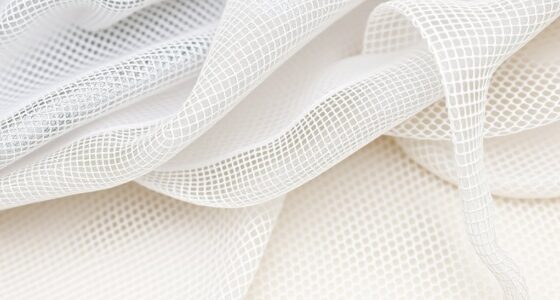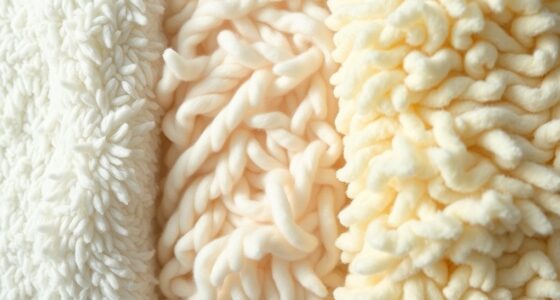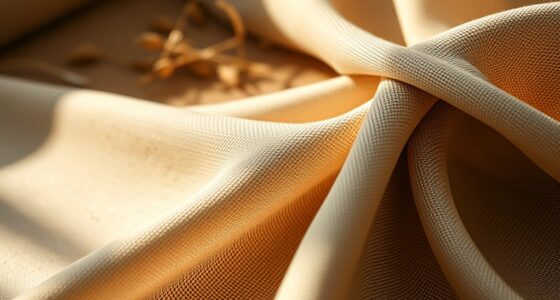

Seacell seaweed fiber offers you a sustainable, ocean-harvested textile that combines natural benefits with luxury. Grown responsibly in coastal waters without harmful chemicals, it infuses fabrics with nutrients and antioxidants from seaweed to help soothe and protect your skin. The eco-friendly manufacturing process reduces waste, emissions, and water use, making it a responsible choice for your wardrobe. To discover how this innovative fiber supports both your health and the environment, keep exploring more.
Key Takeaways
- Seacell fiber combines sustainably harvested seaweed with cellulose to create eco-friendly, luxurious textiles infused with ocean nutrients.
- The manufacturing process minimizes waste and chemical use, ensuring a sustainable and cleaner production of seaweed-infused fabrics.
- Seaweed in Seacell provides natural benefits like antioxidants and soothing properties, supporting skin health and comfort.
- This ocean-harvested fiber promotes environmental sustainability by reducing emissions, water use, and supporting ocean ecosystem health.
- Wearing Seacell offers a luxurious, health-conscious choice that blends natural ocean-derived benefits with eco-friendly fashion.

Have you ever wondered if there’s a sustainable alternative to traditional textiles? Seaweed fiber, specifically Seacell seaweed fiber, offers an innovative solution that combines eco-friendliness with luxury. This material is crafted through a process that emphasizes sustainable sourcing, meaning the seaweed is harvested responsibly, ensuring the ocean’s delicate ecosystems remain healthy. Unlike conventional fibers that often rely on resource-intensive farming or synthetic chemicals, seaweed is a renewable resource that grows abundantly in coastal waters without the need for fertilizers or pesticides.
The fiber manufacturing process for Seacell involves blending harvested seaweed with cellulose fibers, creating a textile that’s both environmentally conscious and highly functional. During production, the seaweed is processed into a fine powder and integrated into the fiber mix, allowing the resulting fabric to retain many of the seaweed’s natural benefits. This process not only minimizes waste but also reduces reliance on synthetic chemicals, making it a cleaner choice for the environment. As a consumer, you get to enjoy a product that’s rooted in responsible practices from start to finish.
What’s especially compelling about Seacell seaweed fiber is its ability to harness the ocean’s natural properties. The seaweed component infuses the fabric with nutrients and antioxidants, which can help soothe and protect your skin. Plus, because the fiber manufacturing process emphasizes sustainability, you’re wearing a textile that’s designed to reduce environmental impact. This means fewer emissions, less water consumption, and a smaller carbon footprint compared to traditional textile production. The result is a luxurious fabric that aligns with eco-conscious values without sacrificing quality or comfort.
When you choose garments made from Seacell seaweed fiber, you’re supporting a shift toward more sustainable sourcing in the fashion industry. This fiber exemplifies how innovation can turn natural resources into beautiful, functional textiles that respect the planet. The process is transparent, and many brands now prioritize eco-friendly fiber manufacturing techniques, ensuring that your wardrobe choices contribute to a healthier environment. With a growing demand for sustainable fashion, Seacell seaweed fiber stands out as a compelling option that marries ocean-inspired luxury with responsible production.
In essence, this fiber presents a unique opportunity to wear something that’s both beautiful and sustainable. It’s a testament to how thoughtful fiber manufacturing and sustainable sourcing can transform the way we approach textiles. By choosing seaweed-based fabrics, you’re embracing a future where fashion doesn’t have to come at the planet’s expense—an ocean-harvested luxury you can confidently wear. Additionally, the health benefits of seaweed-infused textiles can provide soothing effects for sensitive skin, making this fiber not only eco-friendly but also beneficial for your well-being.
Seacell seaweed fiber clothing
As an affiliate, we earn on qualifying purchases.
As an affiliate, we earn on qualifying purchases.
Frequently Asked Questions
How Does Seacell Fiber Compare to Traditional Silk in Luxury Feel?
When comparing fiber types, you’ll notice that Seacell fiber offers a unique blend of luxury softness and sustainability, but traditional silk often provides a smoother, more luxurious feel. As you touch each, you might find silk’s silky sheen and delicate texture slightly more refined, while Seacell’s eco-friendly origin adds a fresh, natural quality. Overall, both deliver high-end luxury softness, but silk still holds the title for classic elegance.
Is Seacell Fiber Suitable for Sensitive Skin or Allergies?
Did you know that over 15% of people worldwide have sensitive skin or allergies? Seacell fiber is a great choice if you’re concerned about skin sensitivity, as it offers hypoallergenic benefits. Its gentle, natural composition minimizes irritation, making it suitable for sensitive skin. You’ll find it comfortable and safe, even if you have allergies, allowing you to enjoy luxury wear without worry.
What Are the Care Instructions for Garments Made From Seacell Fiber?
To care for garments made from seacell fiber, you should follow gentle washing instructions to preserve the fabric’s softness and integrity. Use cold or lukewarm water and a mild detergent, avoiding bleach or harsh chemicals. After washing, opt for proper drying by laying the garment flat or hanging it to air dry. Avoid high heat, as it can damage the delicate seaweed fibers, ensuring your garment stays beautiful longer.
Can Seacell Fiber Be Recycled or Biodegraded Easily?
Think of seacell fiber as a gentle leaf falling into a stream—it’s eco-friendly and naturally breaks down. Its biodegradability potential is high, meaning it can decompose fairly easily. However, recycling challenges may arise if it’s blended with synthetic fibers or treated with chemicals. You can wear it with peace of mind, knowing it’s designed to return to the earth without leaving a lasting footprint.
How Does the Environmental Impact of Seacell Fiber Production Differ From Conventional Textiles?
You might wonder how the environmental impact of seacell fiber production compares to conventional textiles. Unlike traditional fabrics, seacell emphasizes marine conservation and sustainable sourcing, reducing harmful waste and pollution. Its production uses less water and chemicals, helping protect oceans and marine life. By choosing seacell, you support eco-friendly practices that prioritize sustainability and minimize environmental harm, making it a better choice for the planet.

Organic Basics Womens Core Ribbed Cotton Tank Top Bralette, Seaweed, Medium
Scoop-neck tank bralette in a ribbed cotton fabric.
As an affiliate, we earn on qualifying purchases.
As an affiliate, we earn on qualifying purchases.
Conclusion
Imagine wrapping yourself in a fabric as timeless as the ocean itself. SeaCell seaweed fiber isn’t just luxurious—it’s a sustainable choice that connects you to nature’s deep wisdom. Just like the ocean’s currents nourish life, your wardrobe can support environmental health. By choosing this ocean-harvested luxury, you’re not only elevating your style but also contributing to a healthier planet—proving that true elegance flows from mindful choices.
sustainable seaweed fiber activewear
As an affiliate, we earn on qualifying purchases.
As an affiliate, we earn on qualifying purchases.

Belsen Classic Cotton Blend Crinkle Soft Lightweight Scarf Wrap Shawl (Seaweed Green)
60% cotton/40% polyester. Soft and Comfortable Breathable.
As an affiliate, we earn on qualifying purchases.
As an affiliate, we earn on qualifying purchases.