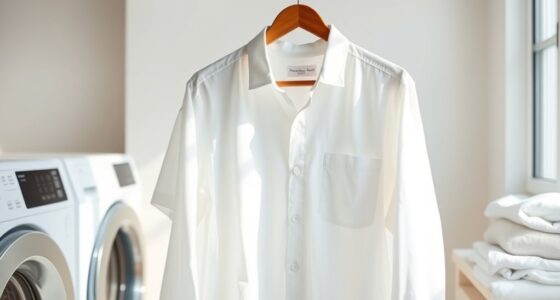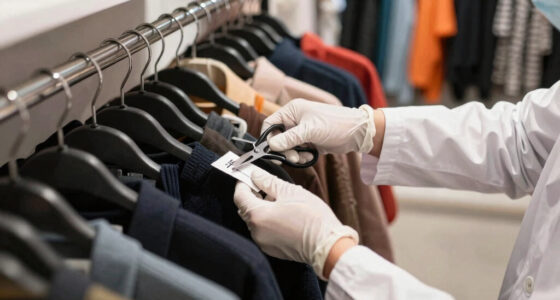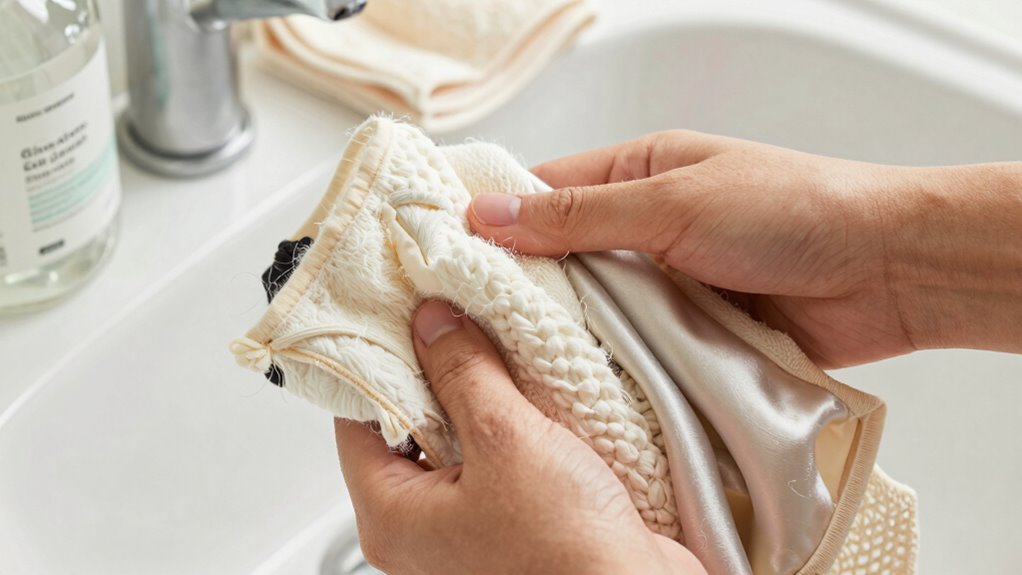
To wash mixed-fiber garments safely, use gentle cycles with cold or lukewarm water, and check the care labels carefully. Opt for mild fabric softeners designed for mixed fabrics, or skip softeners if unsure. Protect delicate fibers by placing garments in mesh bags and avoid overcrowding your washer. Air dry or use low-heat drying methods, and lay items flat if possible. For more tips on maintaining your clothes’ quality and longevity, keep exploring the best techniques.

Get your wardrobe favorites delivered free with Prime
- Fast, free delivery on millions of items
- Prime Video, Amazon Music and more included
- Member-only deals all year
Key Takeaways
- Always check care labels and follow manufacturer instructions for washing and drying.
- Use cold or lukewarm water on a gentle or delicate cycle to prevent fiber damage.
- Place garments in mesh laundry bags for extra protection during washing.
- Prefer air drying or use low-heat settings, avoiding direct sunlight to prevent fading.
- Choose compatible fabric softeners designed for mixed fibers to maintain softness and prevent residue.

Washing mixed-fiber garments can be tricky because different fibers often require different care. You need to be mindful of how each fabric reacts to water, heat, and cleaning agents to keep your clothes looking their best. One common mistake is using fabric softeners indiscriminately—they can sometimes damage delicate fibers or leave residue that affects the garment’s texture. Instead, opt for gentle fabric softeners formulated specifically for mixed fabrics, or skip them altogether if you’re unsure. These conditioners can help keep fibers soft and prevent static cling, but always check the care labels first to avoid any adverse reactions.
Use gentle fabric softeners suitable for mixed fibers, or skip them to protect delicate fabrics and maintain texture.
When it comes to washing, your goal is to treat all fibers gently while maintaining their integrity. Use cold or lukewarm water, as hot water can cause shrinkage or weaken certain materials like wool or silk. Select a gentle or delicate cycle on your washing machine—this reduces agitation and minimizes fiber stress. For extra protection, consider placing your garments in a mesh laundry bag. This prevents excessive rubbing against other items and helps preserve the fabric’s quality. Proper washing techniques are essential in caring for mixed-fiber garments and ensuring their longevity. Incorporating appropriate washing methods can significantly extend the lifespan of your clothes. Avoid overcrowding the washer; giving your clothes space to move ensures a thorough, yet gentle clean. Additionally, understanding fiber reactions can guide you in selecting the best washing methods for each fabric type.
Drying techniques are just as vital as washing. High heat can distort or damage delicate fibers, so always opt for air drying or use a low-heat setting if you’re using a dryer. Laying garments flat to dry is often the safest method, especially for items made of wool or silk, since it prevents stretching or misshaping. If you prefer hanging them, use padded hangers or lay a towel underneath to support the fabric. Avoid direct sunlight, which can fade colors or weaken fibers over time. When using a dryer, select a low or no-heat cycle, and consider adding dryer balls to reduce static and improve airflow. This helps maintain the garment’s softness and prevents unnecessary wear.
Pay attention to the care labels on your mixed-fiber garments—they provide the best guidance for washing and drying. Combining proper techniques with gentle handling guarantees your clothes stay looking vibrant and last longer. Remember, each fiber has unique needs, so adapting your routine accordingly makes a big difference. Using the right fabric softeners and drying techniques not only preserves the appearance but also maintains the comfort and durability of your mixed-fiber clothes. Proper understanding of sound vibrations can also help in maintaining the integrity of certain fibers during washing and drying. With a little extra care, you can confidently wash your garments knowing they’ll come out clean, soft, and in great shape every time.
mesh laundry bags for delicate clothes
As an affiliate, we earn on qualifying purchases.
As an affiliate, we earn on qualifying purchases.
Frequently Asked Questions
Can Mixed-Fiber Garments Go in the Dryer?
Yes, mixed-fiber garments can go in the dryer, but you need to be careful with fabric blending and drying techniques. Check the care label first, as some fibers may shrink or get damaged. Use a low heat setting to protect the fibers and prevent shrinkage. Remove garments promptly to avoid wrinkles, and consider air drying more delicate blends for extra safety. Always follow specific instructions for the best results.
How Often Should I Wash Mixed-Fiber Clothing?
You should wash mixed-fiber clothing after every 3 to 4 wears or when it becomes visibly dirty or sweaty. Fabric blending affects how often you need to wash, as some fibers are more prone to odor or dirt buildup. Regular washing maintains freshness and prevents damage. Be sure to check care labels for specific instructions, but generally, sticking to a consistent washing frequency helps keep your mixed-fiber garments in good shape.
Are There Special Detergents for Mixed Fibers?
Think of your detergent as the knight in shining armor for mixed fibers, protecting fabric integrity. While there aren’t many special detergents explicitly for mixed fibers, you should prioritize gentle, pH-neutral options. Always check fiber compatibility and choose a detergent designed for delicate or multi-fiber clothing. This way, you prevent damage and keep your garments looking their best, just like a hero safeguarding their precious treasures.
Can I Iron Mixed-Fiber Fabrics Safely?
Yes, you can iron mixed-fiber fabrics safely if you follow proper ironing techniques and fabric care tips. Set your iron to a low or medium heat, depending on the most delicate fiber in the blend. Use a pressing cloth to protect the fabric and avoid direct contact with the iron. Always check the garment’s care label, and test a small, inconspicuous area first to prevent damage.
Do Mixed Fibers Shrink More Than Single Fibers?
Mixed fibers generally don’t shrink more than single fibers because the different materials balance each other’s fiber behavior. However, shrinkage factors vary depending on the specific fibers involved. You should always check care labels, as some fibers like wool or cotton are more prone to shrinking. Proper washing and drying techniques help prevent unwanted shrinkage and maintain the garment’s shape, regardless of fiber composition.
Conclusion
Treat your mixed-fiber garments with gentle care, like tending to delicate blooms in a garden. By following these simple steps, you protect their vibrant threads and keep them singing with life. Think of each wash as a tender hug, preserving their beauty and strength for seasons to come. When you handle them thoughtfully, you’re not just cleaning clothes — you’re nurturing treasures that tell your story with every wear.
Evergreen bestsellers Picks
bestsellers
As an affiliate, we earn on qualifying purchases.