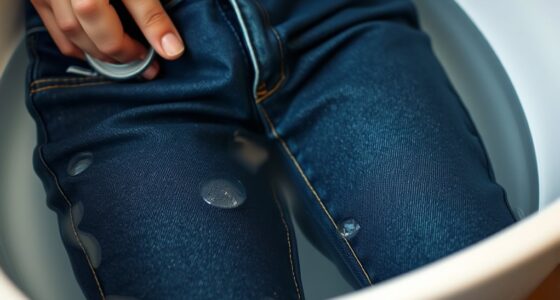
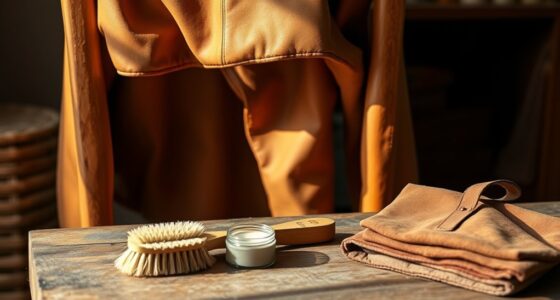
To wash handwoven fabrics and artisan textiles, wash them separately in cold water with gentle, pH-neutral detergents to prevent dye bleeding and fiber damage. Handle your textiles carefully, avoiding harsh chemicals, bleach, and agitation that can distort the weave. Act quickly with stain removal, blotting instead of rubbing, and rinse thoroughly. For organic or tough stains, try a vinegar and water solution softly. Continue exploring these tips to keep your textiles vibrant and intact.

Get your wardrobe favorites delivered free with Prime
- Fast, free delivery on millions of items
- Prime Video, Amazon Music and more included
- Member-only deals all year
Key Takeaways
- Always wash handwoven and artisan textiles separately in cold water to prevent dye bleeding and fiber damage.
- Use gentle, pH-neutral detergents designed for delicate fabrics to preserve color and texture.
- Handle textiles carefully, avoiding agitation or rubbing to maintain weave integrity.
- Treat stains promptly with mild solutions like cold water and vinegar, testing on small areas first.
- Rinse thoroughly after washing to remove residues and prevent discoloration or fiber deterioration.

Handwoven fabrics require gentle care to preserve their beauty and durability. When it comes to maintaining these textiles, understanding how to properly wash them is vital. One of the key concerns is dye preservation. Many artisan fabrics are dyed with natural or delicate dyes that can fade or bleed if not handled correctly. To protect the vibrant colors, always wash handwoven fabrics separately from other clothing, especially during the first few washes. Use cold water, as hot water can cause dyes to run or fade more quickly. Gentle detergents formulated for delicate textiles are your best choice because they help maintain the fabric’s color integrity. Avoid harsh chemicals or bleach, which can strip the dyes and weaken the fibers over time. If you notice any dye transfer, rinse the fabric immediately with cold water to prevent further bleeding. Proper dye preservation is essential not just for the fabric’s appearance but also for its longevity, allowing you to enjoy its beauty for years to come. Additionally, understanding how fiber composition influences washing methods can help you select the most suitable care routine for your textiles.
Stain removal on handwoven fabrics requires a careful approach. When a spill occurs, act swiftly to prevent stains from setting. Blot—don’t rub—the stain gently with a clean, damp cloth to lift as much of the substance as possible. For stubborn stains, avoid aggressive scrubbing, which can damage the delicate fibers or distort the weave. Instead, use a mild solution of water and a gentle, pH-neutral detergent, applying it softly to the affected area. Test any stain removal method on a small, inconspicuous section first to ensure it won’t harm the fabric’s dyes or fibers. For organic stains like food or sweat, a mixture of cold water and a small amount of vinegar can be effective. Always rinse thoroughly after treating a stain to remove any residue that might cause discoloration later. When dealing with tough stains, patience is key—sometimes multiple gentle treatments are needed. Remember, the goal is to lift the stain without compromising the fabric’s integrity or its dye colors.
delicate fabric handwashing detergent
As an affiliate, we earn on qualifying purchases.
As an affiliate, we earn on qualifying purchases.
Frequently Asked Questions
Can Handwoven Fabrics Be Machine Washed Safely?
You shouldn’t machine wash handwoven fabrics or artisan textiles unless the care label says it’s safe. If it is, use the delicate cycle on your machine and cold water to prevent damage. Always place the fabric in a mesh bag for extra protection. However, handwashing is usually safer to preserve the fabric’s integrity, color, and texture, ensuring your textiles stay beautiful longer.
How Do I Remove Stains Without Damaging the Textile?
To remove stains without damaging your textile, act quickly, test first, and use gentle cleaning. Blot the stain gently with a clean cloth, avoiding rubbing. Apply a mild solution of water and natural soap, then softly dab the area. Rinse with cool water, and let it air dry. Focus on stain removal with gentle cleaning, and always prioritize delicate handling to preserve your handwoven fabric’s beauty and integrity.
What Detergents Are Best for Delicate Woven Fabrics?
You should use gentle detergents or natural cleaning agents when caring for delicate woven fabrics. Look for products labeled specifically for delicate or handwoven textiles, as they’re free from harsh chemicals that can damage fibers. Avoid bleach or strong detergents, and opt for mild, eco-friendly options. Always test a small area first, and wash by hand to make certain your artisan textiles stay beautiful and intact over time.
How Often Should I Wash Artisanal Textiles?
You probably wonder how often you should wash your artisanal textiles. Typically, maintenance frequency depends on use; if it’s used daily, wash every few months. For occasional pieces, washing twice a year suffices. To preserve their beauty, follow preservation tips like gentle hand washing and avoiding harsh detergents. This approach minimizes wear, keeps colors vibrant, and prolongs your textiles’ lifespan, ensuring they remain stunning and functional for years.
Can I Iron or Press Handwoven Fabrics?
Yes, you can iron handwoven fabrics, but use gentle ironing techniques to avoid damaging the fibers. Set your iron to a low or silk setting, and always test a small area first. Pressing safety is essential; place a pressing cloth between the iron and the textile to prevent shine or burns. Avoid applying too much pressure, and never use steam on delicate, handwoven fabrics.
Conclusion
So, go ahead and handle those delicate handwoven fabrics with the utmost care—after all, they’re just pieces of art, right? It’s amusing how we often forget that even the most beautiful textiles need gentle treatment to stay stunning. Irony aside, your patience will pay off, and your artisan textiles will thank you by lasting generations. Who knew that a little careful washing could be the secret to keeping history alive in your hands?
Halloween Picks
halloween
As an affiliate, we earn on qualifying purchases.