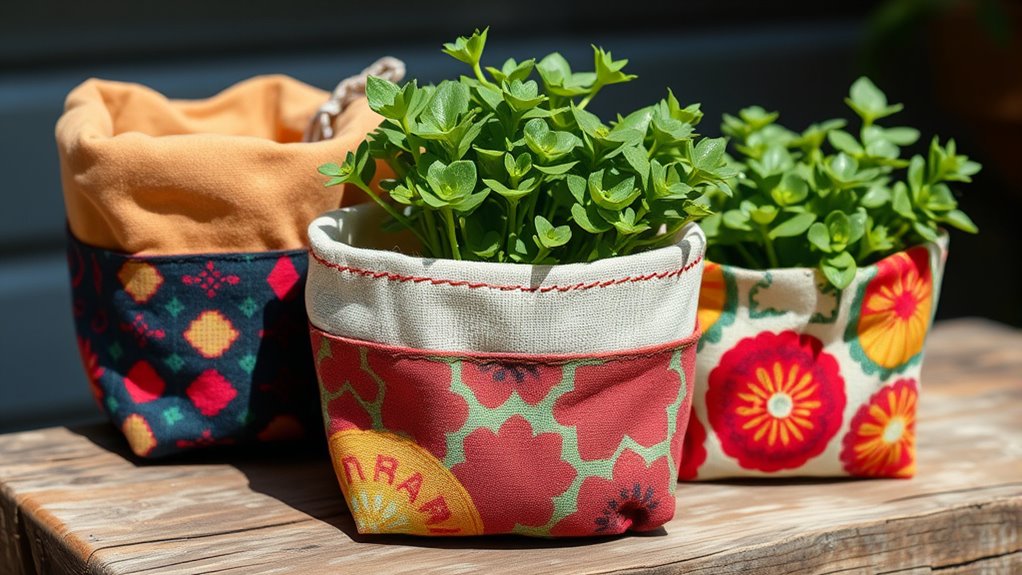

DIY fabric planters let you create stylish, personalized covers that enhance your pots and showcase your plants with ease. By choosing durable, water-resistant fabrics like canvas or outdoor polyester, you can craft lightweight, breathable covers perfect for indoor or outdoor use. Measure your pots carefully, sew or glue the fabric, and add decorative touches to match your decor. Keep your plants healthy with proper drainage and airflow—continue exploring for more tips to bring your creative vision to life.
Key Takeaways
- Choose durable, water-resistant fabrics like canvas or outdoor polyester for longevity and plant protection.
- Measure your pot accurately, including height and circumference, to create a well-fitting fabric cover.
- Sew or glue fabric edges securely, adding decorative touches such as ribbons or embroidery for style.
- Incorporate drainage solutions, like holes or waterproof liners, to prevent overwatering and root rot.
- Customize the design with colors, patterns, and embellishments to match your indoor or outdoor decor.
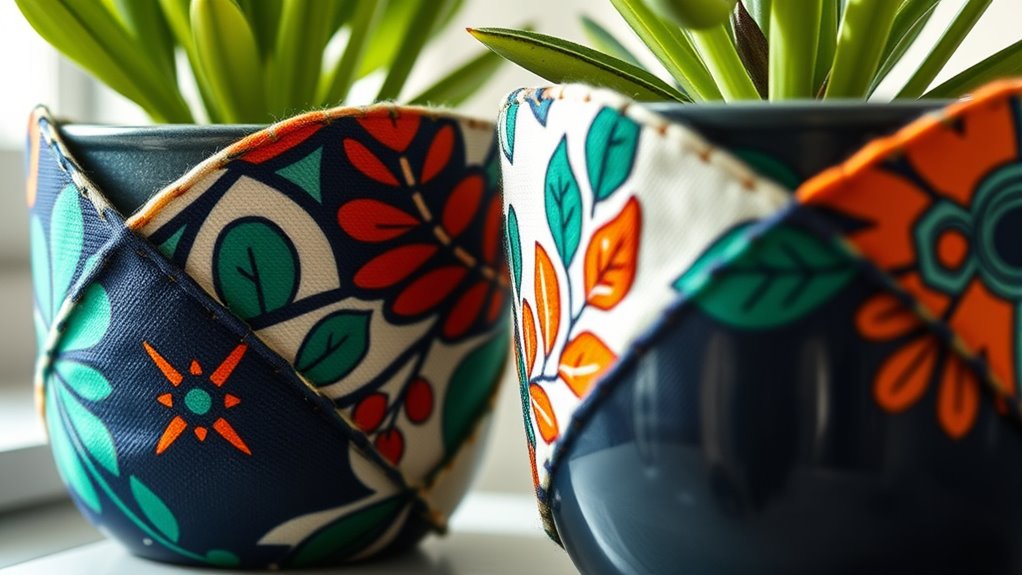
If you want to add a touch of creativity to your indoor or outdoor space, making your own fabric planters is a simple and rewarding project. These DIY covers not only elevate the look of your plants but also offer a practical way to protect your pots and roots. When choosing fabric types, think about durability, water resistance, and aesthetics. Opt for materials like canvas, burlap, or outdoor-rated polyester that can withstand weather conditions and frequent watering. These fabrics breathe well, which helps prevent root rot and keeps your plants healthy. Plus, they come in a variety of colors and patterns, allowing you to customize your planters to match your decor or outdoor theme.
Plant care is an essential consideration when selecting fabric for your planters. If you’re working with moisture-loving plants, like ferns or pothos, you’ll want fabrics that can manage excess water and prevent mold. Water-resistant or waterproof fabrics help keep your plants from sitting in soggy soil, which can cause root rot. Conversely, if you’re caring for plants that prefer drier conditions, lightweight fabrics such as linen or cotton blends work well, allowing for better airflow and moisture regulation. Whatever fabric you choose, ensure it’s thick enough to hold its shape but breathable enough to promote healthy plant growth. Additionally, understanding the properties of fabric breathability can help in selecting the best material for your plant’s needs.
Creating your fabric planter is straightforward. Measure your pot’s height and circumference, then cut your fabric accordingly, leaving extra allowance for seams. Sew or use fabric glue to assemble the sides, creating a snug cover that fits your pot perfectly. For a more polished look, add decorative elements like ribbon trims, buttons, or embroidery. You might also consider lining the inside with a waterproof barrier or adding drainage holes to improve plant care, especially for moisture-sensitive plants. Once assembled, slide the fabric cover over your pot, adjusting as needed, and place your plant inside. These fabric planters are lightweight, portable, and easy to clean, making them perfect for both indoor and outdoor gardening.
Incorporating fabric planters into your space transforms ordinary pots into eye-catching accessories that reflect your style. They’re versatile, affordable, and customizable, allowing you to experiment with different fabric types and designs. As you care for your plants, remember that the right fabric can influence plant health by providing proper drainage and airflow. Whether you’re a seasoned gardener or just starting out, DIY fabric planters are a fantastic way to showcase your love of plants while adding a creative touch to your environment.

abshoo Big Student Laptop Backpack For College Women Middle High School Teen Girls Bookbag Travel Daypack (Black)
- Large Capacity: Fits 15.6-inch laptops and essentials
- Durable Water-Resistant Fabric: Made with oxford material
- Breathable, Adjustable Straps: Reduces shoulder pressure
As an affiliate, we earn on qualifying purchases.
Frequently Asked Questions
What Types of Fabric Are Best for Outdoor Durability?
You should choose weather-resistant materials like acrylic or polyester for outdoor durability, as they resist moisture and UV damage. Breathable fabrics such as canvas or linen also work well, allowing airflow to prevent mold and mildew. These fabrics keep your planters looking great longer and withstand outdoor conditions. Make sure to select high-quality, treated fabrics to guarantee your DIY covers last through rain, sun, and wind, maintaining their style and function.
How Do I Ensure Proper Drainage in Fabric Planters?
To guarantee proper drainage in fabric planters, start by adding a layer of small rocks or broken pottery at the bottom. Incorporate fabric layering by placing a breathable landscape fabric or perforated plastic beneath your main fabric to prevent soil leakage. Follow watering tips by watering deeply but infrequently, allowing excess water to drain freely, which keeps roots healthy and prevents waterlogging. This approach promotes ideal plant growth.
Can I Customize Fabric Planters for Specific Plant Sizes?
Think of your fabric planter as a tailor-made suit — you can easily customize it for your plant’s size. Measure your plant’s root ball precisely, then use fabric cutting tips to create a snug fit. Trim excess fabric and add extra space for growth. With some patience, your fabric planters will perfectly suit specific plant sizes, ensuring healthy roots and a stylish display.
How Do I Clean and Maintain Fabric Planter Covers?
To clean and maintain your fabric planter covers, start by removing them from the pots. Use gentle fabric cleaning tips like spot cleaning with a damp cloth and mild detergent, avoiding harsh chemicals. For deeper cleaning, hand wash or machine wash on a delicate cycle. Always air dry to prevent damage. Maintaining fabric covers regularly keeps them looking fresh and extends their lifespan, ensuring your planters stay stylish and functional.
Are Fabric Planters Eco-Friendly and Biodegradable?
Did you know that many fabric planters are made from biodegradable materials? You can feel good knowing they’re eco-friendly, breaking down naturally over time. Plus, you have recycling options for those that aren’t biodegradable. Using these materials reduces waste and supports sustainability. So, when you choose fabric planters, you’re making an environmentally responsible decision that benefits both your plants and the planet.
Conclusion
Now that you’ve crafted your own fabric planters, your space transforms from ordinary to extraordinary, like a garden of endless possibilities. With just a few materials and a bit of creativity, you’ve turned simple pots into stylish works of art. Remember, these planters are more than just covers—they’re a reflection of your personality. So go ahead, nurture your plants and your style, and let your DIY spirit bloom like the most vibrant flower in your garden of life.