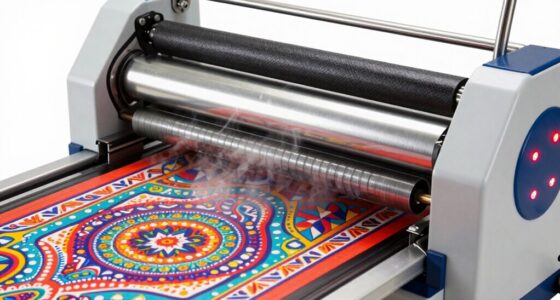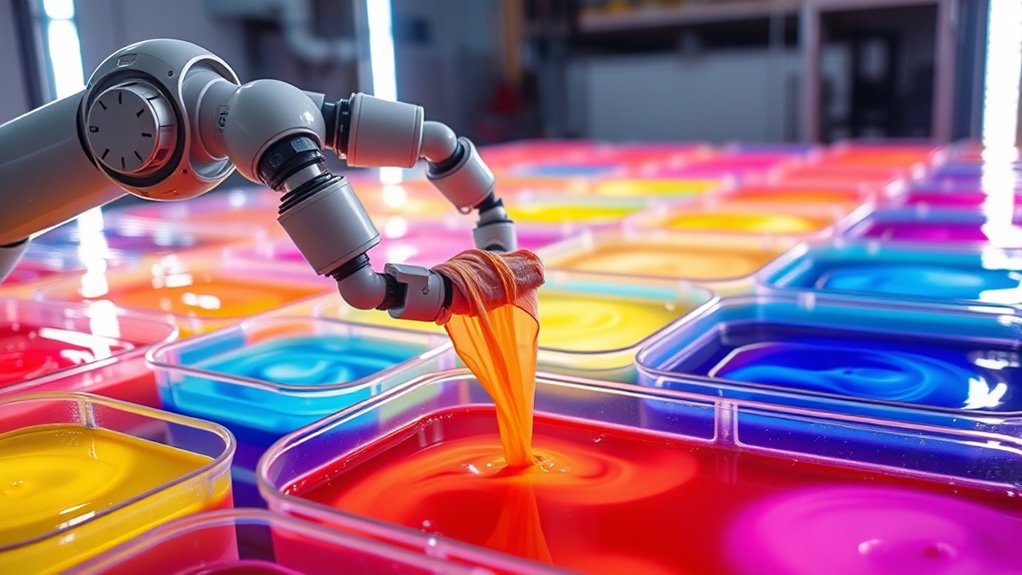

Smart dyeing robots transform textile coloration by automating precise, efficient, and eco-friendly processes. They speed up production, ensure vibrant, consistent colors, and reduce waste through real-time monitoring and accurate control of dyeing parameters. Their energy-efficient operation saves costs and minimizes environmental impact. By adopting these robots, you can improve product quality, meet sustainability goals, and stay competitive. Curious about how these innovations can revolutionize your dyeing operations? Keep exploring to find out more.
Key Takeaways
- Smart dyeing robots enhance process speed, accuracy, and consistency, ensuring vibrant colors aligned with design specifications.
- They optimize resource use by precisely controlling dyeing parameters, reducing waste and environmental impact.
- Equipped with sensors for real-time monitoring, they enable immediate adjustments, improving quality and uniformity.
- Automation lowers energy consumption and manual labor, resulting in cost savings and sustainable operations.
- Advanced features support creative experimentation, helping businesses stay competitive and meet modern environmental standards.
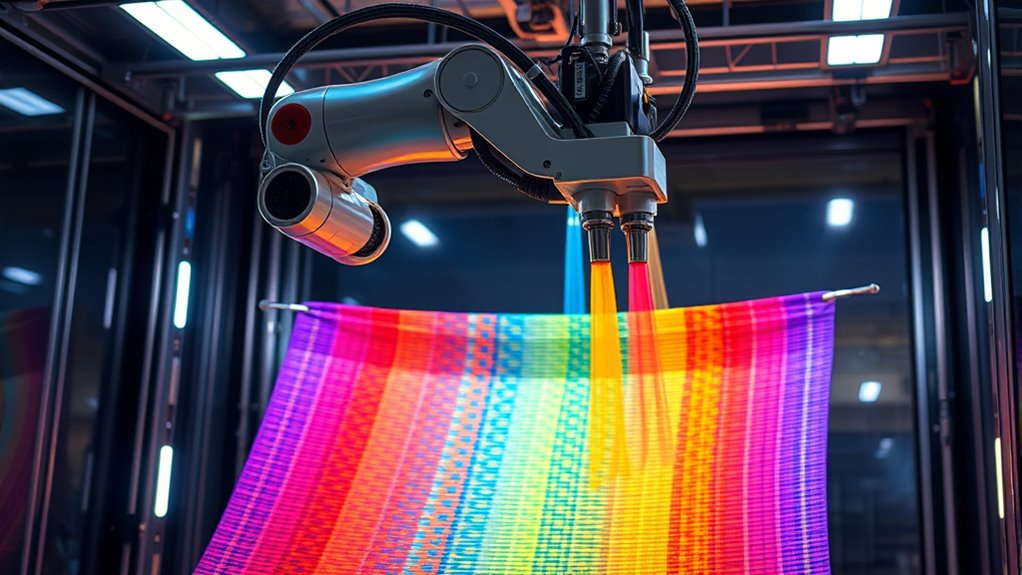
Smart dyeing robots are revolutionizing the textile industry by making the dyeing process faster, more precise, and environmentally friendly. These advanced machines are designed to maximize every step, ensuring that colors are vibrant, consistent, and true to the design specifications. When you use smart dyeing robots, you benefit from unparalleled color accuracy, which means the shades you achieve match your expectations perfectly. This high level of precision reduces waste caused by mismatched colors and minimizes the need for re-dyeing, saving both time and resources. As a result, you can deliver quality products that meet strict standards and satisfy your clients’ demands.
One of the key advantages of these robots is their energy efficiency. Unlike traditional dyeing methods that consume大量 of water and electricity, smart dyeing robots are engineered to operate with minimal energy input. They utilize intelligent algorithms to regulate temperature, dye concentration, and agitation, ensuring ideal dye uptake with less energy expenditure. This not only lowers your operational costs but also reduces your environmental footprint, aligning your production with sustainable practices. The automation of dyeing processes means fewer manual interventions, which translates to less waste and fewer errors. With precise control over dyeing parameters, you avoid over-dyeing or under-dyeing fabrics, further contributing to resource conservation.
As you adopt smart dyeing robots, you’ll notice how their sensors and real-time monitoring systems provide immediate feedback, allowing you to make adjustments on the fly. This responsiveness ensures uniform color distribution across large batches, a feat difficult to achieve with traditional methods. The automation also speeds up production timelines, so you can meet tight deadlines without sacrificing quality. Furthermore, because these robots are programmed with sophisticated software, you can easily experiment with different colors and effects, expanding your creative possibilities while maintaining consistency. Additionally, understanding water quality and flow rate is crucial, as it impacts dye absorption and overall process efficiency.
The integration of smart dyeing robots into your manufacturing process means you’re not just improving efficiency—you’re elevating the quality and sustainability of your products. With their emphasis on color accuracy and energy efficiency, these robots help you reduce waste, lower costs, and produce textiles that meet modern environmental standards. As technology continues to evolve, expect even more innovative features that will further streamline your dyeing operations, making your business more competitive and eco-conscious. In short, smart dyeing robots empower you to produce high-quality, vibrant textiles with less effort and greater responsibility toward the environment.
Frequently Asked Questions
What Are the Initial Costs of Implementing Smart Dyeing Robots?
The initial investment for implementing smart dyeing robots can range from $200,000 to over $500,000, depending on the system’s complexity and size. You’ll face technological expenses like advanced sensors, automation equipment, and software integration. While the upfront costs are significant, they often lead to long-term savings through increased efficiency, reduced waste, and consistent color quality. Planning your budget carefully guarantees a successful and smooth progression to automated dyeing.
How Do Smart Dyeing Robots Handle Different Fabric Types?
Oh, the marvels of technology! Your smart dyeing robots master fabric compatibility by adjusting dye absorption rates, ensuring each material gets just the right splash of color. Whether it’s delicate silk or rugged denim, these robots analyze fabric properties and tweak their processes accordingly. So, you don’t have to worry about mismatched hues or ruined textiles—they handle diverse fabric types with robotic finesse, making dyeing both smarter and more reliable.
What Maintenance Is Required for These Robotic Systems?
You need to regularly perform robot calibration to guarantee precise dyeing and maintain peak performance. Keep up with software updates to improve functionality, fix bugs, and enhance safety features. Check the dyeing components, like nozzles and sensors, for wear and tear, replacing parts as necessary. Regularly clean the system to prevent dye buildup, and schedule routine inspections to catch potential issues early, ensuring your smart dyeing robots run smoothly and efficiently.
Can Smart Dyeing Robots Adapt to Custom or Unusual Color Requests?
Yes, smart dyeing robots can adapt to custom color requests and unusual dyeing techniques. You can program them for custom color flexibility, allowing precise control over specific shades and effects. These robots handle complex or unconventional dyeing methods efficiently, ensuring consistent results. Their advanced sensors and AI enable quick adjustments, making it easy for you to meet unique client demands and experiment with innovative dyeing processes without sacrificing quality.
How Do These Robots Impact Overall Production Speed?
You’ll find that smart dyeing robots considerably boost overall production speed by maintaining excellent color consistency and reducing errors. Their precise control allows for faster turnaround times, while their energy-efficient operations lower costs. As a result, you can meet tight deadlines more easily, improve product quality, and reduce waste, all of which enhance your manufacturing efficiency and help you stay competitive in a fast-paced industry.
Conclusion
Imagine walking into a factory where vibrant colors dance across fabrics, effortlessly brought to life by intelligent robots. You see precision in every stitch, the hum of innovation filling the air, transforming what once was manual labor into a symphony of automation. With smart dyeing robots, you’re witnessing a future where creativity and technology blend seamlessly, creating a world of endless possibilities. Embrace this colorful revolution, and let your imagination be painted with the hues of progress.