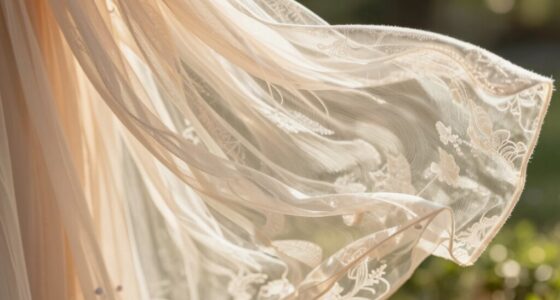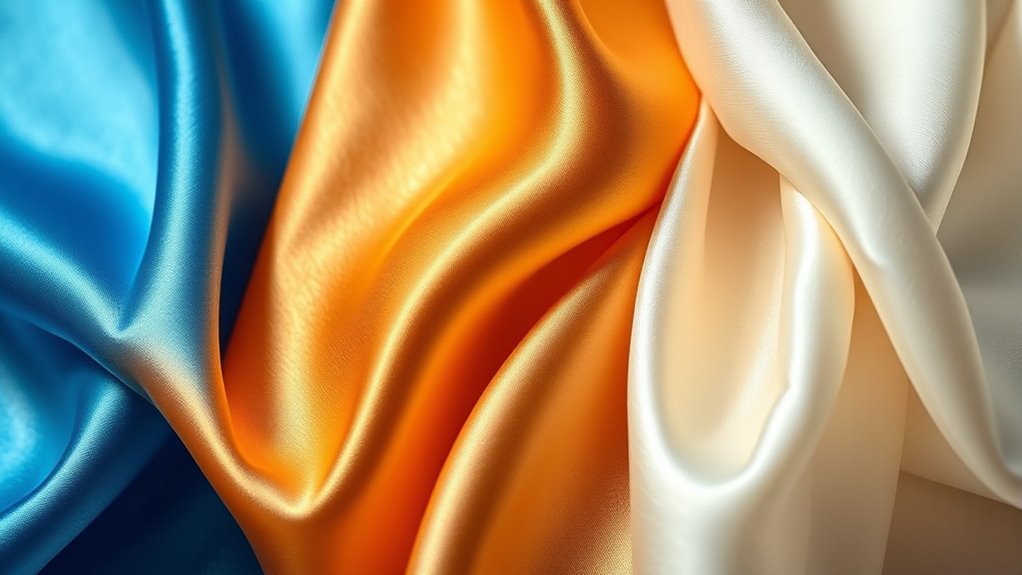
Silk fabrics offer diverse options like mulberry, wild, and peace silk, each with unique origins. Mulberry silk is the most common, produced through traditional methods that raise silkworms in controlled environments. Wild silk is harvested from natural habitats, making it more eco-friendly and with a natural look. Peace silk allows silkworms to complete their life cycle, ensuring animal welfare. Exploring these options helps you choose sustainable, ethical fabrics—discover more about their differences and benefits as you continue.
Key Takeaways
- Mulberry silk is produced by silkworms fed on mulberry leaves, requiring controlled environments and significant resources.
- Wild silk is harvested from naturally occurring silkworms, offering a more eco-friendly and organic alternative to cultivated silks.
- Peace silk allows silkworms to complete their life cycle, providing a humane, animal-friendly option without sacrificing luxury quality.
- Sustainable silk practices focus on reducing water use, waste, and environmental impact across all silk types.
- Understanding differences helps consumers choose eco-conscious, ethical silk fabrics suited to their values and preferences.
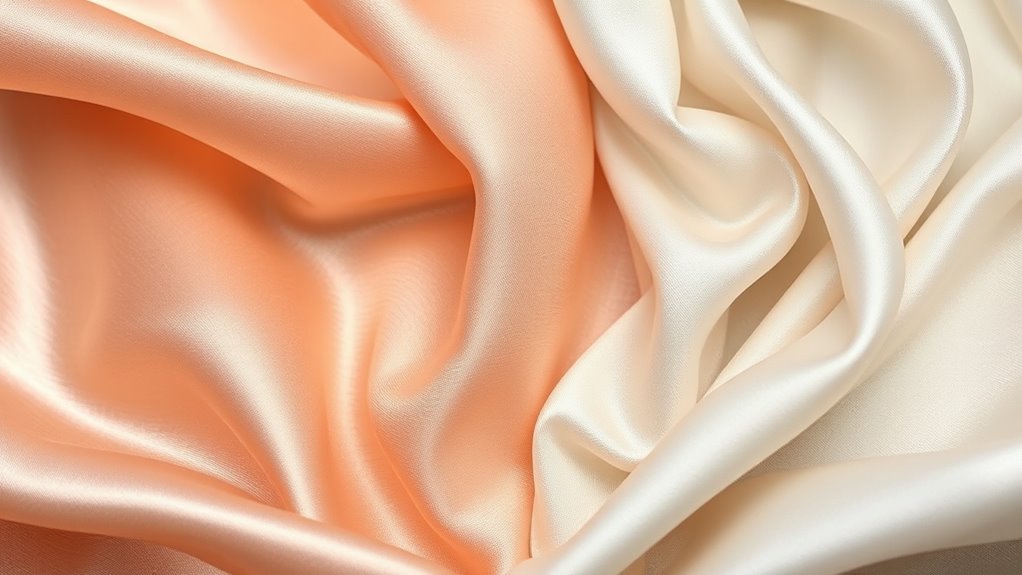
Have you ever wondered what makes silk fabrics so luxurious and sought after? The answer lies in their exquisite texture, natural sheen, and the centuries-old tradition of craftsmanship. However, what often goes unnoticed is the significant impact of how silk is produced. Today, many people are increasingly interested in sustainable production methods, especially when it comes to luxury textiles like silk. Traditional silk farming, primarily mulberry silk, involves raising silkworms in controlled environments and harvesting their cocoons, which can raise concerns about environmental impact and animal welfare. That’s why more manufacturers and consumers are exploring alternative options that prioritize sustainability while maintaining the high quality silk is known for.
Exploring sustainable silk options helps balance luxury, environmental care, and animal welfare.
Sustainable production in the silk industry focuses on minimizing resource use, reducing waste, and ensuring ethical treatment of silkworms. Mulberry silk, the most common type, is produced by farming silkworms that feed exclusively on mulberry leaves. This process, while traditional, can be resource-intensive, requiring large amounts of water and mulberry leaves. However, innovations in sustainable mulberry silk farming aim to cut down on water consumption and promote eco-friendly practices, making it a more responsible luxury textile. These efforts help preserve natural ecosystems and reduce environmental footprint, aligning the production with modern values without sacrificing the silk’s luxurious appeal.
Wild silk, on the other hand, is harvested from silkworms that spin their cocoons in natural environments, often without human intervention. This method typically involves less direct impact on the environment because it relies on naturally occurring silkworms and their habitats. Wild silk tends to have a more irregular texture and a richer, more organic appearance, which many find uniquely beautiful. While it’s less mass-produced, wild silk’s sustainable qualities stem from its minimal interference with natural ecosystems, making it a compelling choice for eco-conscious consumers seeking a luxury textile that respects nature.
Then there’s peace silk, also known as Ahimsa silk, which offers an animal-friendly alternative to traditional silk. In this process, silkworms are allowed to complete their life cycle and emerge from their cocoons before harvesting the fibers. This method aligns with ethical principles, making it an appealing option for those who want the luxurious feel of silk without harming the silkworms. Peace silk combines sustainability with compassion, and its production supports a more humane approach to creating one of the world’s most treasured fabrics.
Whether it’s sustainable mulberry silk, wild silk, or peace silk, each type provides a way to enjoy the luxury textile while respecting the environment and animal welfare. As you explore silk fabrics, understanding these different production methods allows you to make more conscious choices that blend elegance with responsibility. Additionally, advancements in sustainable silk production continue to improve the environmental footprint of this timeless fabric, making it an even more responsible choice for eco-conscious consumers.

Byitre 16 Momme 100% Mulberry Silk Charmeuse Fabric 44'' Wide for Sewing
- Pure Mulberry Silk Material: 6A grade, 16 momme, 44 inches wide
- Includes One Full-Length Piece: Multiple yards available, continuous or separate cuts
- Versatile for Many Projects: Suitable for garments, accessories, and home decor
As an affiliate, we earn on qualifying purchases.
As an affiliate, we earn on qualifying purchases.
Frequently Asked Questions
How Is Wild Silk Harvested Without Harming the Environment?
Wild silk harvesting minimizes environmental impact by collecting cocoons from naturally occurring wild silkworms without disturbing their habitats. You carefully gather the cocoons, avoiding the destruction of the surrounding ecosystem and other wildlife. This sustainable method guarantees that wild silk production doesn’t harm the environment, preserving biodiversity and reducing pollution. By choosing wild silk, you support eco-friendly practices that respect nature and promote responsible harvesting.
What Are the Main Differences in Durability Among Mulberry, Wild, and Peace Silk?
You’ll find that mulberry silk is the most durable due to its stronger silk fiber strength, making it resistant to wear and tear. Wild silk, however, tends to be less durable because its fibers are coarser and weaker. Peace silk falls somewhere in between, offering moderate durability while also emphasizing ethical harvesting. Overall, if durability is your priority, mulberry silk is the best choice.
Are Peace Silk Products More Eco-Friendly Than Traditional Silk?
Yes, peace silk products are generally more eco-friendly than traditional silk because they often have eco-friendly certifications and come from sustainable farming practices. Unlike conventional silk, peace silk allows silkworms to live through the process, reducing harm. This ethical approach supports environmental sustainability and animal welfare, making peace silk a better choice for eco-conscious consumers seeking sustainable fabrics.
Can Wild Silk Be Ethically Sourced From Protected Habitats?
Wild silk can be ethically sourced from protected habitats if you carefully choose brands that prioritize wild silk conservation. These companies implement strict ethical sourcing practices, ensuring the silkworms thrive without harming delicate ecosystems. By supporting such initiatives, you’re helping preserve rare habitats and promote sustainable silk production. It’s like giving a standing ovation to nature’s resilience while flaunting luxurious wild silk—truly an epic win for the environment!
How Do Silk Farming Practices Impact Local Communities?
You’ll find that silk farming practices influence local communities considerably. When done ethically, they can boost socioeconomic effects by creating jobs and supporting local economies. However, unsustainable practices might threaten cultural preservation, as traditional methods and customs could be lost. By promoting responsible silk farming, you help guarantee communities benefit economically while maintaining their cultural heritage, fostering a balanced relationship between the environment, society, and silk production.
Conclusion
Now that you’ve explored the world of silk fabrics—mulberry, wild, and peace silk—you’ve uncovered their unique stories woven into every thread. Think of each silk type as a different melody, whispering elegance and nature’s artistry. As you choose your fabric, remember it’s more than just a material; it’s a silky dance of tradition, sustainability, and beauty. Embrace the charm of silk, and let it drape your life in effortless grace.