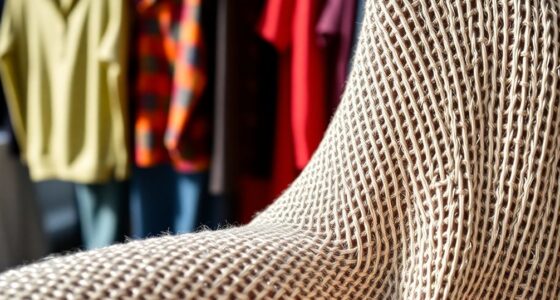
Gingham and plaid are classic checkered fabrics rooted in rich history and cultural significance. Gingham features simple, uniform squares and is often used in casual shirts and home decor, while plaid has deeper roots in Scottish clan identity and intricate Asian textiles. Both patterns have evolved over time, blending tradition with modern fashion and interior design. If you want to explore their fascinating origins and modern twists, you’ll discover more fascinating details ahead.

Get your wardrobe favorites delivered free — and shop member deals
- Fast, free delivery on millions of items
- Access to Prime Big Deal Days deals on October 6–7
- Prime Video, Amazon Music and more included
Key Takeaways
- Gingham features simple, uniform squares with a balanced pattern, often used in casual clothing and home decor.
- Plaid, or tartan, includes complex, multicolored patterns historically linked to Scottish clans and cultural symbolism.
- Both patterns have ancient origins, dating back centuries, and are woven into textiles for durability and cultural expression.
- Modern fashion and interior design incorporate gingham and plaid for their timeless appeal and versatile aesthetic.
- The patterns evoke nostalgia or contemporary style, making them popular choices across generations for clothing and home accessories.
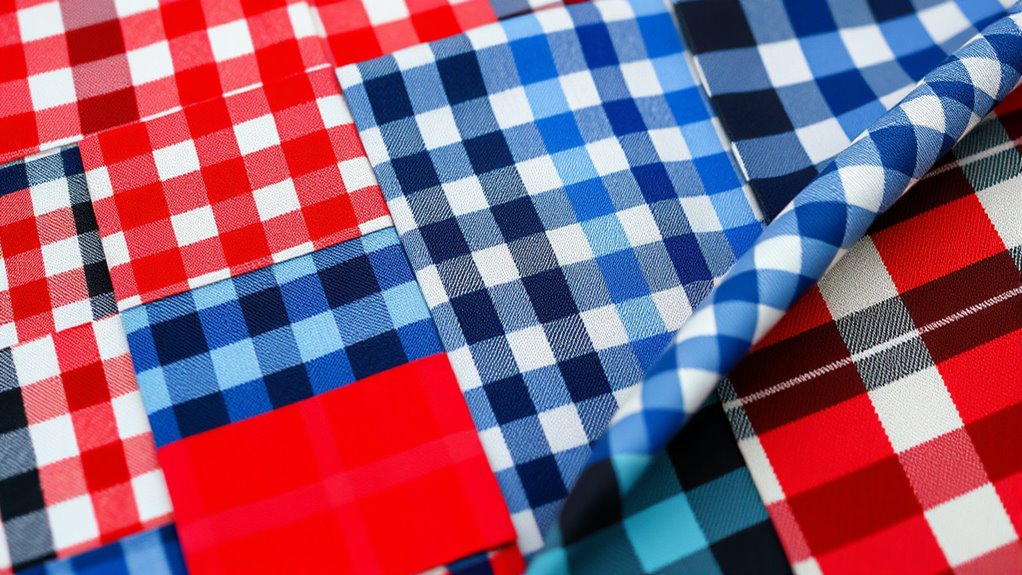
Checkered fabric patterns, characterized by their distinctive squares and contrasting colors, have a timeless appeal that spans fashion and interior design. When you think of these patterns, you might picture classic shirts, tablecloths, or even upholstery, but their origins run deep into history. The history origins of checkered fabrics trace back centuries, with evidence pointing to their use in ancient civilizations across the world. In Europe, particularly in Scotland, plaid patterns—known locally as tartans—became symbols of clan identity, dating back to the 16th century. These tartans featured specific color combinations and patterns that represented different families, and they were woven into wool for durability and warmth. Meanwhile, in Asia, similar checkered designs appeared in textiles from China and Japan, often woven with intricate craftsmanship, signifying social status or cultural symbolism. Over time, these patterns spread across continents, evolving into different styles and uses. Additionally, the woven textile techniques used to create these patterns reflect the rich craftsmanship and cultural significance behind them. In the modern era, checkered patterns, especially gingham and plaid, have seen a resurgence and adaptation in fashion and interior design. Today, you’ll find gingham, with its simple, uniform squares, commonly used in casual shirts, dresses, and accessories. Its origins are believed to be linked to European fabric weaving in the 17th century, but it became especially popular during the 1950s and 1960s in America, thanks in part to its association with suburban, Americana style. Modern uses of gingham extend beyond fashion: it’s frequently seen in tablecloths, curtains, and picnic blankets, giving a cheerful, nostalgic vibe. Plaid, on the other hand, has become a versatile pattern, often associated with preppy or grunge aesthetics, depending on the color schemes and scale of the pattern. Designers incorporate plaid into everything from runway collections to home decor, blending tradition with contemporary trends. Both gingham and plaid patterns are now integral to various styles, thanks to their adaptability and rich history. You can wear a checked shirt to evoke a vintage or country feel, or use checkered cushions and throws to add warmth and character to your space. Their ability to transcend time and trends makes them enduring elements in your wardrobe and home. Whether you’re drawn to their historical roots or modern appeal, checkered fabric patterns continue to offer a timeless, versatile option to express your style and personality.
As an affiliate, we earn on qualifying purchases.
Frequently Asked Questions
How Do I Distinguish Between Different Types of Checkered Fabrics?
To distinguish between different checkered fabrics, focus on fabric pattern variations like size, color, and spacing. Check the checkered fabric identification by examining the pattern’s symmetry and alignment. For example, gingham features small, evenly spaced checks, while plaid has larger, varied lines and colors. Feel the fabric’s texture and look closely at the pattern’s details. This helps you quickly identify and differentiate among checkered fabric types.
Are There Specific Care Instructions for Gingham Versus Plaid Fabrics?
Think of your fabric as a storybook; each page needs gentle handling. Gingham and plaid fabrics often share care instructions but watch for differences in fabric dyeing techniques and sewing pattern variations. Typically, you should machine wash in cold water, avoid bleach, and tumble dry on low. Iron on medium heat if needed. Always check labels, because delicate fabrics like these thrive with gentle, loving care to keep their vibrant checkered charm alive.
What History or Cultural Significance Do Checkered Patterns Hold?
Checkered patterns hold rich cultural symbolism and trace back to historical origins. You might find them linked to Scottish tartans, representing different clans, or symbolize rural life and tradition in American history. These patterns often reflect cultural identity and heritage, making them more than just fabric designs. Their significance varies worldwide, but they universally evoke a sense of tradition, community, and history that continues to influence fashion and culture today.
Which Checkered Patterns Are Most Suitable for Formal Wear?
For formal wear, choose subtle checkered patterns like small houndstooth or finely woven Prince of Wales checks. These patterns have evolved with refined checkered color palettes, combining muted tones and classic neutrals that exude elegance. You should opt for high-quality fabrics that showcase the fabric pattern evolution, ensuring your look stays sophisticated. These checkered patterns strike the perfect balance between tradition and modern style, making them ideal for formal occasions.
How Can I Incorporate Checkered Fabrics Into Modern Home Decor?
Did you know that incorporating checkered fabrics can boost your home’s style by 30%? To do this, choose a statement checkered piece, like a throw pillow or curtains, and coordinate its colors with solid hues in your room. Mix patterns carefully—pair your checkered fabric with subtle stripes or solids—and keep the color palette balanced. This approach adds a modern, lively touch to your decor without overwhelming the space.
Conclusion
So, next time you see gingham or plaid, remember these timeless patterns bring a touch of charm and warmth to any wardrobe. They’re like a gentle whisper of tradition, subtly enhancing your style without overpowering it. Embrace the classic checkered look, and you’ll find a quiet confidence in effortlessly blending comfort with elegance. After all, sometimes the simplest patterns offer the most delightful way to express your unique personality.
Fall Picks
fall essentials
As an affiliate, we earn on qualifying purchases.