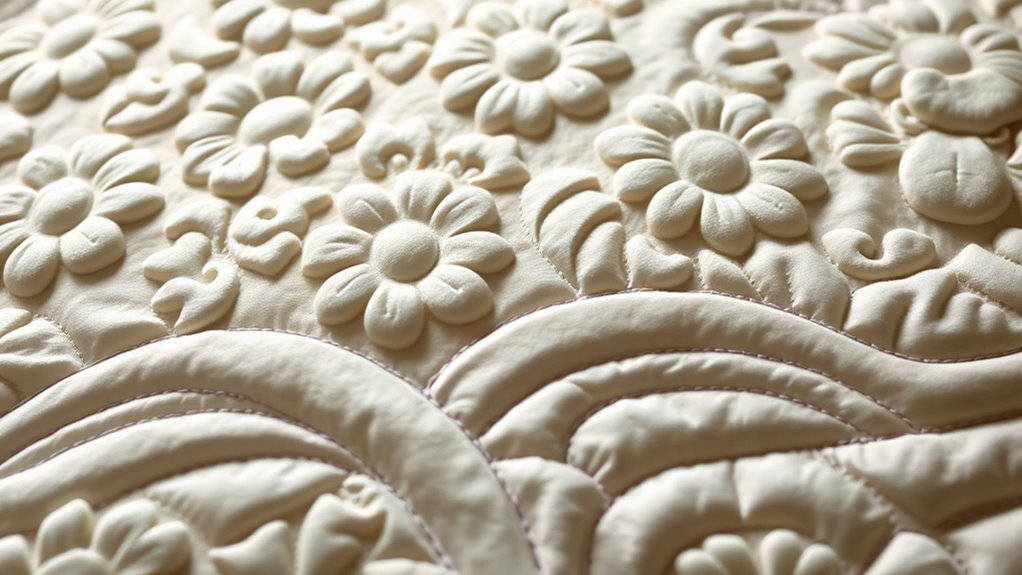
Quilted fabrics like matelassé, padding, and channel quilting combine specific patterns and sewing techniques to create durable, insulating, and decorative materials. These methods layer fabrics with padding or batting and sew them in patterns like diamond, squares, or parallel channels to hold layers securely in place. This process not only boosts the fabric’s strength and warmth but also adds visual appeal. Continue exploring to discover how these quilting styles influence fabric texture and functionality.

Get your wardrobe favorites delivered free — and shop member deals
- Fast, free delivery on millions of items
- Access to Prime Big Deal Days deals on October 6–7
- Prime Video, Amazon Music and more included
Key Takeaways
- Matelassé creates a padded, textured look resembling upholstery through intricate quilting and raised patterns.
- Padding involves inserting batting or foam between fabric layers to enhance insulation and comfort.
- Channel quilting uses parallel stitched lines to form evenly spaced channels, providing structure and durability.
- These techniques combine functionality and aesthetic appeal, often used in luxury textiles and home furnishings.
- Precise stitching and layer alignment ensure strength, uniformity, and long-lasting durability in quilted fabrics.
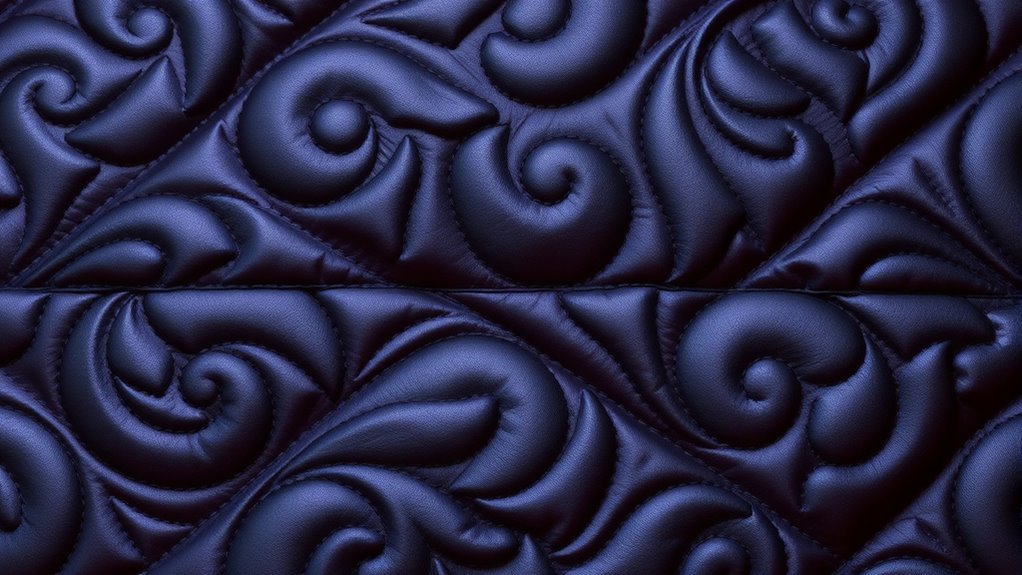
Have you ever wondered what makes quilted fabrics so warm and durable? The secret lies in the way they’re constructed, combining textile patterns and manufacturing techniques to create a fabric that’s both functional and stylish. When you look at quilted textiles, you’re seeing more than just a piece of cloth; you’re witnessing a carefully engineered material designed for insulation and strength. The patterns used in quilting, like diamond, square, and chevron, aren’t just decorative—they also serve a purpose by holding layers together and distributing stress evenly. These textile patterns are integral to the fabric’s overall resilience, preventing shifting and bunching over time.
The manufacturing techniques behind quilted fabrics are equally fascinating. They typically involve sewing two or more layers of fabric with padding or batting in between. This process, known as quilting, creates a three-dimensional structure that traps heat, making the fabric exceptionally warm. Different quilting styles, such as matelassé or channel quilting, use specific stitching patterns to achieve unique textures and visual effects. Matelassé, for instance, mimics the look of padded upholstery with its raised, quilted appearance, achieved through complex stitching that creates a textured, fabric-like surface. Channel quilting involves sewing parallel lines along the fabric, forming defined “channels” that keep the padding evenly distributed. These techniques not only enhance insulation but also add a decorative element, allowing fabrics to serve both function and fashion.
In manufacturing, precision is key. The layers are carefully aligned and stitched to guarantee uniformity, which is essential for durability. Modern innovations have introduced machine quilting, making it easier to produce consistent textile patterns at scale. This guarantees that each piece maintains the same quality, whether it’s a cozy jacket, a luxurious blanket, or a decorative throw pillow. Additionally, understanding the insulation properties of quilted fabrics helps in selecting the right materials for specific climates and uses. The choice of thread and stitching style impacts the fabric’s strength and aesthetic, giving you options to customize the look and feel. The versatility of quilting methods means you can find quilted fabrics in a wide variety of styles, from traditional to contemporary, all thanks to the mastery of textile patterns and manufacturing techniques.
Ultimately, quilted fabrics stand out because of how they combine form and function. Whether you’re wrapped in a warm quilt or admiring the intricate stitching on a designer handbag, you’re experiencing the craftsmanship that goes into each piece. Understanding the textile patterns and manufacturing techniques helps you appreciate the skill involved in creating these resilient, beautiful fabrics. It’s this blend of artistry and engineering that makes quilted textiles a timeless choice for warmth, durability, and style.
As an affiliate, we earn on qualifying purchases.
Frequently Asked Questions
What Are the Best Care Instructions for Quilted Fabrics?
You should follow the care instructions specific to your quilted fabric’s surface textures and quilting thread types. Generally, wash on a gentle cycle with cold water to prevent damage. Use mild detergent and avoid bleach. For drying, air dry or tumble dry on low heat to preserve the fabric’s structure and prevent fiber damage. Regularly inspect seams and quilting stitches to maintain their appearance and longevity.
How Do Quilted Fabrics Vary in Insulation Properties?
You’ll notice quilted fabrics vary in insulation based on their construction. Matelassé offers a plush look with moderate thermal insulation, perfect for lightweight warmth. Padding provides extra layers that trap heat, boosting thermal insulation for colder conditions. Channel quilting creates pockets that help retain moisture and warmth, making it ideal for outdoor gear. Your choice depends on how much thermal insulation and moisture retention you need for comfort and protection.
Can Quilted Fabrics Be Customized for Specific Designs?
Yes, you can absolutely customize quilted fabrics for specific designs. With personalized quilting, you can choose patterns, stitching styles, and even add embroidered details to create a unique look. Custom fabric design allows you to select colors, textures, and quilting techniques that match your vision. Whether for fashion, home décor, or gifts, tailoring quilted fabrics helps you achieve a one-of-a-kind piece that reflects your style and preferences.
What Are Common Applications Beyond Fashion and Home Decor?
Imagine fabric that not only feels plush but also serves essential roles beyond fashion and home decor. You might find quilted fabrics in industrial insulation, providing thermal barriers, or in medical applications like cushioning protective gear and orthopedic supports. Their layered structure offers durability and comfort, making them perfect for specialized uses. So, your quilted fabric could be working quietly behind the scenes in healthcare or industrial environments.
Are There Eco-Friendly Quilted Fabric Options Available?
Yes, eco-friendly quilted fabric options exist. You can choose fabrics made from sustainable fiber options like organic cotton, hemp, or recycled polyester. Look for brands that prioritize eco-conscious manufacturing processes, such as low-waste techniques and non-toxic dyes. These choices help reduce environmental impact while providing durability and comfort, making your quilted projects both stylish and sustainable.
Conclusion
Now that you’ve explored quilted fabrics like matelassé, padding, and channel quilting, you’re ready to see how they transform your projects. Think of these fabrics as the cozy blankets of the textile world—wrapping your creations in warmth and style. Whether you’re designing a statement piece or adding subtle texture, quilted fabrics bring depth and personality. Embrace their versatility and let your creativity soar like a bird in the open sky.
Fall Picks
fall essentials
As an affiliate, we earn on qualifying purchases.