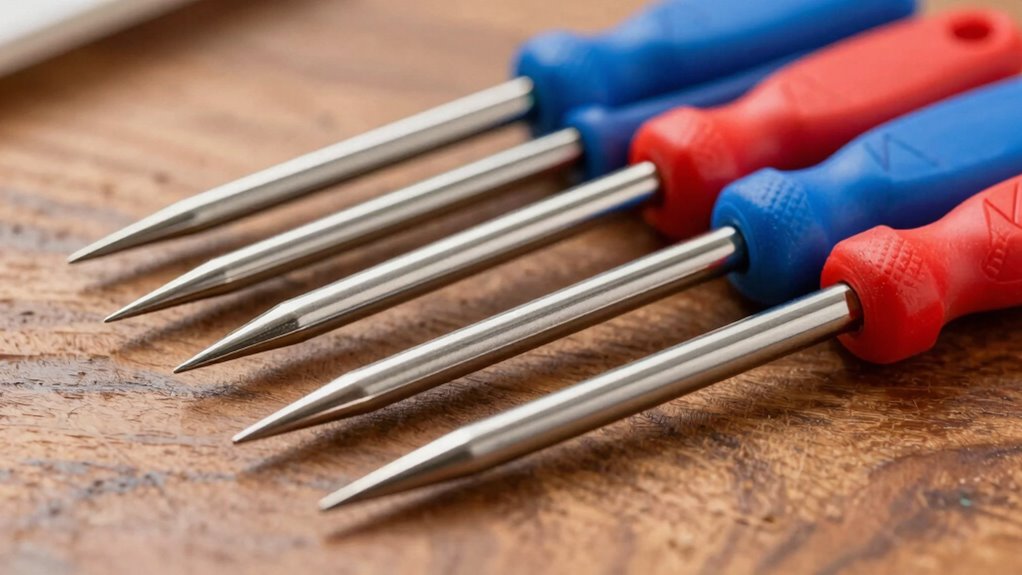

To work effectively with thick fabrics, choose upholstery needles in sizes 100/16 or 110/18. These heavy-duty needles have sharp, strong points designed to cut through dense fibers smoothly and prevent fabric distortion. Using the right needle type, such as ballpoint or upholstery needles, guarantees clean stitches and reduces skipped stitches or needle breakage. Regularly check and replace worn needles, and adjusting tension settings can help maintain quality. Keep exploring to discover more tips for your upholstery projects.

Get your wardrobe favorites delivered free — and shop member deals
- Fast, free delivery on millions of items
- Access to Prime Big Deal Days deals on October 6–7
- Prime Video, Amazon Music and more included
Key Takeaways
- Use size 100/16 or 110/18 upholstery needles for dense, thick fabrics to ensure smooth sewing and durability.
- Choose needles with sharp, strong points designed to cut through dense fibers cleanly.
- Regularly inspect and replace worn needles to prevent skipped stitches and fabric damage.
- Select heavy-duty needles made from durable materials to handle high resistance without breaking.
- Proper needle and tension adjustments minimize fabric stretching and ensure a professional finish.
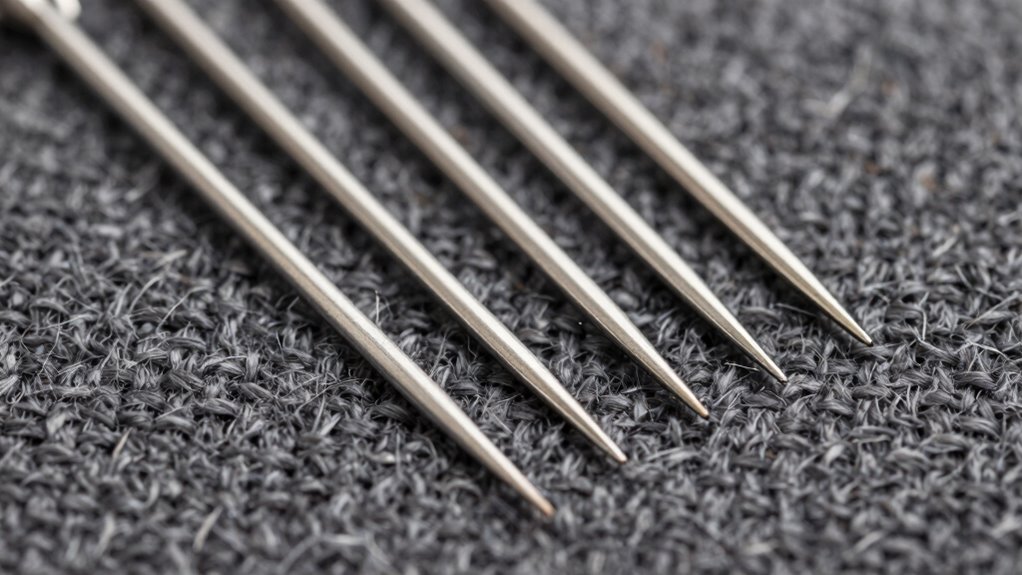
When working with thick fabric for upholstery projects, choosing the right needle is essential for ensuring smooth sewing and durable results. Thick fabrics like heavy canvas, denim, or tufted materials can be challenging to sew through, and the wrong needle can cause fabric stretching, skipped stitches, or even needle breakage. To prevent these issues, you need an upholstery needle designed specifically for dense materials. These needles are built with stronger, sharper points that penetrate thick fibers easily, reducing stress on your sewing machine and ensuring your stitches stay even and secure.
One key factor to consider is the needle’s size and type. For thick fabrics, a larger, heavier-duty needle such as a size 100/16 or 110/18 is often recommended. These needles have a robust shaft that can handle the resistance of dense materials without bending or breaking. Ballpoint or upholstery needles with a sharp point are ideal because they cut through fibers cleanly, minimizing fabric stretching and distortion during sewing. Using the correct needle helps you maintain control, resulting in professional-looking seams that hold up over time. Additionally, selecting the appropriate needle material can further improve the durability and performance of your sewing tools.
For thick fabrics, use size 100/16 or 110/18 upholstery needles with sharp points for smooth, controlled sewing.
Needle maintenance plays a crucial role in achieving quality results. After each project or even during long sewing sessions, check your needles for signs of wear, such as dullness, bending, or burrs. A dull or damaged needle can cause skipped stitches, fabric pulling, or uneven tension, which compromises both your work and the longevity of your machine. Regularly replacing needles prevents these issues and keeps your sewing process smooth. Proper needle maintenance also involves cleaning your machine regularly to remove lint and debris, which can interfere with needle movement and cause additional stress on both the needle and fabric. Additionally, proper needle care can extend the lifespan of your needles and ensure consistent sewing performance. Paying attention to needle compatibility with your fabric and machine settings can further improve your sewing results.
When working with thick fabric, you might also notice that fabric stretching can occur if the needle isn’t suitable or if tension settings are off. To minimize this problem, sew slowly and evenly, and use the correct needle to reduce the force needed to push through the material. Tension adjustments might be necessary to prevent puckering or pulling, especially on delicate or stretchy parts of your upholstery. Proper needle choice not only ensures easier sewing but also preserves the fabric’s integrity, keeping it from stretching or distorting as you work. Additionally, selecting the right needle type can significantly improve your sewing experience and the durability of your finished project. Paying attention to thread tension and using quality threads can also contribute to a more professional and long-lasting upholstery finish.
As an affiliate, we earn on qualifying purchases.
Frequently Asked Questions
Can Upholstery Needles Be Used for Leather Fabrics?
Yes, upholstery needles can be used for leather fabrics, but you should check their leather compatibility first. Not all needles are suitable, especially for thicker or tougher leather. Look for needles designed specifically for leather, often made with durable needle material options like steel or nickel-plated steel. These materials help the needle penetrate leather smoothly without bending or breaking, ensuring a clean, professional finish on your project.
How Do I Choose the Right Needle Size?
To choose the right needle size, consider your fabric’s thickness and type. Use longer needles for thick, dense fabrics to guarantee smooth penetration, while shorter needles work better for delicate materials. Opt for needles made from sturdy materials like stainless steel for durability, especially with heavy fabrics. Matching needle length and material to your project helps prevent damage and makes sewing easier, resulting in a cleaner, professional finish.
Are There Specific Needles for Decorative Topstitching?
Did you know decorative stitching can add a 50% more personalized touch to your projects? For this, you’ll want needles specifically designed for decorative topstitching, which feature a larger eye for thicker threads and smooth needle compatibility to prevent breakage. These needles are tailored for precision and durability, ensuring your decorative stitches look professional. Always match the needle type to your fabric and thread for the best results.
Can Upholstery Needles Be Sharpened?
Upholstery needles can’t usually be sharpened because their hardened steel tips are designed for durability, not resharpening. However, if you notice the needle becoming dull, you can try gentle needle sharpening techniques, but it’s often more effective to replace them for consistent performance. This guarantees the durability of upholstery needles, maintaining their strength and sharpness for thick fabric work, preventing damage to fabric or sewing machine.
What’s the Best Storage Method for Upholstery Needles?
You should store upholstery needles in a dedicated, labeled container to prevent accidents and keep them organized. Coincidentally, good needle maintenance involves regular checks for rust and dullness, so you can keep your needles in a protective case that allows for easy inspection. Prioritize storage safety by ensuring the container is out of reach of children or pets, maintaining both your tools and your workspace’s safety.
Conclusion
Choosing the right upholstery needle is like finding a trusted partner for your thick fabric projects. With the proper needle, you’ll glide through heavy materials as smoothly as a boat sailing through calm waters. Remember, the right tool makes all the difference—turning a challenging task into a satisfying craft. So, equip yourself with the best, and let your creativity stitch its way to stunning furniture and upholstery masterpieces. Happy sewing!
Halloween Picks
halloween
As an affiliate, we earn on qualifying purchases.