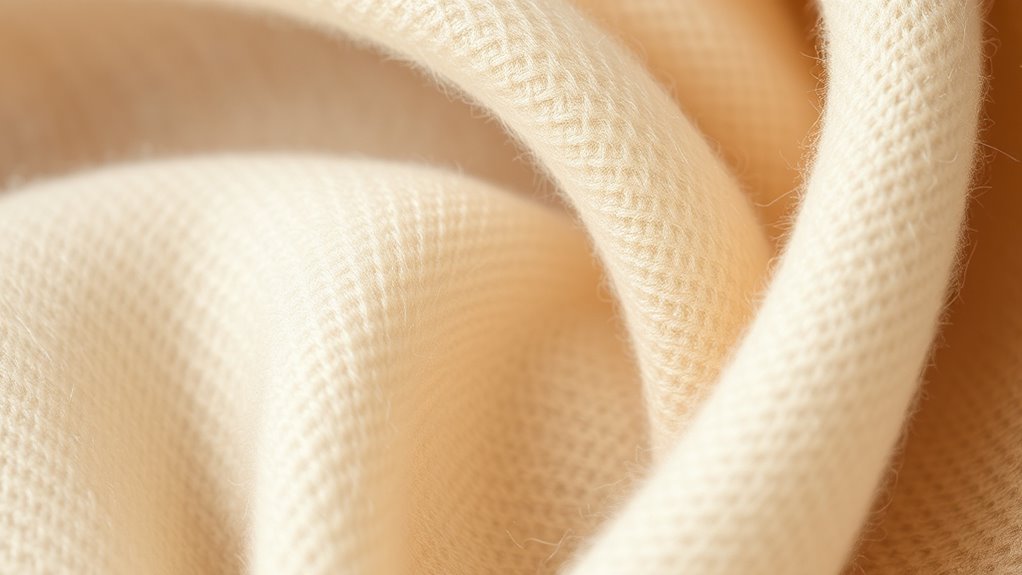

Cashmere fabric gets its incredible softness from the fine undercoat fibers of specific goats, mainly the Cashmere breed. These goats naturally shed their winter coat, which is carefully collected through ethical shearing once a year, ensuring animal welfare and sustainability. The fibers are processed into yarns that feel luxuriously gentle and lightweight. If you stay tuned, you’ll discover more about how responsible sourcing enhances both the quality and eco-friendliness of cashmere.

Get your wardrobe favorites delivered free — and shop member deals
- Fast, free delivery on millions of items
- Access to Prime Big Deal Days deals on October 6–7
- Prime Video, Amazon Music and more included
Key Takeaways
- Cashmere fabric’s exceptional softness originates from the fine undercoat fibers of specially bred goats.
- The fibers are carefully collected through ethical, sustainable shearing during the goats’ molting season.
- Meticulous processing and spinning preserve the fibers’ delicate, lightweight, and silky texture.
- Sustainable sourcing practices ensure eco-friendly production without harming the goats or environment.
- The natural fine fibers, typically less than 19 microns, create a plush, soft feel in cashmere textiles.

Have you ever wondered what makes cashmere fabric so luxurious and sought after? It all comes down to the fiber production process and the way it’s sourced. Cashmere is derived from the fine undercoat of certain goat breeds, primarily the Cashmere goat, which is carefully sheared to gather the soft fibers. The quality of the fiber depends heavily on how it’s produced, with attention paid to sustainable sourcing practices that protect both the animals and the environment. When you choose cashmere, you’re not just investing in its plush feel; you’re supporting a process that emphasizes responsible harvesting and eco-friendly methods.
Fiber production begins with collecting the downy undercoat, which the goats naturally shed during the molting season. Skilled herders gently shear the goats, often just once a year, to minimize stress and ensure animal welfare. This careful approach to fiber collection is a key aspect of sustainable sourcing, as it promotes the health of the goats and prevents overharvesting. Once collected, the raw fibers are sorted by quality, cleaned, and spun into yarns. The entire process requires meticulous attention to detail, as high-quality cashmere fibers are incredibly fine—typically less than 19 microns in diameter—contributing to their renowned softness and lightweight feel.
Sustainable sourcing isn’t just about gentle harvesting; it also involves ethical practices throughout the entire supply chain. Many producers now prioritize transparent sourcing methods that trace each step of fiber production, from goat herding to yarn spinning. This ensures that environmental impact is minimized, and animal welfare is maintained. By supporting brands committed to sustainable sourcing, you help promote responsible practices that reduce waste, conserve water, and lower carbon emissions. Additionally, sustainable methods often involve working with local communities, empowering herders with fair wages and better living conditions.
Choosing cashmere from responsibly managed sources means you’re getting a product that’s not only luxurious but also environmentally conscious. The fibers are naturally renewable, with goats shedding their undercoat each year, making the process sustainable when done correctly. This ongoing cycle allows for continuous fiber production without depleting resources or harming ecosystems. Moreover, implementing sustainable practices in fiber collection can significantly reduce the environmental footprint of cashmere production. When you feel the softness of a cashmere sweater, remember that behind that comfort lies a carefully managed fiber production process rooted in sustainable sourcing. It’s a blend of craftsmanship and respect for nature that elevates cashmere beyond mere luxury, turning it into a responsible choice for conscious consumers.
As an affiliate, we earn on qualifying purchases.
Frequently Asked Questions
How Is Cashmere Different From Regular Wool?
Wool versus cashmere differs mainly in softness and fiber quality. Cashmere comes from goat fibers, making it much softer and finer than regular wool, which often comes from sheep. While both share similarities in warmth and durability, cashmere offers a luxurious feel and lighter weight. You’ll notice that cashmere feels gentler on your skin and provides superior insulation, making it a premium choice compared to standard wool.
What Environmental Impacts Does Cashmere Production Have?
You might marvel at the minimal environmental impact of sustainable farming, but cashmere production can still create ecological footprints. Overgrazing and herd expansion threaten ecosystems, causing erosion and biodiversity loss. While eco-conscious practices reduce these risks, the process often requires significant resources. By choosing ethically produced cashmere, you support sustainable farming, helping to lessen environmental impacts and promote eco-friendly practices.
How Can I Identify Authentic Cashmere?
To identify authentic cashmere, check the fiber quality by gently feeling the fabric—real cashmere feels incredibly soft and smooth. Look for high-quality, fine fibers without any coarse or scratchy patches. Verify the origin authentication by asking for certification or detailed product info, as genuine cashmere often comes from reputable regions like Mongolia or China. Trust reputable brands and inspect labels closely to guarantee you’re getting authentic, high-quality cashmere.
What Are the Best Care Tips for Cashmere Garments?
Did you know cashmere is one of the most delicate fabrics, requiring special care? To keep your garments soft and luxurious, always wash delicate items by hand in cold water with gentle detergent. Avoid wringing; instead, gently squeeze out excess water. For storage, fold your cashmere neatly and keep it in a breathable container. This prevents stretching and pilling, ensuring your cashmere stays beautiful for years.
Is Cashmere Suitable for All Climates?
Cashmere is versatile but may not be ideal for all climates. Its excellent climate adaptability makes it perfect for seasonal wear, keeping you warm in winter and comfortable in cool summer evenings. However, in extremely hot or humid environments, it might feel too warm or cause sweating. You’ll want to choose lightweight cashmere options for warmer climates and layer appropriately to enjoy its softness without discomfort.
Conclusion
Now that you know the magic behind cashmere’s whisper-soft touch, you’re holding a piece of cloud spun from goat fibers. It’s more than just a fabric; it’s a gentle hug from nature itself. When you wrap yourself in cashmere, you’re draping yourself in warmth and luxury, like a cozy secret only the finest goats can tell. Embrace this silky treasure and let your style float effortlessly on a cloud of comfort.
Evergreen bestsellers Picks
bestsellers
As an affiliate, we earn on qualifying purchases.