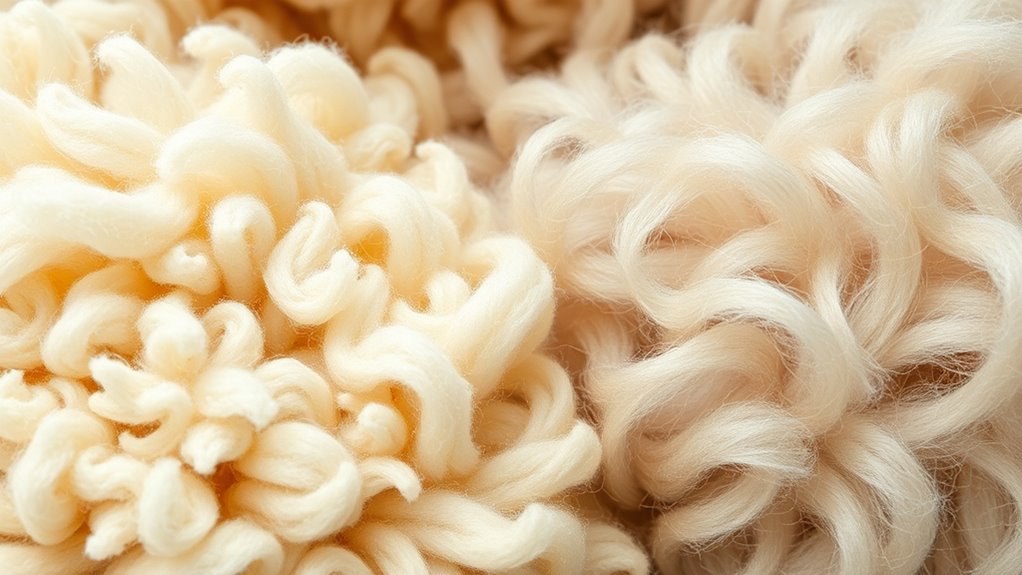

If you’re choosing between alpaca and merino wool for warmth and texture, alpaca offers superior insulation thanks to its hollow fibers and feels silky and luxurious if of high quality. It’s lightweight and perfect for cold, outdoor activities, but requires delicate care. Merino wool is incredibly soft, comfortable against sensitive skin, and easy to maintain, making it ideal for everyday wear. To discover which suits your needs best and learn more, keep exploring the details below.

Get your wardrobe favorites delivered free — and shop member deals
- Fast, free delivery on millions of items
- Access to Prime Big Deal Days deals on October 6–7
- Prime Video, Amazon Music and more included
Key Takeaways
- Alpaca wool has hollow fibers, offering superior lightweight insulation, while Merino wool provides excellent warmth with a softer, smoother texture.
- Merino wool is very soft, ideal for sensitive skin, whereas high-quality alpaca feels silky but can vary in coarseness.
- Alpaca is warmer without added weight, making it suitable for cold outdoor activities; Merino’s warmth is enhanced when layered.
- Both fibers are warm, but alpaca’s insulation is more efficient, and Merino wool is often preferred for next-to-skin comfort.
- Alpaca’s texture varies from silky to coarse depending on quality, while Merino wool consistently offers a soft, smooth feel.

When choosing between alpaca and merino wool, understanding their differences can help you make the best decision for your needs. Both fibers are prized for their warmth and softness, but they have distinct characteristics that can influence your comfort and the longevity of your garments. One of the key factors to contemplate is their sustainability benefits. Alpaca wool is often regarded as more environmentally friendly because alpacas have a gentle grazing pattern that minimizes land damage, and the fiber production process typically involves less chemical processing. In contrast, merino wool, derived from sheep, requires more water and land resources, and its production can involve chemicals for cleaning and processing. If eco-friendliness is a priority for you, alpaca wool might be the more sustainable choice.
Alpaca wool is more eco-friendly than merino wool due to gentler grazing and less chemical processing.
When it comes to warmth, both fibers excel, but they do so in slightly different ways. Alpaca fibers are hollow, providing superior insulation without adding weight. This makes alpaca garments incredibly warm and lightweight, ideal for cold climates or outdoor activities where you want to stay warm without bulk. Merino wool, on the other hand, is known for its fine, soft fibers that create a natural insulating layer. It offers excellent warmth, especially when layered, but tends to be slightly heavier than alpaca for the same level of insulation. So, if you prefer a lightweight, highly insulating option, alpaca might be your best bet.
Texture is another important aspect. You’ll find that merino wool is incredibly soft and smooth against your skin, which makes it a popular choice for base layers and next-to-skin clothing. Its fine fibers are less itchy than traditional wool, providing comfort even for sensitive skin. Alpaca wool, while softer than many other natural fibers, can vary in texture depending on the quality. High-quality alpaca feels silky and luxurious, but lower grades might be a bit coarser. If you prioritize a silky touch and don’t mind a bit of variation, alpaca can be very comfortable. Additionally, fiber quality plays a significant role in determining the overall softness and texture of the finished garment.
Maintenance requirements also differ. Merino wool is known for its ease of care; it’s naturally odor-resistant and typically only needs occasional washing in cold water. It also dries quickly, making it convenient to care for. Alpaca wool, however, requires more delicate handling. It’s best to hand wash alpaca garments and lay them flat to dry, as they can be prone to shrinking or felting if not treated carefully. Regular maintenance is essential to keep alpaca looking its best, but once you establish a routine, it’s manageable.
As an affiliate, we earn on qualifying purchases.
Frequently Asked Questions
Which Fiber Is More Eco-Friendly to Produce?
You’ll find alpaca fiber generally more eco-friendly to produce because it requires less water and chemicals, thanks to sustainable practices used in herding. Its environmental impact is lower since alpacas have softer grazing habits, reducing land degradation. Merino wool, while natural, often involves more intensive farming and chemical treatments. So, if sustainability matters most to you, alpaca fiber tends to be a greener choice overall.
How Do Alpaca and Merino Wool Compare in Durability?
You’ll find alpaca fiber generally more durable than merino wool because its fibers are thicker and stronger. Alpaca’s fiber thickness provides resistance to wear and tear, making it last longer with proper care. Processing techniques also matter; alpaca is often processed with gentler methods that preserve fiber strength, while merino wool’s finer fibers can be more delicate. Overall, alpaca offers better durability for long-lasting garments.
Are Alpaca and Merino Wool Suitable for Sensitive Skin?
Imagine gently brushing your hand over soft, natural fibers—alpaca and merino wool can be suitable for sensitive skin, but it depends on your skin’s sensitivity level. Both fibers are generally hypoallergenic, yet some people experience fiber irritation, especially with coarser varieties. Alpaca is smoother and less itchy, making it a better choice for sensitive skin, while merino wool’s fine fibers usually feel gentle, but individual reactions vary.
Which Fiber Is More Resistant to Odors and Bacteria?
You’ll find that merino wool is more resistant to odors and bacterial growth compared to alpaca. Its natural properties help it wick moisture away, preventing bacteria from thriving and reducing odor buildup. Alpaca, while warm and soft, doesn’t have the same level of odor resistance. So, if odor control is a priority, merino wool is your better choice, especially for active or long-term wear.
Can Alpaca and Merino Wool Be Blended Effectively?
Yes, alpaca and merino wool can be blended effectively. You benefit from blended textile benefits like enhanced warmth, softness, and durability. Fiber blending techniques guarantee the fibers integrate well, creating a versatile fabric that combines alpaca’s insulation and merino’s fine texture. This blend offers you a cozy, resilient garment, perfect for cold weather, with improved odor resistance and comfort, making it a smart choice for high-quality, multifunctional clothing.
Conclusion
Ultimately, choosing between alpaca and merino wool comes down to your priorities. Alpaca offers unmatched warmth and a silky softness that feels luxurious, yet it can be more delicate. Merino, on the other hand, provides excellent breathability and a finer texture suited for everyday wear. While alpaca’s plushness feels indulgent, merino’s lightweight versatility keeps you comfortable in any season. Both fibers excel in their own way—your perfect pick depends on whether you seek cozy indulgence or versatile performance.
Fall Picks
fall essentials
As an affiliate, we earn on qualifying purchases.