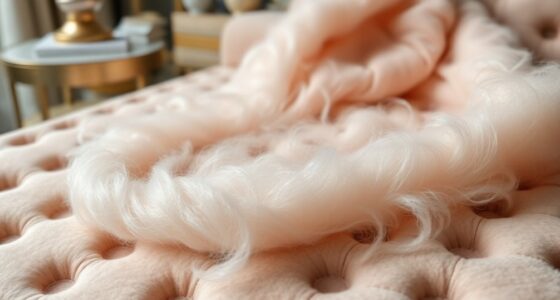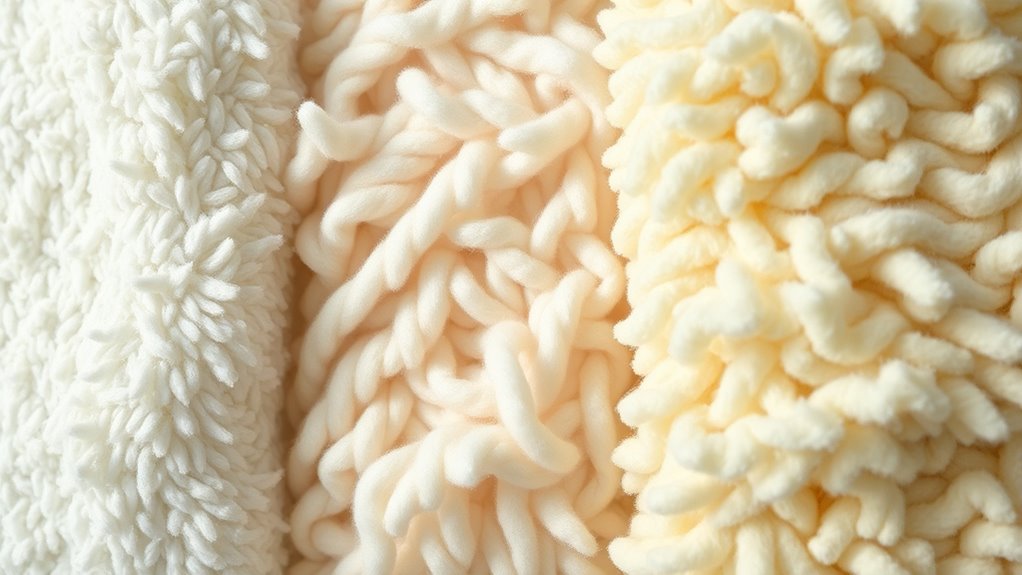

Fleece fabrics like Polar, Micro, and Sherpa each offer unique benefits for different needs. Polar fleece is thick and warm, perfect for outdoor gear and casual wear. Micro fleece is lighter and moisture-wicking, great for active use. Sherpa fleece has a plush, fluffy interior that mimics sheepskin, providing extra warmth. Understanding their differences helps you choose the best for your comfort and style—exploring further reveals how eco-friendly techniques impact each type.

Get your wardrobe favorites delivered free — and shop member deals
- Fast, free delivery on millions of items
- Access to Prime Big Deal Days deals on October 6–7
- Prime Video, Amazon Music and more included
Key Takeaways
- Fleece is a synthetic fabric made mainly from polyester, designed for warmth, softness, and lightweight comfort.
- Polar fleece is durable, warm, and ideal for outdoor and casual wear.
- Micro fleece is finer, lightweight, and offers moisture-wicking and insulation properties.
- Sherpa fleece is plush and fluffy, mimicking sheepskin, providing extra warmth and comfort.
- Eco-friendly fleece options use recycled polyester, reducing environmental impact while maintaining quality.

Have you ever wondered what makes fleece such a popular and versatile fabric? The answer lies in understanding how fleece manufacturing has evolved and how it impacts fleece sustainability. Fleece, originally developed as a synthetic alternative to wool, is made primarily from polyester, which is derived from petroleum. During fleece manufacturing, polyester fibers are spun into yarns and then knitted or woven into fabric. This process allows for the creation of lightweight, warm, and soft textiles that are perfect for a wide range of clothing and accessories. Over the years, manufacturers have focused on making fleece more environmentally friendly by improving production techniques and exploring recycled materials. Today, many brands use recycled polyester, which repurposes plastic bottles and other waste into fleece fabric, considerably reducing the environmental footprint and promoting fleece sustainability. Recycled fibers have become a key innovation in making fleece more eco-friendly and sustainable.
When it comes to fleece sustainability, the industry has made notable strides. Conventional fleece production often involves energy-intensive processes and the use of non-renewable resources, raising concerns about its environmental impact. However, advancements in fleece manufacturing include the increased use of recycled fibers, which help cut down on waste and lessen reliance on virgin petroleum. These recycled fleeces are not only eco-friendly but also durable and soft, meeting the same standards as traditional fleece. By choosing products made from recycled materials, consumers can support fleece sustainability efforts and help reduce plastic waste in landfills and oceans.
Understanding the differences between polar, micro, and Sherpa fleece can also deepen your appreciation of fleece’s versatility. Polar fleece is the most common type, known for its warmth and durability, making it ideal for outdoor gear and casual wear. Micro fleece is even finer, offering lightweight insulation and excellent moisture-wicking properties. It’s perfect for layering or for those who prefer a softer, more delicate feel. Sherpa fleece mimics the look and texture of sheepskin, with a plush, fluffy interior that provides extra warmth and coziness, often used in jackets and blankets. Each type of fleece serves a specific purpose and showcases the fabric’s adaptability.
As an affiliate, we earn on qualifying purchases.
Frequently Asked Questions
How Does Fleece Compare to Wool in Insulation?
Fleece generally provides better insulation than wool, as it traps more air to keep you warm. It’s also lightweight and dries quickly, making it great for active wear. While fleece has good breathability, wool excels at moisture wicking, pulling sweat away from your skin to keep you dry and comfortable. If you want warmth and moisture management, fleece offers superior insulation, but wool’s moisture wicking is ideal for staying dry in damp conditions.
Is Fleece Suitable for High-Intensity Outdoor Activities?
Ever wondered if fleece can keep up with your high-energy outdoor adventures? Yes, it’s suitable, but you should consider breathability concerns and moisture management. Fleece offers good insulation and dries quickly, helping regulate your body temperature. However, during intense activities, it might trap moisture if you sweat heavily. Layer appropriately with moisture-wicking base layers to stay comfortable and dry, ensuring you perform at your best.
Can Fleece Be Recycled or Eco-Friendly?
Fleece can be recycled and made from eco-friendly materials, making it a more sustainable choice. You can find recycling options through specialized programs that accept post-consumer fleece garments, turning them into new products. Look for fleece made from recycled polyester or other eco-friendly materials, which reduces environmental impact. By choosing recycled fleece and supporting recycling initiatives, you help promote sustainability and reduce waste in the fashion industry.
How Do I Properly Care for and Wash Fleece Garments?
Think of caring for fleece like balancing durability with softness. You should wash your fleece in cold water to preserve its fibers, avoiding fabric softeners that can damage the material. For garment stain removal, gently pre-treat stains before washing. When drying fleece, avoid high heat—air drying is best to prevent shrinking and pilling. Proper care keeps your fleece cozy, vibrant, and long-lasting, making it easy to enjoy through many adventures.
What Are the Differences in Durability Among Polar, Micro, and Sherpa Fleece?
You’ll find polar fleece is very durable and holds up well to fleece maintenance, making it great for regular fleece layering. Micro fleece is softer and lightweight but tends to be less durable and can pill more easily. Sherpa fleece offers excellent durability and warmth, making it ideal for heavy-duty use. Your choice depends on how much wear and tear your fleece will endure and how you plan to care for it.
Conclusion
Now that you know the differences between polar, micro, and sherpa fleece, you’ll appreciate their unique warmth and softness. Did you know that fleece production has increased by over 50% in the past decade, reflecting its popularity? Whether you’re layering for winter or cozying up at home, choosing the right fleece makes all the difference. So, next time you reach for your fleece, you’ll understand exactly why it’s such a versatile and sustainable choice.
Halloween Picks
halloween
As an affiliate, we earn on qualifying purchases.