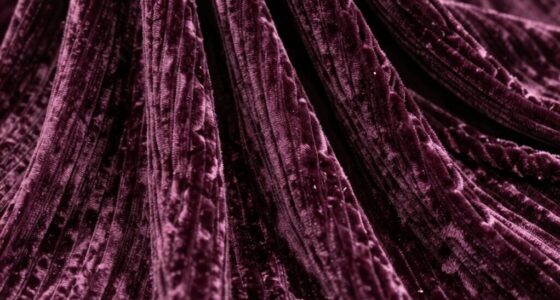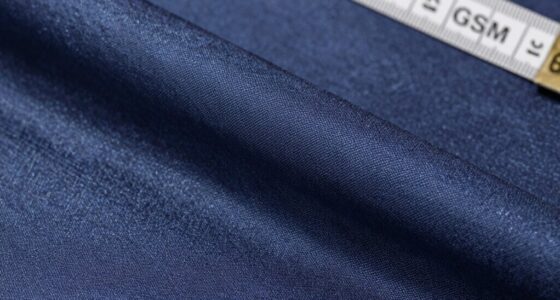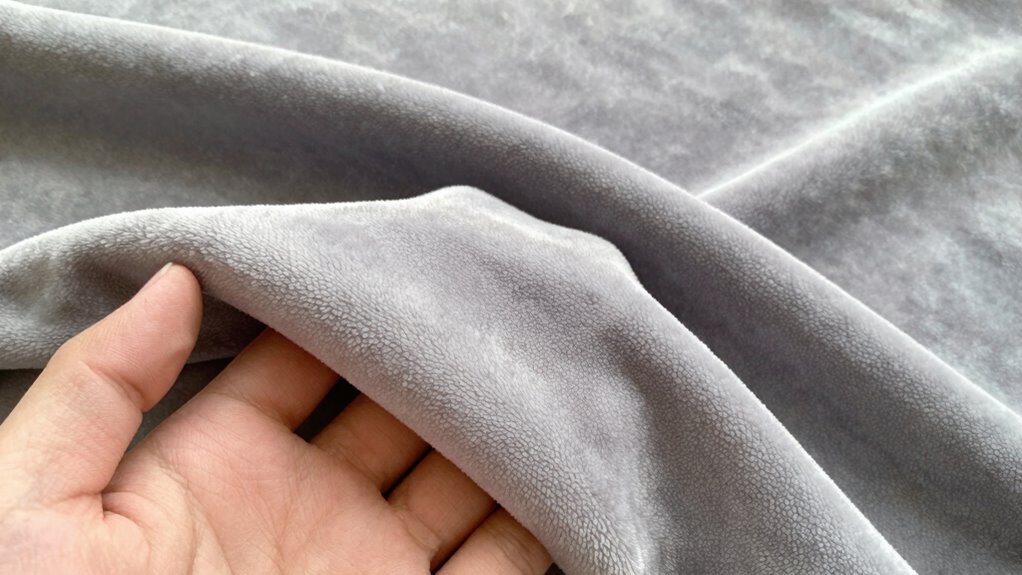
A soft hand feel in fabric means it’s comfortable, smooth, and inviting to touch. It signals high-quality textiles that feel luxurious against your skin and offer durability over time. Factors like fiber type, weave, and finishing processes influence softness. Choosing fabrics with a soft hand feel elevates your garments’ appearance and comfort. If you want to understand how this impacts your wardrobe and long-term wear, keep exploring how texture and craftsmanship come together.
Key Takeaways
- Soft hand feel indicates a fabric’s tactile comfort and high-quality craftsmanship.
- It results from fiber type, weave, and finishing processes during manufacturing.
- Soft fabrics enhance garment appearance, durability, and resistance to pilling and wrinkling.
- A luxurious hand feel contributes to a refined, polished look and better garment drape.
- Choosing soft, well-textured fabrics ensures comfort, ease of care, and a premium wearing experience.
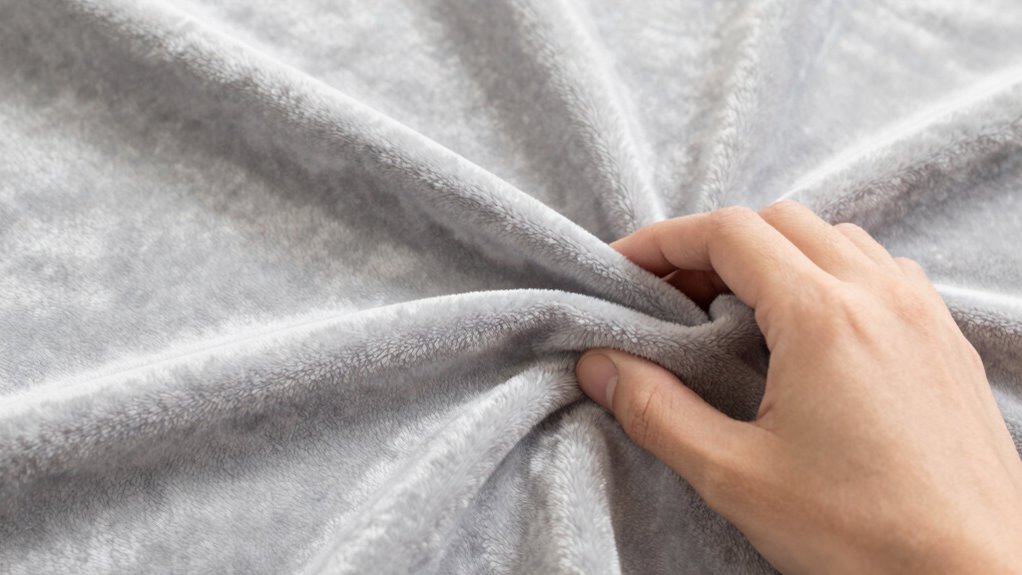
Having a soft hand feel in fabric considerably enhances your comfort and the overall quality of the garment. When you run your fingers over a fabric with a gentle, plush texture, it immediately signals a higher level of craftsmanship and attention to detail. Fabric softness isn’t just about feeling nice; it’s a key indicator of the textile texture‘s quality and how well the fabric will perform over time. Softness affects how the fabric drapes on your body, how comfortable it feels against your skin, and even how it responds to washing and wear. When you choose fabrics with a soft hand feel, you’re opting for materials that are inviting and luxurious, making your clothing feel more like a second skin.
A soft hand feel elevates comfort, quality, and the luxurious appeal of your garments.
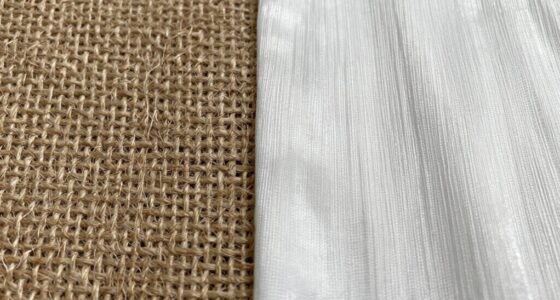
Understanding what fabric softness means involves recognizing the different factors that influence textile texture. It’s often a result of the fiber type, the fabric’s weave or knit, and the finishing processes used during manufacturing. Natural fibers like cotton, silk, and cashmere tend to have inherently softer hand feels, but the way they’re processed can amplify or diminish this quality. For example, a finely spun cotton with a smooth, tightly woven texture will generally feel softer and more refined than a coarser version. Synthetic fibers, on the other hand, can be engineered to mimic natural softness, but they sometimes lack the depth of texture that genuine natural fibers offer.
The importance of fabric softness extends beyond comfort. When a textile feels soft to the touch, it often reflects a level of craftsmanship that elevates the garment’s overall appeal. Soft fabrics tend to look more refined, with a smoother surface that resists pilling and maintains its appearance longer. The textile texture plays a critical role here; a well-textured fabric with a soft hand can hide minor imperfections and create a more polished look. Additionally, softer fabrics are generally easier to care for, as they tend to resist wrinkling and provide a cozy, inviting feel that encourages frequent wear.
Ultimately, choosing fabrics with a soft hand feel means you’re prioritizing comfort without sacrificing quality. It’s about feeling good in your clothing and appreciating the subtle details that make each piece special. Whether you’re selecting a T-shirt, a blouse, or a pair of trousers, the fabric softness and textile texture will influence not only how the garment looks but also how it makes you feel. When you invest in soft, well-textured fabrics, you create a wardrobe that’s both luxurious and functional—making every wear a pleasant experience.
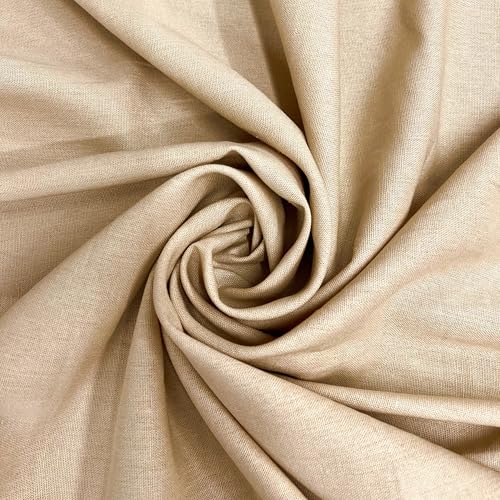
Karla Oatmeal Soft Hand Feel Linen Rayon Fabric by The Yard for Clothes, Costumes, Crafts, etc – 10194 (Size (in inches):5 Yards (53×180);)
Content: 55% linen, 45% rayon
As an affiliate, we earn on qualifying purchases.
As an affiliate, we earn on qualifying purchases.
Frequently Asked Questions
How Is Soft Hand Feel Measured Scientifically?
You measure soft hand feel scientifically through fiber microscopy and hand feel assessments. Fiber microscopy allows you to examine fiber surface smoothness and surface irregularities, which influence softness. Hand feel assessment involves tactile tests where you gently touch and manipulate fabric samples, rating their softness on a standardized scale. Combining these methods provides objective data on fabric softness, helping you understand and improve the textile’s overall tactile quality.
Does Fabric Softness Affect Durability?
Yes, fabric softness can influence durability. Softer fabrics often have a smoother texture, which can reduce wear and tear from friction. However, overly soft fabrics might be less resistant to stretching or pilling, affecting their longevity. You should consider consumer preferences for a balance between softness and durability. Choosing fabrics with the right texture guarantees your comfort without sacrificing the product’s lifespan, aligning with what users typically value.
Can Soft Hand Feel Be Achieved With Synthetic Fibers?
Yes, you can achieve a soft hand feel with synthetic fibers. In fact, many modern synthetic fabrics like polyester and nylon are engineered to mimic natural fibers’ softness, with some fabrics feeling as plush as cotton or silk. Advances in textile technology allow manufacturers to enhance fabric texture, making synthetic fibers incredibly soft to the touch while maintaining durability and affordability. So, a luxurious feel isn’t limited to natural materials anymore.
How Does Washing Impact Fabric Softness Over Time?
Washing can reduce fabric softness over time because it affects fiber elasticity and dye absorption. Repeated washing loosens fibers, making the fabric less supple, while detergent residues can strip away natural lubricants that keep it soft. Additionally, dye absorption may fade, altering texture and feel. To maintain softness, wash gently, avoid harsh detergents, and consider using fabric conditioners to preserve fiber elasticity and keep the fabric feeling soft longer.
Is Soft Hand Feel More Important Than Other Fabric Qualities?
You might find that soft hand feel is more important than other fabric qualities because it directly affects comfort and your overall experience. While durability or colorfastness matter, your preference for a fabric’s texture influences your satisfaction. Soft fabrics often feel more inviting and luxurious, aligning with consumer preferences for comfort. Ultimately, the importance depends on your personal needs, but soft hand feel frequently takes center stage in choosing fabrics.

PEASUG 100% Cotton Muslin Fabric, 63 Inch X 2 Yards Unbleached Muslin Linen Fabric by The Yard, Medium Weight Draping Fabrics Suitable for Sewing Embroidery, Garments, Crafts Material-Natural
Package Includes: You will receive a 63-inch wide and 2-yard (1.8m) long muslin fabric; the suitable size design…
As an affiliate, we earn on qualifying purchases.
As an affiliate, we earn on qualifying purchases.
Conclusion
Ultimately, embracing the subtle art of soft hand feel in fabrics invites a touch of understated elegance to your wardrobe. While it might seem a simple detail, it gently guides your choice, whispering of comfort and quality. When you select fabrics with this nuanced quality, you’re not just dressing; you’re indulging in a quiet luxury that elevates your everyday experience. After all, sometimes, it’s the softest touches that leave the most lasting impressions.

Byitre 16 Momme 100% Pure Mulberry Silk Fabric – 44 Inches Wide Charmeuse Silk, 1 Yard for Pajamas, Shirts or DIY Crafts(Ivory)
【100% Pure Mulberry Silk Material】:Silk fabric made of 6A grade mulberry silk, 16 momme thickness, 44 inches width….
As an affiliate, we earn on qualifying purchases.
As an affiliate, we earn on qualifying purchases.

TEXTILORD® Cashmere Fabric by The Yard,Italian Wool Cashmere Premium Fabric,Viscose, Fashion, Clothing, Sewing DIY Crafting Fashion Design Washable Cloth (58 Inch Wide) (Navy Blue, 1 Yard)
✨ Timeless Style: Elevate your creations our fabric a timeless choice that adds a classic touch to your…
As an affiliate, we earn on qualifying purchases.
As an affiliate, we earn on qualifying purchases.