
Pattern notchers are essential tools that help you create precise notches for aligning fabric pieces during sewing. They guide you in matching important points like darts, necklines, and armholes, ensuring your garments fit perfectly. Proper use and placement of notches prevent errors, puckering, and uneven seams. By selecting the right types and practicing correct marking techniques, you improve your sewing accuracy and professional finish. Keep exploring to discover how mastering pattern notching can elevate your garment-making skills.
Key Takeaways
- Pattern notchers create precise markings to align fabric pieces accurately during sewing, ensuring proper fit and seam matching.
- Proper placement of notches within seam allowances prevents fabric distortion and facilitates seamless assembly.
- Different types of notches (wedge, clip, key) serve specific purposes for complex shapes and curved patterns.
- Correct use of pattern notchers improves garment quality by reducing errors, puckering, and misaligned seams.
- Consistent marking and maintenance of notches streamline the sewing process and enhance professional garment finishing.

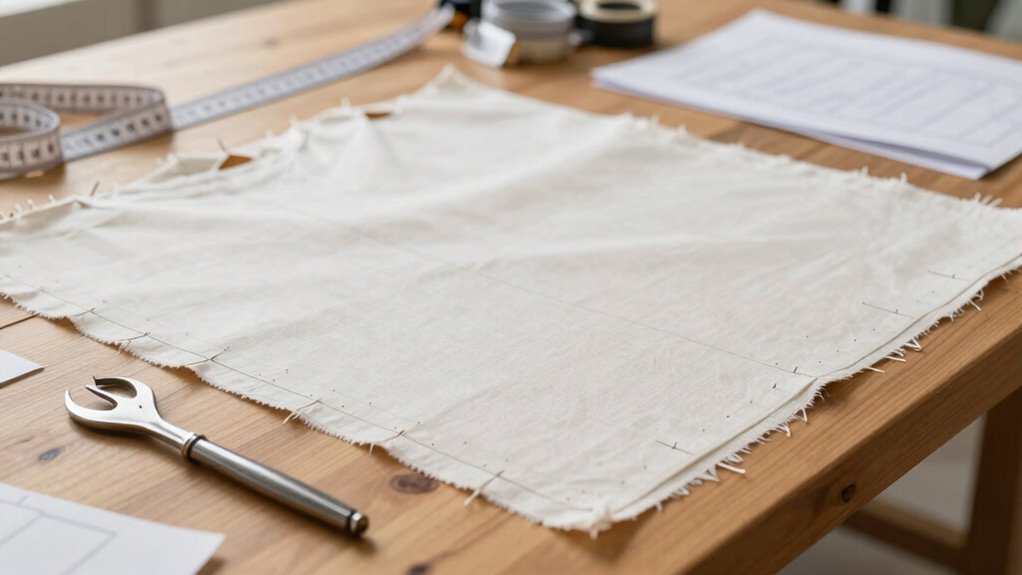
Pattern notchers are indispensable tools in garment construction, helping you create accurate notches that guarantee pieces align perfectly during sewing. When you’re working on a pattern, these small cuts or marks serve as guides for matching fabric sections, especially at critical points like darts, necklines, or armholes. Proper notching makes the difference between a well-fitted garment and one that’s off-balance. They help you visualize how pieces will come together and confirm your fabric alignment stays precise throughout the sewing process. Without reliable notching, you risk misaligned seams or uneven hems, which can compromise the overall look and fit of your finished piece. Using pattern notchers properly means paying close attention to seam allowances. When you cut notches into your pattern, you should do so within the seam allowance area, not on the seam itself, to avoid weakening the fabric or compromising the seam’s integrity. Notches act as quick visual cues for matching seams and edges, so aligning notches during sewing helps keep your fabric layers perfectly synchronized. This is especially important when working with complex shapes or curves, where even small misalignments can lead to puckering or distortion. By making consistent, accurate notches, you streamline the assembly process, reducing the chances of errors and confirming your pieces fit together as intended. Proper notching techniques are essential for achieving professional results, especially with challenging fabrics or intricate designs. Pattern notchers come in various styles, from standard wedge notches to more specialized types like clip notches or key notches. Whichever you choose, the goal remains the same: to mark your fabric in a way that’s clear and easy to follow during assembly. When marking your pattern, be deliberate and precise, ensuring each notch is placed at the correct point for perfect fabric alignment. This is especially essential for symmetrical designs or when working with fabric that has a pattern or nap, where even small discrepancies can be noticeable. Keep your notches consistent in size and placement to make matching seams quicker and more accurate. Additionally, practicing accurate marking can significantly improve the overall quality of your finished garment. Mastering the use of pattern notchers and understanding how to create precise notches can also help you avoid errors and improve your sewing efficiency. Incorporating proper tools into your sewing kit guarantees better results and reduces the risk of damaging delicate fabrics. Ultimately, pattern notchers are simple but indispensable tools that protect the integrity of your garment. They help you maintain proper seam allowances and align fabric pieces with confidence, saving you time and frustration in the long run. When used correctly, these notches become an invisible guide that keeps your sewing precise and professional-looking. Mastering their use ensures your sewing projects will fit well, look polished, and reflect your skill and attention to detail. Having a good understanding of fabric handling techniques further enhances the accuracy of your notches and overall sewing outcomes.
pattern notcher tools for sewing
As an affiliate, we earn on qualifying purchases.
As an affiliate, we earn on qualifying purchases.
Frequently Asked Questions
How Do Pattern Notches Improve Garment Fitting?
Pattern notches improve garment fitting by providing clear alignment points, especially when working with fabric stretch. They guarantee your seams match perfectly, preventing distortion. Notches also guide you on where to trim or fold, maintaining consistent seam allowances. When you follow these notches accurately, your finished garment fits better, looks professional, and retains shape. They’re essential for precise construction, especially with stretchy fabrics that can shift or stretch during sewing.
Can Pattern Notches Be Reused on Different Fabric Types?
Think of pattern notches as the secret map in your sewing adventure—they can often be reused across different fabric types, but with caution. Fabric stretch influences notch placement, so on stretch fabrics, you might need to adjust or reinforce notches. Always consider the characteristics of each fabric to guarantee the notches serve their purpose without causing confusion. Reusing notches saves time, but tailoring their placement to each fabric ensures a perfect fit.
What Tools Are Best for Creating Precise Pattern Notches?
To create precise pattern notches, you should use sharp tools like tailor’s chalk or a fabric marking pen along with a notcher punch or scissors. Guarantee fabric stability by securing the pattern and fabric firmly before marking, which helps with accurate notch placement. For delicate fabrics, consider using a rotary cutter with a small blade or specialized notching tools to prevent distortion and achieve clean, consistent notches.
Are Pattern Notches Necessary for All Garment Types?
You might think pattern notches are always necessary, but they aren’t for every garment. Imagine fabric stretching as you sew; notches help align pieces accurately, especially when pattern markings fade or fabric slips. For stretchy or delicate fabrics, notches provide essential guidance, ensuring proper fit and seam matching. However, for simple or stable fabrics, you can often skip notches, relying on other markings or seam allowances for guidance.
How Do Pattern Notches Assist in Complex Seam Alignments?
Pattern notches help you align complex seams accurately by providing visual guides, especially when dealing with varying seam allowances and fabric stretch. They guarantee that pieces match perfectly, even on curved or bias edges, preventing puckering or misalignment. By marking notches precisely, you can manage fabric stretch and seam allowances effectively, making complex seam constructions smoother and more precise, ultimately resulting in a professional-looking finished garment.
Conclusion
As you master pattern notchers, you’re forging a path through the fabric of craftsmanship. Each notch becomes a heartbeat, a signpost guiding your hands with purpose. With every line you mark, you carve a rhythm of precision and intent, stitching together more than just garments — you’re weaving stories of skill and dedication. Embrace these symbols, for they’re the quiet language that transforms your vision into tangible, wearable art. Keep notchin’, keep creating.