
To dry fabrics without shrinking, handle your clothes gently by squeezing out excess water carefully and avoid twisting. Choose a sturdy, ventilated drying rack or flat surfaces for delicate items, and skip direct sunlight to prevent damage. Use low heat or air-dry in well-ventilated indoor spaces. Padded hangers help prevent stretching, and removing clothes promptly stops fiber weakening. Keep these tips in mind to preserve your fabric’s size and shape as you dry—more helpful advice is ahead.
Key Takeaways
- Use flat drying methods for delicate or shrink-prone fabrics to maintain their shape.
- Avoid high heat; opt for low or no-heat settings on tumble dryers.
- Hang clothes on padded or fabric-covered hangers to prevent stretching.
- Dry clothes in shaded areas with good air circulation to prevent fiber weakening.
- Gently squeeze out excess water without twisting to prevent fabric distortion.
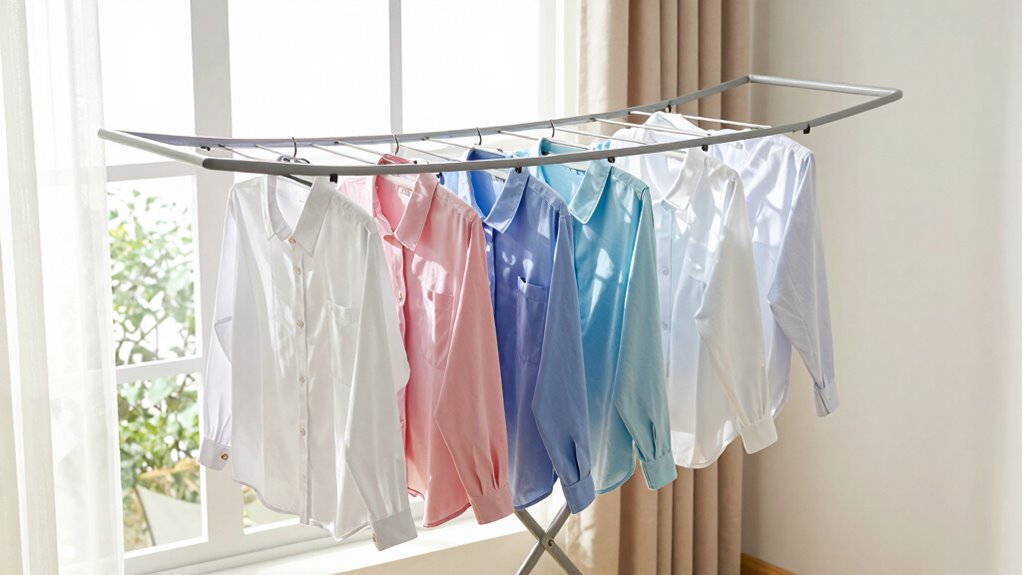
Drying fabrics without shrinking them can be tricky, but with the right techniques, you can keep your clothes looking their best. The key is to handle your laundry carefully and choose the proper drying methods. Using fabric softeners during the wash cycle can help reduce stiffness and static, making your clothes more flexible and less prone to damage during drying. Fabric softeners also help maintain the fabric’s integrity, which can prevent shrinkage over time. However, don’t overuse them, as they can sometimes leave residues that affect the fabric’s breathability.
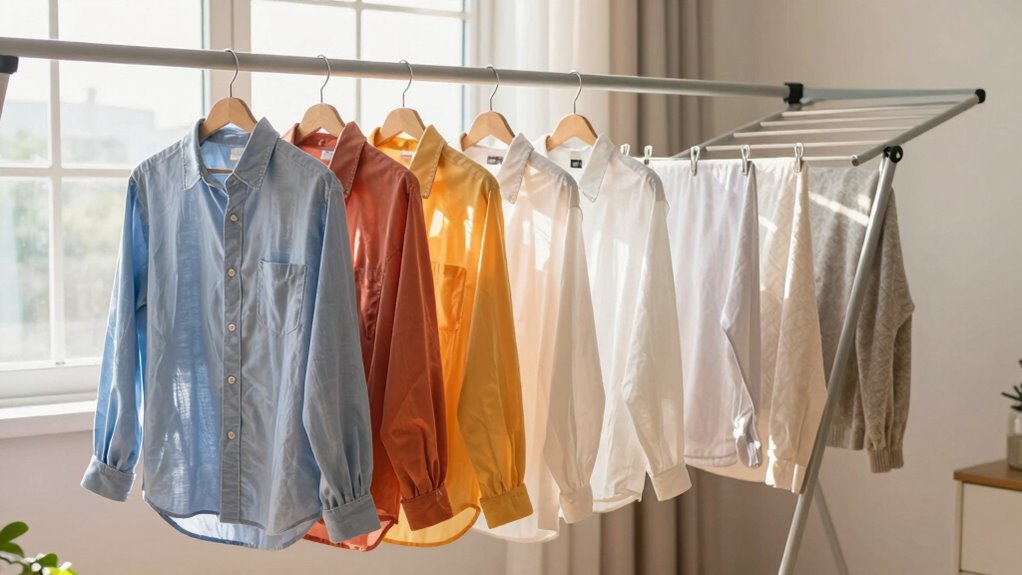
When it comes to drying, selecting the right drying rack options can make a significant difference. Air drying on a sturdy, well-ventilated drying rack is one of the safest ways to dry your clothes without risking shrinkage. Avoid hanging heavy items like sweaters or denim on thin wires, which can stretch or distort the fabric. Instead, opt for a flat drying rack for delicate or knitted fabrics, as this helps maintain their shape and prevents stretching. If you need to hang items, use padded or fabric-covered hangers to prevent indentations or stretching at the shoulders.
Keep in mind that drying indoors in a well-ventilated space is preferable to using a dryer, especially for delicate fabrics. High heat from tumble dryers can cause shrinkage, so if you must use a dryer, choose the lowest heat setting or a delicate cycle. Remove clothes promptly once they’re dry to prevent over-drying, which can weaken fibers and lead to shrinking. For added protection, consider laying particularly delicate or shrink-prone items flat on a towel to dry. This method helps preserve their original shape and size.
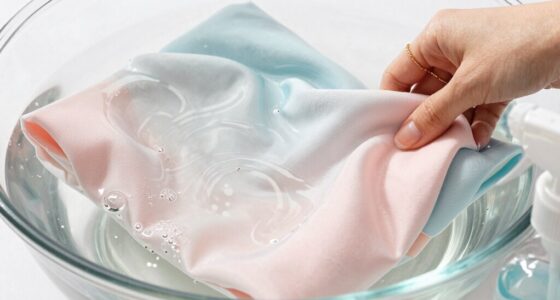
Another helpful tip is to avoid direct sunlight when air drying, as prolonged exposure can weaken fibers and cause fading or shrinkage. Instead, dry your clothes in shaded or covered areas with good air circulation. Also, be mindful of how you wring out your clothes after washing; gently squeeze out excess water instead of twisting, which can distort the fabric and cause it to shrink once dried.

Amazon Basics Foldable Portable Clothes Drying Rack for Indoor Air Drying, Collapsible Design, 14.5" D x 29.5" W x 41.8" H, White
- Indoor clothes drying rack: Energy-saving and gentle air drying
- Durable steel construction: Rust and mildew resistant white finish
- Collapsible design: Folds flat for easy storage and portability
As an affiliate, we earn on qualifying purchases.
As an affiliate, we earn on qualifying purchases.
Frequently Asked Questions
Can Fabric Type Affect Drying Methods to Prevent Shrinking?
Yes, fabric type greatly affects drying methods for shrink prevention. You should consider fabric composition, as natural fibers like cotton and wool tend to shrink more than synthetic ones like polyester or nylon. To prevent shrinking, follow specific drying instructions, such as air-drying delicate fabrics or using low heat settings for dryer cycles. Properly understanding your fabric type guarantees effective shrink prevention and maintains your garments’ shape and size.
Is Air Drying Better Than Machine Drying for Delicate Fabrics?
A stitch in time saves nine, so choosing the right drying method matters. Air drying is generally better than machine drying for delicate fabrics because it’s gentler and helps prevent shrinking. Machine drying can be harsher, risking damage or deformation. If you want to preserve your delicate textiles, opt for air drying. It’s a simple step that extends the life of your fabrics and keeps them looking their best.
How Does Room Temperature Influence Fabric Shrinking During Drying?
Room temperature considerably influences fabric shrinking during drying through temperature regulation and humidity control. When the room is too warm, fibers can relax and contract unevenly, increasing shrinkage risk. Conversely, cooler, stable temperatures help maintain fabric integrity. Proper humidity control also matters; high humidity slows evaporation, reducing stress on fibers, while low humidity accelerates drying, potentially causing shrinkage. Keep the room at moderate temperatures with balanced humidity for best results.
Are There Specific Products to Prevent Shrinking While Drying?
Yes, you can use specialized products and chemical treatments to prevent shrinking while drying. Look for fabric protectors or anti-shrink sprays designed specifically for delicate materials. These treatments form a barrier that helps maintain fabric’s original size and shape. Always follow the manufacturer’s instructions, and test on a small area first. Using these products combined with gentle drying methods offers an effective way to keep your fabrics from shrinking.
Can Drying Fabrics Flat Prevent Shrinking More Than Hanging?
A stitch in time saves nine, and when it comes to drying fabrics, laying them flat can help prevent shrinking more than hanging. Flat drying reduces fabric stiffness and maintains shape, slowing down the drying speed but protecting fibers from stretching or distorting. Hanging can stretch delicate fabrics, increasing the risk of shrinking or misshaping. So, if you want to keep your clothes true to size, dry them flat.
Conclusion
Drying fabrics properly can extend their lifespan and keep them looking new. By following simple tips like air drying or using low heat settings, you can prevent shrinking and preserve your clothes’ fit. Did you know that improper drying causes up to 70% of fabric damage? Staying mindful of your drying methods not only saves your favorite garments but also reduces waste. So, take care with your fabrics, and they’ll reward you with longer-lasting wear.