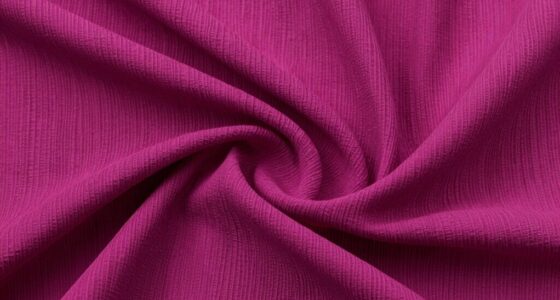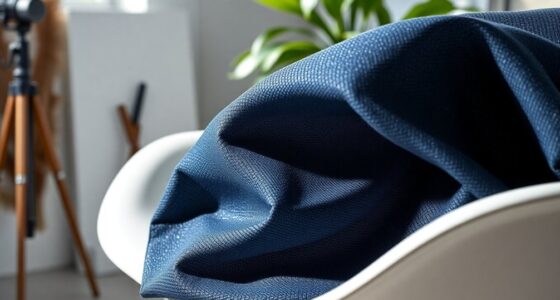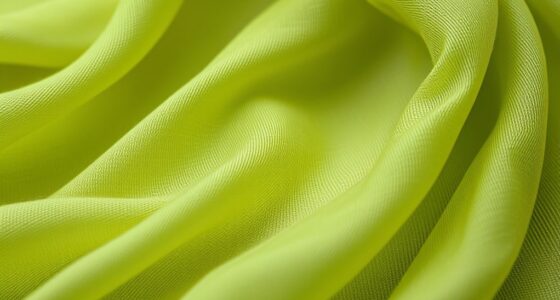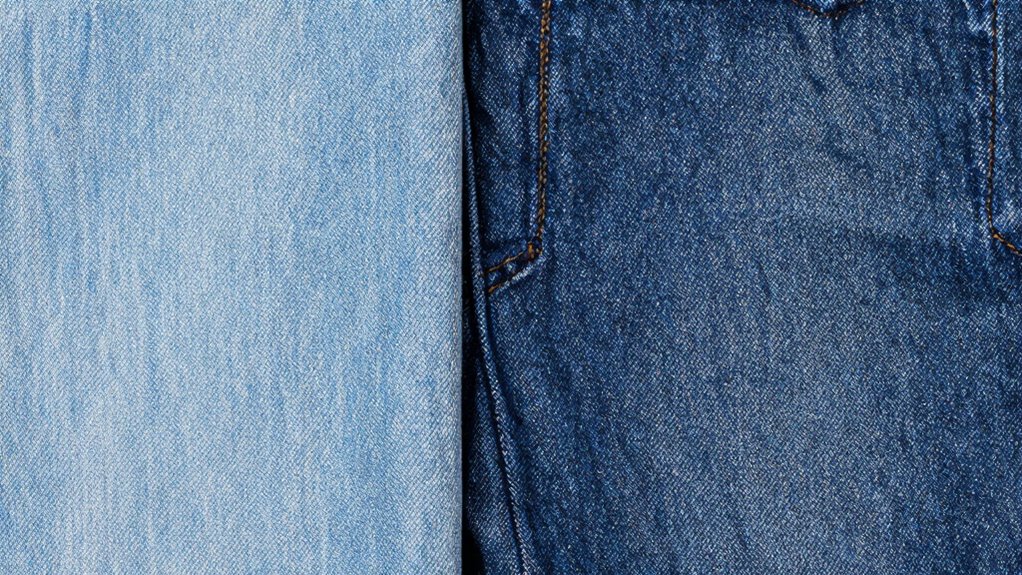

Chambray and denim differ mainly in weave and weight. Denim, made with a twill weave, is heavier and more durable, giving it a rugged look perfect for jeans and workwear. Chambray, with its plain weave, is lighter, softer, and ideal for shirts and casual wear. While denim has a textured, rugged appearance, chambray offers a smooth, polished look. To discover more details about their unique styles and uses, keep exploring.

Get your wardrobe favorites delivered free — and shop member deals
- Fast, free delivery on millions of items
- Access to Prime Big Deal Days deals on October 6–7
- Prime Video, Amazon Music and more included
Key Takeaways
- Denim is a heavier, durable fabric with a twill weave, while chambray is lighter, softer, with a plain weave.
- Denim’s rugged appearance and history relate to workwear; chambray offers a polished, casual-chic look.
- Denim is typically used for jeans and jackets; chambray is ideal for shirts, dresses, and layered pieces.
- Denim’s diagonal ribs provide texture and resilience; chambray’s smooth surface offers a refined, delicate aesthetic.
- The fabric’s weight and weave influence their versatility for casual, workwear, or dressy styles.
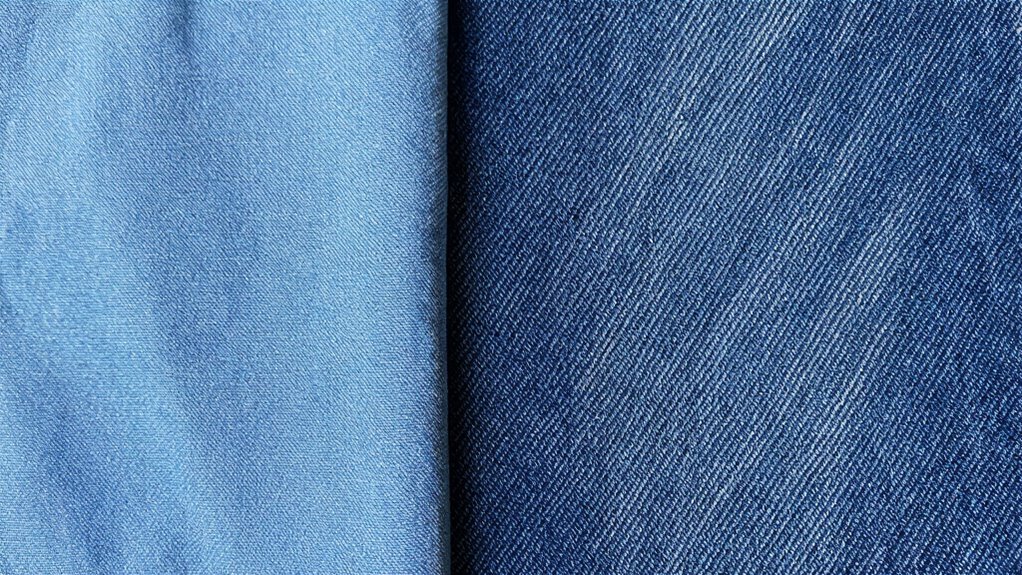
When choosing between chambray and denim, it’s important to understand their differences, as each fabric offers unique qualities suited for various styles and uses. Both fabrics share a common history rooted in workwear, but their fabric history diverged long ago, leading to distinct characteristics. Denim, originating in the 17th century in France, became popular among miners and laborers because of its durability and strength. Its twill weave, with diagonal ribs, gave it resilience, making it perfect for tough work environments. Chambray, on the other hand, has a lighter, more refined fabric history, dating back to France in the 19th century. It was initially used for shirts and casual wear, valued for its softer hand and breathable qualities. Today, these historical origins influence not just their look but also their styling versatility. Recognizing the twill weave of denim helps explain its durability and rugged appeal compared to chambray’s lighter, plain weave. When you consider styling versatility, denim is often seen as the more rugged, casual option. Its heavier weight and sturdy construction lend themselves well to jeans, jackets, and workwear-inspired pieces. Denim’s versatility lies in its ability to be both durable and fashionable, easily dressed up or down depending on the cut and wash. You can find denim in a wide range of styles, from distressed jeans to sleek skirts, making it a wardrobe essential for various casual and semi-formal looks. Additionally, the fabric history of each fabric influences how they are perceived and styled today, with denim maintaining its rugged, utilitarian reputation and chambray embodying a softer, more refined aesthetic. The dyeing techniques used also contribute significantly to their distinct appearances and styling options. Chambray, by contrast, is lighter and softer, making it ideal for shirts, dresses, and layered outfits. Its subtle, smooth texture offers a more polished appearance, perfect for a casual-chic look. Because chambray fabrics are usually thinner and breathable, they’re comfortable in warmer weather and lend themselves to a more relaxed, sophisticated aesthetic. Furthermore, chambray’s breathability makes it a popular choice for summer attire, complementing its soft and delicate feel. In terms of styling versatility, denim tends to lend itself to bold statements — classic blue jeans, statement jackets, or skirts that can be dressed up or down. Chambray’s softer, more delicate feel makes it suitable for layering or wearing in more refined, understated styles. You can wear a chambray shirt tucked into trousers or with skirts for a casual-chic vibe, especially in spring and summer. Since both fabrics can be dyed or washed to achieve different looks, understanding their fabric history helps you appreciate how each can be styled for various occasions. Whether you want the rugged durability of denim or the breezy elegance of chambray, knowing their origins and styling versatility helps you make informed choices that suit your wardrobe needs.
As an affiliate, we earn on qualifying purchases.
Frequently Asked Questions
Which Fabric Is More Environmentally Sustainable, Chambray or Denim?
You’ll find chambray generally more eco-friendly than denim because it often uses eco-friendly production methods and lighter fabric. If you choose organic fabric options for both, chambray’s lighter weight requires less water and energy during production. Look for brands prioritizing sustainable practices and organic fibers, as they help reduce environmental impact. Overall, chambray is a better choice if you’re aiming for a more environmentally sustainable fabric.
Can Chambray Be as Durable as Denim for Heavy-Duty Wear?
Chambray isn’t as durable as denim for heavy-duty wear because of its lighter fabric weight and tighter weave, making it more suitable for casual fashion trends. Historically, fabric history shows denim’s rugged roots, designed for workwear, while chambray was created as a lighter alternative. If you need long-lasting durability, denim’s thicker, more robust fibers will better support your active lifestyle.
How Do the Costs of Chambray and Denim Compare Over Time?
You’ll find that over time, chambray generally costs less than denim because of its lighter fabric and simpler manufacturing process. A key statistic shows that denim’s complex dyeing and heavier weight can increase costs by up to 50%. Since fabric dyeing and manufacturing processes considerably affect price, chambray’s lighter, less resource-intensive production makes it more economical for long-term wear, especially if durability isn’t your top priority.
Are There Specific Care Instructions Unique to Chambray?
Yes, chambray requires specific care to maintain its fabric texture and color retention. You should wash it in cold water and use a gentle cycle to prevent fading or damage. Avoid bleach and harsh detergents, as they can weaken the fibers and dull the color. Air drying is best to preserve its softness and prevent shrinkage. Following these care instructions helps keep your chambray looking fresh and vibrant over time.
Which Fabric Is More Versatile for Different Fashion Styles?
They say, “Variety is the spice of life,” and in fashion, chambray wins for style adaptability. It’s more versatile, easily blending into casual, professional, and even semi-formal looks. Denim’s sturdiness makes it great for casual wear, but chambray’s lighter, softer feel offers greater fashion versatility. You’ll find it easier to adapt chambray to different styles, giving you more outfit options with less effort.
Conclusion
When choosing between chambray and denim, remember that chambray offers a lightweight, breathable feel perfect for warmer days, while denim provides durability and ruggedness for everyday wear. Both fabrics have their unique advantages, but it’s your lifestyle and style preferences that truly guide your choice. Whether you opt for the softness of chambray or the toughness of denim, embrace what suits you best. Ultimately, it’s about finding the fabric that fits your comfort, your style, and your life.
Fall Picks
fall essentials
As an affiliate, we earn on qualifying purchases.