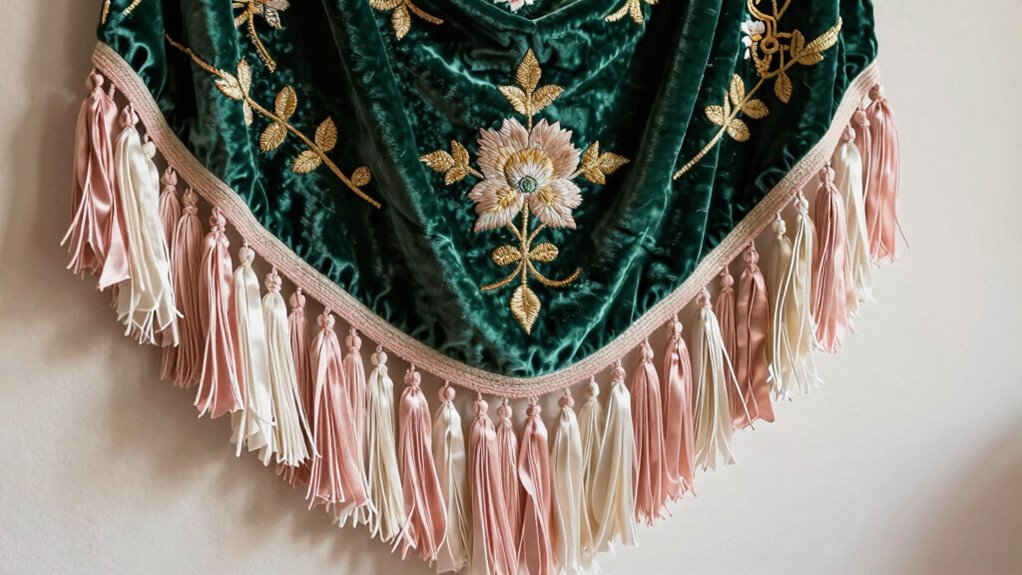

For wall hangings and textile art, natural fibers like cotton, linen, and silk are excellent choices because they absorb dyes well and offer diverse textures and finishes. Cotton and linen are affordable and easy to work with, while silk provides a luxurious sheen. Heavier fabrics like canvas or tapestry create sturdy backgrounds, while lighter fabrics like voile add delicate effects. To discover more about choosing the perfect fabric for your project, explore the options further below.
Key Takeaways
- Choose natural fibers like cotton, linen, or silk for their excellent dye absorption and durability in wall hangings.
- Opt for heavier fabrics such as canvas or tapestry for sturdy, long-lasting wall art backgrounds.
- Consider fabric weight and weave to enhance visual texture and overall aesthetic of the textile piece.
- Select fabrics with cultural or vintage significance to add depth and authenticity to your artwork.
- Prioritize eco-friendly and sustainable fabrics to ensure environmentally conscious textile art creations.
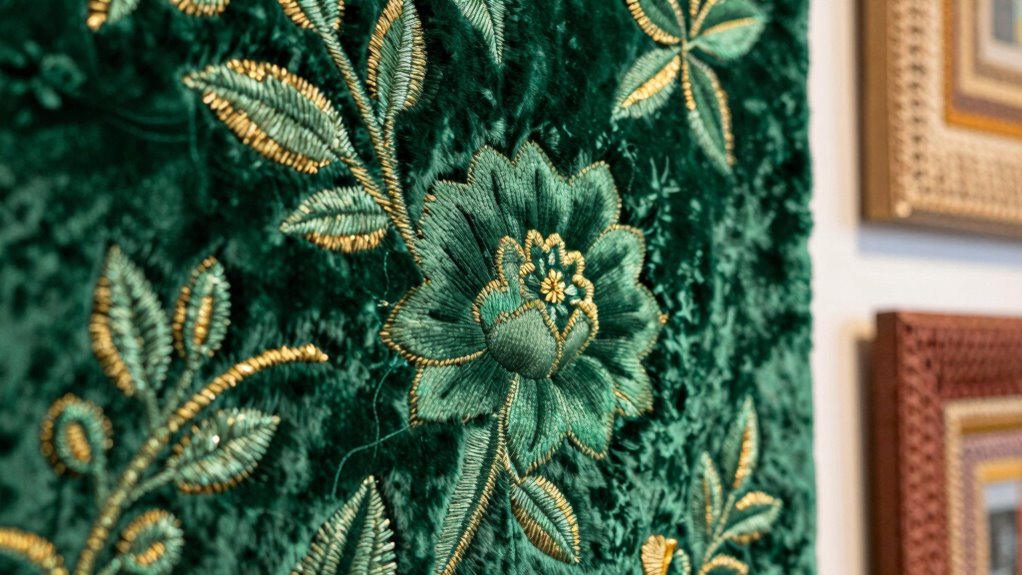
Are you wondering which fabrics work best for wall hangings and textile art? Choosing the right material is crucial because it affects the overall look, durability, and ease of working with the piece. When selecting fabrics, consider how various textile dyeing techniques will interact with the material. Some fabrics absorb dyes differently, resulting in vibrant hues or subtle shades, depending on the dyeing process you choose. For example, natural fibers like cotton and linen respond well to traditional dyeing techniques such as tie-dye, batik, or shibori, allowing you to create intricate patterns or bold, colorful effects. Knowing these textile dyeing techniques helps you pick fabrics that will showcase your artistic vision and stand the test of time. Additionally, understanding the fabric types and their properties can help you select the perfect material for your project.
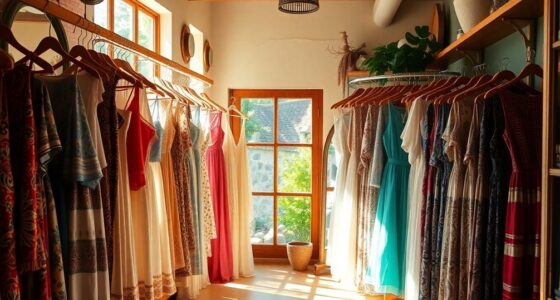
Historical fabric patterns also serve as a great source of inspiration, helping you select textiles that carry cultural significance or vintage charm. Fabrics adorned with traditional motifs like paisleys, florals, or geometric designs can add depth and story to your textile art. If you want a piece that echoes history, look for textiles with authentic historical fabric patterns, which can lend authenticity and character to your wall hangings. These patterns often originate from specific regions or eras, and working with such fabrics can give your art a layered, meaningful quality. Exploring traditional patterns can inspire your artistic process and deepen your connection to the craft. Recognizing the durability and lifespan of different fabrics can guide you in choosing materials that will maintain their beauty over time. It’s also helpful to consider the environmental impact of your fabric choices, especially if sustainability is a priority in your work.
In terms of fabric types, natural fibers like cotton, linen, silk, and wool are popular choices because they are versatile and respond well to various dyeing techniques. Cotton and linen are especially user-friendly for beginners, as they’re affordable and easy to work with. Silk, on the other hand, offers a luxurious sheen and takes dye beautifully, making it ideal for more refined or delicate textile art. Wool provides a textured surface that lends itself well to felted or woven pieces. Synthetic fabrics can sometimes be used but may not absorb dyes as well, limiting your options for traditional dyeing techniques.
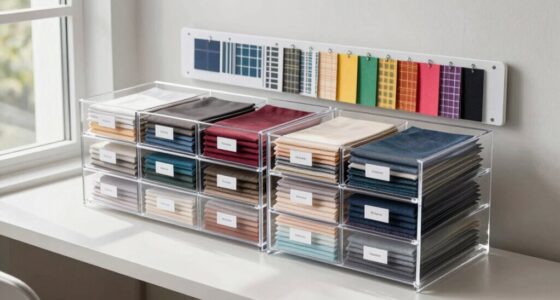
Additionally, the weight and weave of the fabric influence how your finished piece will look and feel. Heavier fabrics like canvas or tapestry fabric give a sturdy background for wall hangings, while lighter fabrics like voile or organza lend an airy, delicate effect. When choosing your fabric, think about how it will serve the overall aesthetic and practical needs of your artwork. Whether you’re highlighting traditional patterns or experimenting with dyeing techniques, selecting the right fabric makes all the difference in creating striking, long-lasting textile art.
As an affiliate, we earn on qualifying purchases.
Frequently Asked Questions
How Do I Care for Delicate Fabric Wall Hangings?
To care for delicate fabric wall hangings, you should avoid harsh cleaning techniques. Gently dust them with a soft brush or vacuum with a low-suction attachment. When framing and mounting, use acid-free materials to prevent damage. If cleaning is needed, consider professional restoration. Always keep the fabric out of direct sunlight to prevent fading. Proper framing and gentle cleaning techniques help preserve your textile art’s beauty and longevity.
Which Fabrics Are Most Eco-Friendly for Textile Art?
You should choose fabrics made from natural fibers like organic cotton, linen, hemp, or bamboo, as they’re more eco-friendly. These materials often require fewer chemicals during production, reducing environmental impact. Additionally, opt for dyes that prioritize dye sustainability—such as plant-based or low-impact dyes—to minimize pollution. By selecting natural fibers and sustainable dyes, you help support environmentally conscious textile art that’s both beautiful and eco-friendly.
Can I Use Synthetic Fabrics for Outdoor Wall Art?
Yes, you can use synthetic fabrics for outdoor wall art. Synthetic fibers offer excellent durability against weather elements, making them a solid choice. While some worry about maintenance, outdoor fabric maintenance is straightforward with regular cleaning and sealing. Keep in mind that synthetic fabrics resist fading and moisture better than natural fibers, ensuring your wall art stays vibrant and intact for years, even in varying outdoor conditions.
How Do Fabric Choices Affect the Longevity of Wall Hangings?
Your fabric choices directly impact your wall hanging’s longevity. Durable fabrics like heavy cotton or linen resist wear and tear, extending their life. Material texture also matters; rougher textures may trap dust or moisture, causing deterioration faster. Synthetic fabrics can be more resistant to environmental factors, but natural fibers often age better if properly cared for. Ultimately, selecting high-quality, suitable fabrics guarantees your wall art remains vibrant and intact over time.
Are There Hypoallergenic Fabrics Suitable for Wall Art?
Think of hypoallergenic fabrics as gentle giants, perfect for fabric allergy concerns. Yes, there are options like organic cotton, bamboo, and hemp that suit wall art. These fabrics resist dust mites and mold, reducing allergic reactions. If you’re sensitive to traditional textiles, choosing hypoallergenic options helps you enjoy your wall hangings without worry. They’re durable, eco-friendly, and safe, making them ideal for creating beautiful, allergy-friendly textile art.
Conclusion
Choosing the right fabric truly elevates your wall hangings and textile art. Opting for durable, visually appealing materials guarantees your creations stand the test of time. Did you know that cotton accounts for over 30% of global textile production? This highlights its versatility and popularity. So, whether you prefer natural fibers or innovative blends, selecting the best fabric will help your artwork thrive and add lasting beauty to your space.