
Using thread color chart systems helps you match shades accurately, ensuring your embroidery looks professional and cohesive. These charts provide visual references and standardized color codes, making it easier to select consistent threads across projects. Reliable brands maintain color fidelity over time and simplify the matching process. By choosing the right tools, you can make confident decisions that elevate your work. Keep exploring to discover how these systems can transform your embroidery projects even further.
Key Takeaways
- Use standardized thread color chart systems to ensure accurate and consistent color matching across projects.
- Refer to thread swatch samples on fabric to preview and select the best matching shades visually.
- Rely on reputable thread brands with reliable color charts to maintain color fidelity and reduce mismatches.
- Coordinate thread colors with fabric and design elements for balanced contrast or subtle blending effects.
- Consistently use established color standards to enhance project professionalism and achieve cohesive results.
When it comes to sewing and embroidery, choosing the right thread color can make all the difference in achieving a polished, professional look. The key to successful color matching lies in understanding color coordination and utilizing reliable thread branding. A well-chosen thread color enhances your design, making it stand out without overpowering your fabric or pattern. It’s not just about picking a shade that looks good; it’s about selecting a hue that complements the overall project, creating harmony and visual appeal. Color coordination plays an essential role here, guiding you to choose shades that work well together, whether contrasting for emphasis or blending seamlessly for a subtle effect.
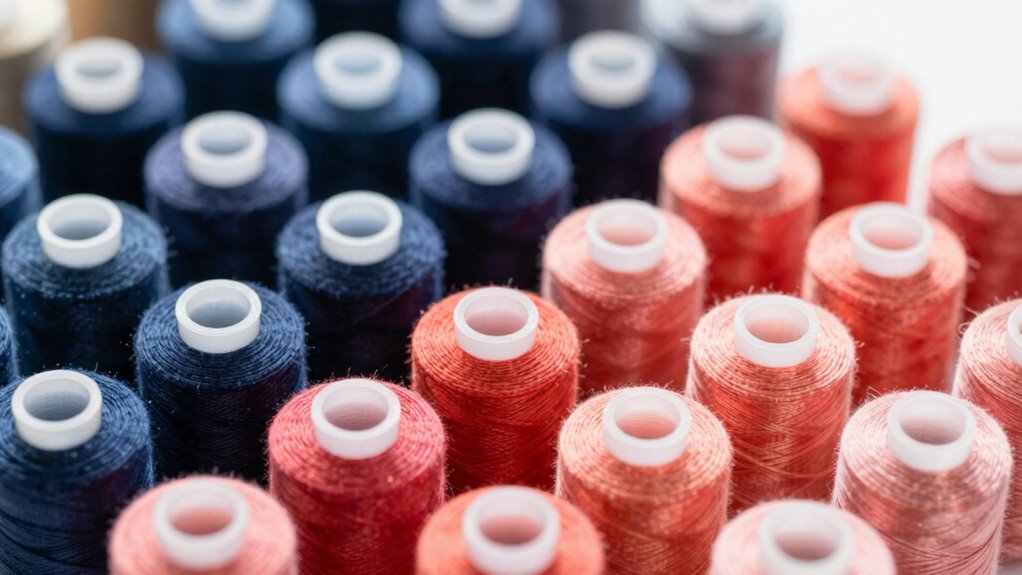
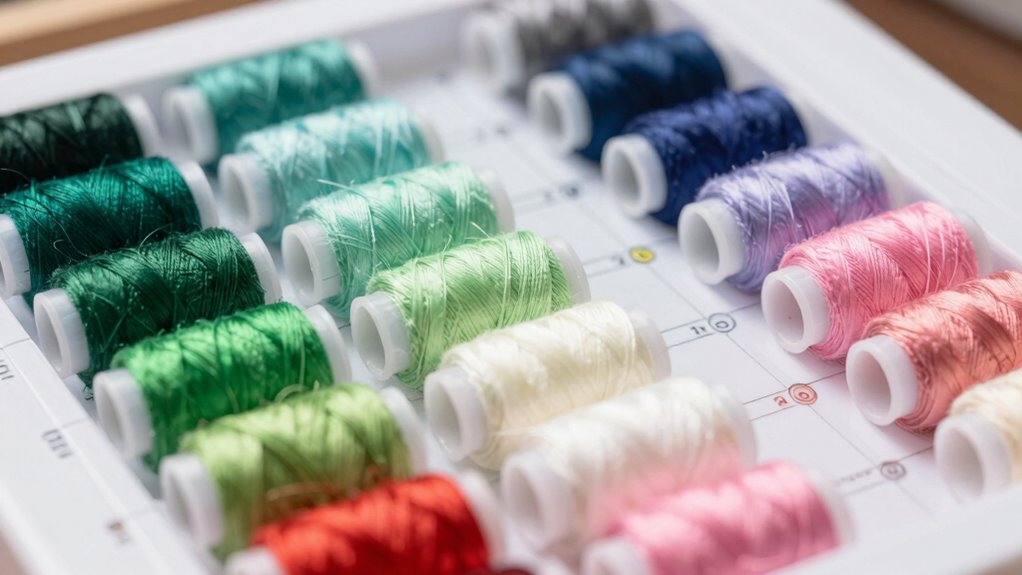
To make better matching decisions, you’ll want to rely on established thread color chart systems. These systems act as your visual reference, providing a standardized way to identify and match thread colors across different brands and products. Many manufacturers offer color charts that feature swatches of their threads, allowing you to see exactly how a color will look on your fabric before stitching. Using these charts simplifies the process, especially when working on complex projects with multiple shades. You can compare your fabric or design colors directly against the chart, ensuring your thread choices are precise and consistent.
Thread branding is also essential because different brands may have their own color palettes, naming conventions, and quality standards. When you stick to reputable brands known for their color accuracy, you reduce the risk of mismatched shades or color fading over time. Many top brands offer detailed color chart systems that are compatible with each other, making it easier to find the perfect match regardless of the brand you prefer. This consistency in thread branding ensures that your projects look professional and uniform, especially if you’re working on a series or need to match existing embroidery.

DMC Threaded Color Card – W100B
- Includes Stranded Cotton and Effects: Variety of color effects included
- Color Matching Assistance: Helps ensure perfect color matches
- Metallic and Pearl Threads: Features metallic pearl and cotton pearl
As an affiliate, we earn on qualifying purchases.
As an affiliate, we earn on qualifying purchases.
Frequently Asked Questions
How Often Should Thread Color Charts Be Updated?
You should update your thread color charts at least once a year to account for color longevity changes and guarantee accurate matches. Regular updates help maintain chart calibration, especially if you notice discrepancies in thread shades or fading over time. Staying current allows you to make better matching decisions, giving your projects a professional finish. Consistent updates also prevent color mismatches, saving you time and effort in the long run.
Are Digital Color Matching Tools More Accurate Than Physical Charts?
Digital color matching tools are often more accurate than physical charts, like a lighthouse guiding you through fog. They enhance color calibration and guarantee shade consistency by analyzing hues precisely. Unlike physical charts that can fade or vary with lighting, digital tools provide consistent results every time. You can trust them to match thread colors accurately, saving you time and reducing errors in your projects.
Can Color Charts Account for Different Fabric Types and Textures?
Color charts can partially account for fabric variation, but they often overlook how texture influences appearance. When you match colors, consider that different fabrics and textures reflect light differently, altering perceived shades. While charts provide a good starting point, you need to test samples on actual fabrics to guarantee accurate matches, especially when dealing with diverse textures. Always keep in mind that fabric variation impacts color perception, so testing is essential.
How Do Lighting Conditions Affect Color Matching Accuracy?
Lighting conditions considerably impact your color matching accuracy due to lighting variability. When lighting changes, your perception of color shifts, making it harder to match threads accurately. Natural daylight offers the truest color perception, while artificial lighting can distort colors. To improve accuracy, always compare thread colors in consistent, neutral lighting, and be aware that different environments may cause your perception of color to vary, affecting your matching decisions.
What Are Common Mistakes When Using Thread Color Charts?
A common mistake when using thread color charts is relying solely on the chart without considering how thread dyeing affects color perception. You might pick a thread that looks perfect on the chart but appears different in real fabric due to dye variations. Always test a small sample first, and remember that lighting conditions can alter how you perceive thread color, leading to mismatched results.
Conclusion
By mastering thread color chart systems, you can make smarter matching decisions and elevate your sewing game. Think of it as having a trusty quill in your hand, guiding you through a tapestry of endless possibilities. With a little practice, you’ll navigate color choices like a seasoned artisan, even in the age of dial-up internet. So, embrace these tools and let your creativity run wild—your projects will thank you for it!