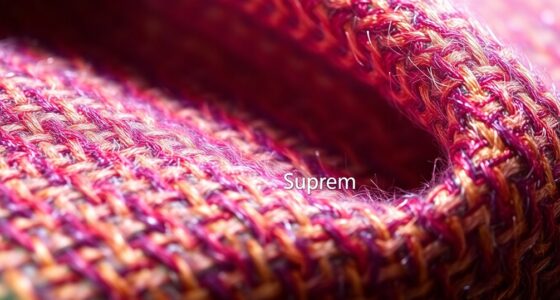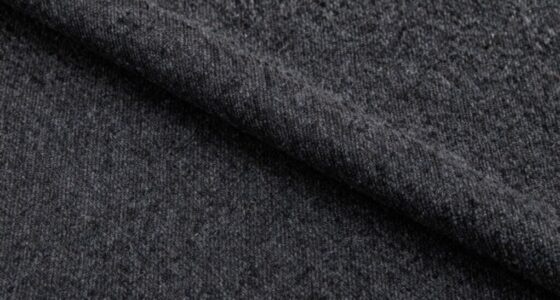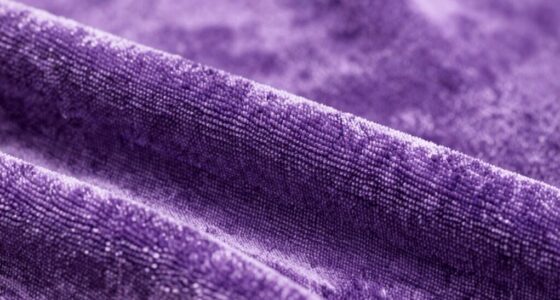
Interlock knit is a sturdy, double-layer fabric made with two sets of interlocked yarns, making it more durable, thicker, and smoother on both sides. Jersey knit is a lighter, single-layer fabric with a softer, more relaxed feel and distinct right and wrong sides. Interlock resists stretching and wrinkling, ideal for activewear or baby clothes, while jersey offers breathability and comfort for casual wear. Exploring how these differences affect your garment choices can help you make better decisions.

Get your wardrobe favorites delivered free with Prime
- Fast, free delivery on millions of items
- Prime Video, Amazon Music and more included
- Member-only deals all year
Key Takeaways
- Interlock knit features two interlocked yarn sets, making both sides look and feel smooth, unlike Jersey’s single-knit, single-sided construction.
- Interlock is denser, thicker, and more durable, resisting stretching, sagging, and pilling better than lightweight, breathable Jersey.
- Jersey knit has a looser stitch, a distinct right and wrong side, and offers a softer, more relaxed drape for casual wear.
- Interlock is ideal for activewear and baby clothes due to its durability, while Jersey suits T-shirts, dresses, and comfortable, everyday garments.
- The manufacturing process results in interlock fabric being stiffer and less prone to wrinkling, whereas Jersey is lighter and more prone to stretching.

Ever wondered what sets interlock knit apart from jersey knit? Well, the differences start with their manufacturing processes, which directly influence fabric durability and overall feel. Interlock knit is produced through a more complex process involving two sets of interlocking yarns that are knit together on specialized machines. This results in a fabric where both sides look identical and feel smooth to the touch. Jersey knit, on the other hand, is made with a single yarn set that creates a distinct right and wrong side. Its manufacturing process involves a simpler, single-knit stitch, which makes it quicker and less costly to produce. Because of these manufacturing differences, interlock knit typically boasts superior fabric durability compared to jersey. The tightly interlocked loops in interlock knit create a denser fabric that resists stretching, sagging, and pilling over time. Manufacturing process also impacts the overall weight and drape of the fabric, influencing how garments hang and feel. Jersey, with its looser stitch, can be more prone to stretching out and developing runs or tears with frequent use or wash cycles.
This enhanced durability in interlock knit makes it ideal for garments that need to withstand regular wear, such as activewear, baby clothes, or even underwear. The double-knit construction provides a more substantial fabric that maintains its shape longer, even after multiple washes. Conversely, jersey’s lighter, more breathable nature makes it perfect for casual T-shirts, dresses, and layered pieces, where softness and breathability are more desirable than long-term durability. The manufacturing process of interlock knit also affects its overall weight and drape. Since it’s denser and thicker, it tends to hang more stiffly and is less prone to wrinkling, which can be advantageous for certain styles. Jersey knit, with its lighter weight and stretchiness, offers a more relaxed, drapey fit that conforms comfortably to your body.
As an affiliate, we earn on qualifying purchases.
Frequently Asked Questions
Which Knit Is More Environmentally Sustainable?
You’ll find that interlock knit is generally more sustainable than jersey knit because it often uses fewer resources during production. If you prioritize eco-friendly fibers and sustainability practices, look for brands that use organic or recycled fibers, regardless of the knit type. Both knits can be eco-friendly if made responsibly, but interlock’s tighter weave can reduce waste and water use, making it a slightly better choice for environmentally conscious consumers.
How Does Each Knit Affect Fabric Stretchability?
Interlock knit generally offers less stretchability than jersey knit because of its higher fabric density, which makes it thicker and more stable. Jersey knit, with its looser structure, provides more stretch and better stretch recovery, allowing it to move with your body comfortably. So, if you need flexibility and ease of movement, jersey is the better choice, whereas interlock offers a more stable, less stretchy fabric.
Are There Specific Care Instructions for Interlock and Jersey Knits?
You should follow specific care instructions for interlock and jersey knits to maintain their quality. Wash them in cold water on a gentle cycle to prevent color fading from fabric dyeing processes. Avoid bleach, which can damage the fibers, and lay flat to dry when possible. These knitting techniques make the fabrics durable, but proper care preserves their stretch and softness, ensuring your garments stay looking new longer.
Which Knit Is More Resistant to Pilling?
Interlock knit is more resistant to pilling because of its tighter weave, making it more durable over time. Its fabric durability outperforms jersey knit, which has a looser texture and is more prone to surface fuzz. The texture differences play a key role here; interlock’s smooth, compact surface helps prevent pills, keeping your garment looking newer longer. If pilling resistance is a priority, choose interlock for longer-lasting wear.
Can Both Knits Be Used for the Same Clothing Types?
Think of fabric texture as a dance, where both interlock and jersey knits perform on the same stage. You can use both for T-shirts, dresses, or activewear, thanks to their versatility. Their manufacturing processes give each a unique rhythm—interlock’s tight, smooth weave suits structured garments, while jersey’s stretch and softness work well for casual, comfortable pieces. So, your choice depends on the feel and fit you want to achieve.
Conclusion
In conclusion, understanding the differences between interlock and jersey knit helps you choose the right fabric for your needs. Did you know that interlock knit is twice as thick and durable as jersey knit? This makes it perfect for high-quality, long-lasting garments. With this knowledge, you can confidently select fabrics that match your style and comfort preferences, ensuring you get the best value and performance from your clothing choices.
Halloween Picks
halloween
As an affiliate, we earn on qualifying purchases.